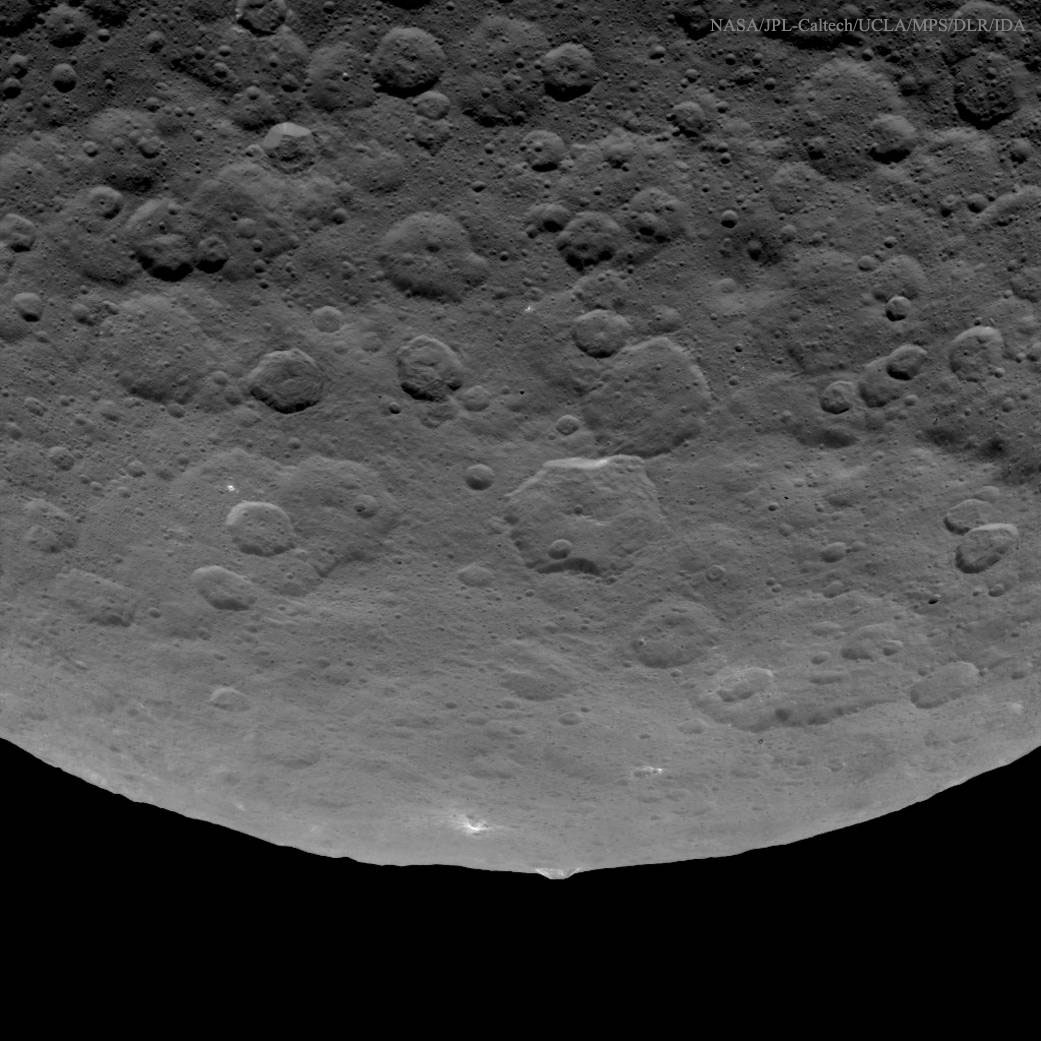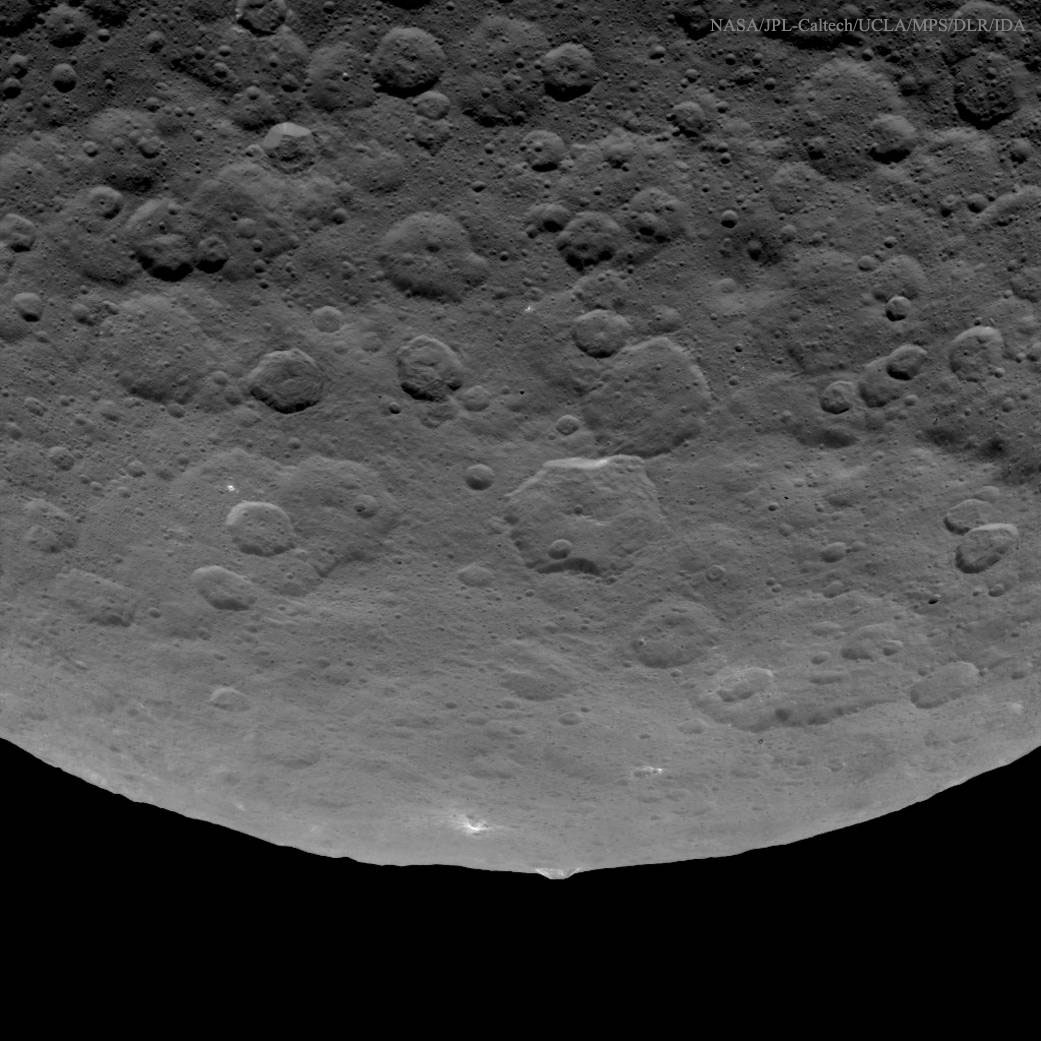
What created this large mountain on asteroid Ceres? No one is yet sure. As if in anticipation of today being Asteroid Day on Earth, the robotic spacecraft Dawn in orbit around Ceres took the best yet image of an unusually tall mountain on the Asteroid Belt's largest asteroid. Visible at the top of the featured image, the exceptional mountain rises about five kilometers up from an area that otherwise appears pretty level. The image was taken about two weeks ago from about 4,400 kilometers away. Although origin hypotheses for the mountain include volcanism, impacts, and plate tectonics, clear evidence backing any of these is currently lacking. Also visible across Ceres' surface are some enigmatic light areas: bright spots whose origin and composition that also remain an active topic of investigation. Even though Dawn is expected to continue to orbit Ceres, officially dubbed a dwarf planet, for millions of years, the hydrazine fuel used to point Dawn's communications antenna toward Earth is expected to run out sometime next year. Tonight & tomorrow: See Venus & Jupiter together after sunset
¿Qué creó esta gran montaña en el asteroide Ceres? Nadie lo sabe con certeza. Como si anticipara que hoy es el Día de los Asteroides en la Tierra, la nave espacial robótica Dawn, en órbita alrededor de Ceres, tomó la mejor imagen hasta ahora de una montaña inusualmente alta en el asteroide más grande del Cinturón de Asteroides. Visible en la parte superior de la imagen destacada, la montaña excepcional se eleva aproximadamente cinco kilómetros desde una zona que, de lo contrario, parece bastante plana. La imagen fue tomada hace aproximadamente dos semanas desde una distancia de unos 4.400 kilómetros. Aunque las hipótesis sobre el origen de la montaña incluyen la vulcanología, impactos y tectónica de placas, actualmente no hay evidencia clara que respalde ninguna de estas. También son visibles en la superficie de Ceres algunas áreas brillantes enigmáticas: manchas brillantes cuyo origen y composición también siguen siendo un tema activo de investigación. Aunque se espera que Dawn continúe orbitando Ceres, oficialmente denominado planeta enano, durante millones de años, el hidrazina utilizado para apuntar la antena de comunicación de Dawn hacia la Tierra se espera que se agote en algún momento del próximo año.