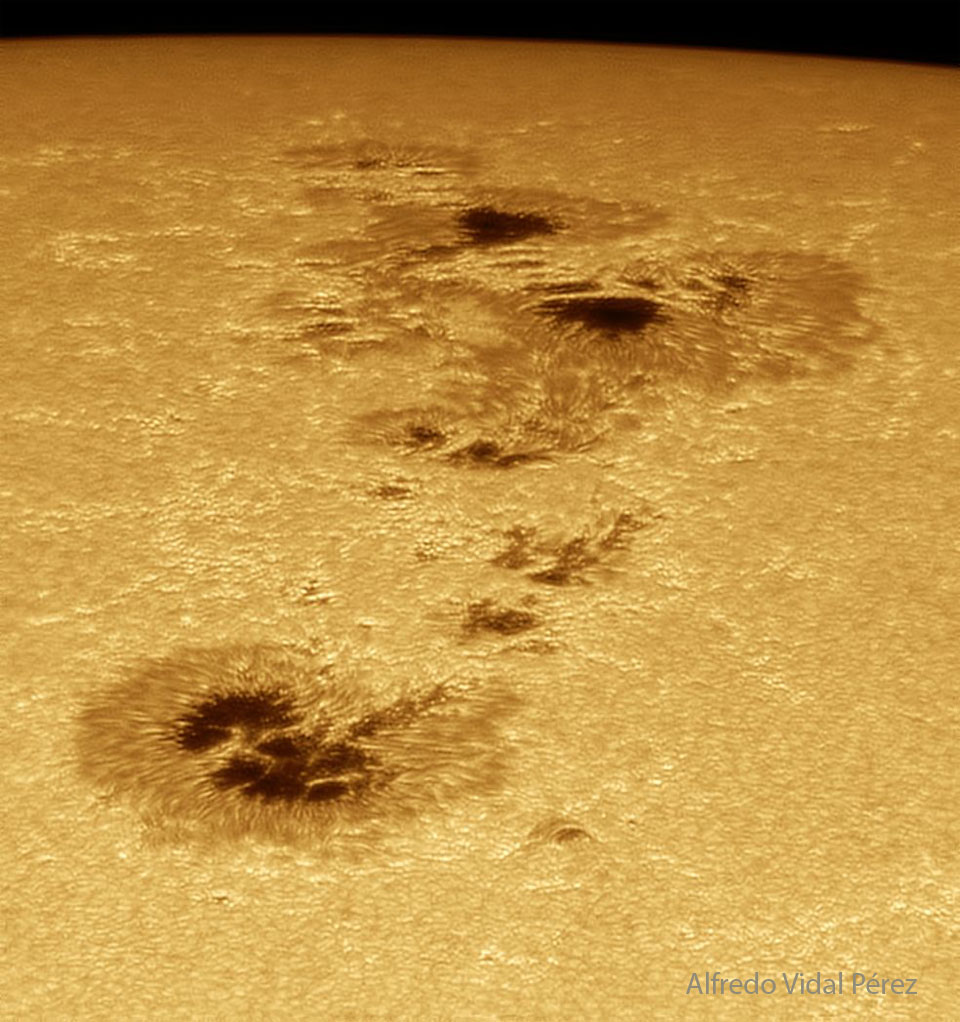
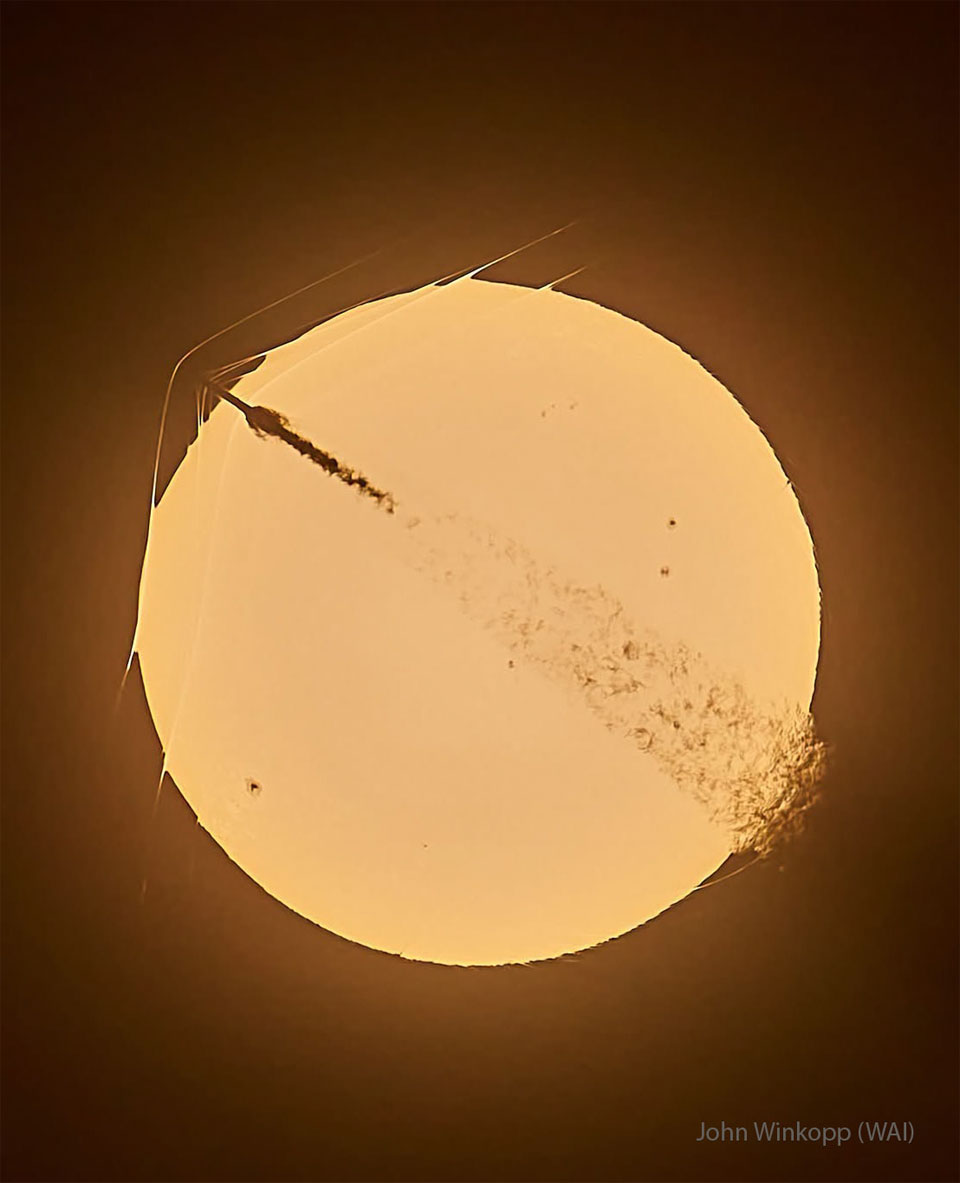
How do sunspots evolve? Large dark sunspots -- and the active regions that contain them -- may last for weeks, but all during that time they are constantly changing. Such variations were particularly apparent a few weeks ago as the active region AR 2339 came around the limb of the Sun and was tracked for the next 12 days by NASA's Solar Dynamic Observatory. In the featured time lapse video, some sunspots drift apart, while others merge. All the while, the dark central umbral regions shift internally and their surrounding lighter penumbras shimmer and wave. The surrounding Sun appears to flicker as the carpet of yellow granules come and go on the time scale of hours. In general, sunspots are relatively cool regions where the local magnetic field pokes through the Sun's surface and inhibits heating. Over the past week, an even more active region -- AR 2371 -- has been crossing the Sun and releasing powerful flares that have resulted in impressive auroras here on Earth. Follow APOD on: Facebook, Google Plus, or Twitter
¿Cómo evolucionan las manchas solares? Las grandes manchas oscuras — y las regiones activas que las contienen — pueden durar semanas, pero durante todo ese tiempo están cambiando constantemente. Tales variaciones fueron particularmente evidentes hace unas semanas cuando la región activa AR 2339 apareció alrededor del borde del Sol y fue observada durante los siguientes 12 días por la Observatorio Dinámico Solar de la NASA. En el video de tiempo dilatado destacado, algunas manchas se alejan entre sí, mientras que otras se fusionan. Todo el tiempo, las regiones centrales oscuras (umbrales) se mueven internamente y sus alrededores más brillantes (penumbrales) titilan y se ondulan. El Sol circundante parece parpadear a medida que la alfombra de granules amarillos aparece y desaparece a escala de horas. En general, las manchas solares son regiones relativamente frías donde el campo magnético local emerge a través de la superficie del Sol y inhibe el calentamiento. Durante la última semana, una región activa aún más intensa — AR 2371 — ha estado cruzando el Sol y liberando potentes llamaradas que han provocado impresionantes auroras aquí en la Tierra.