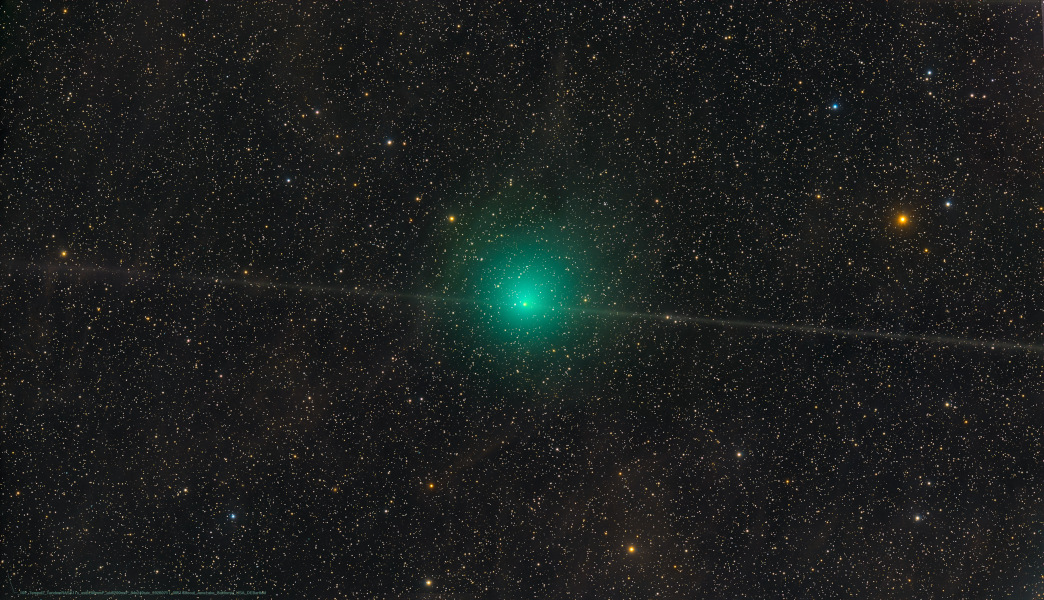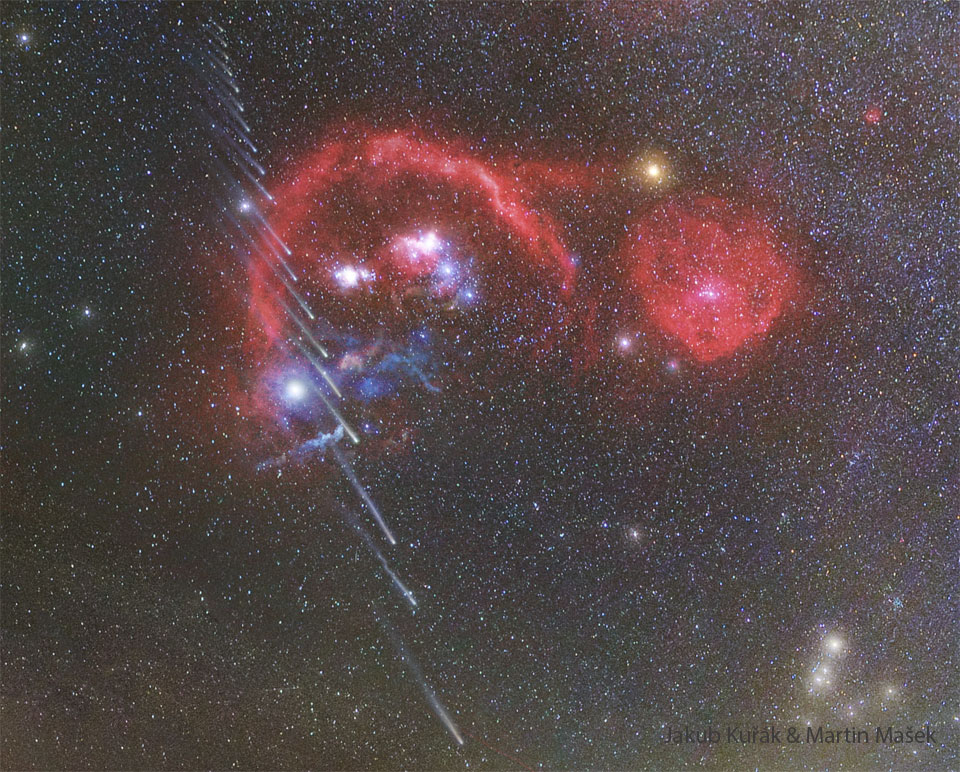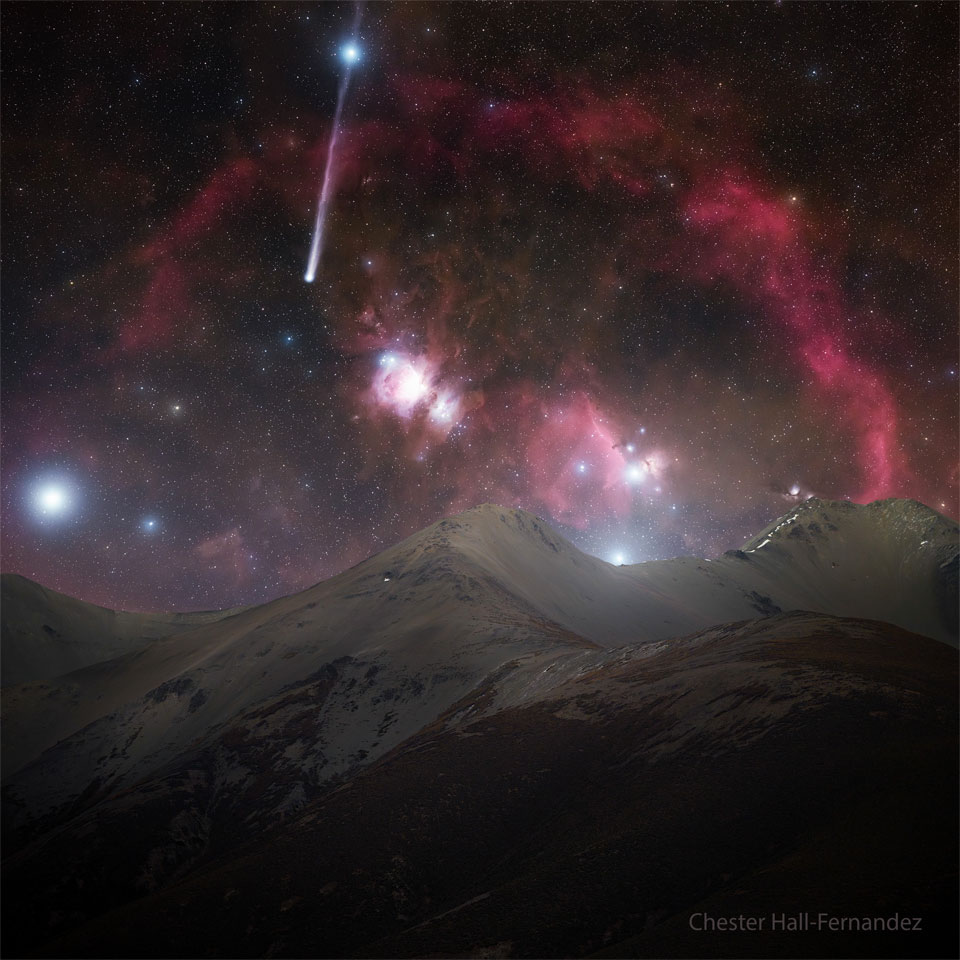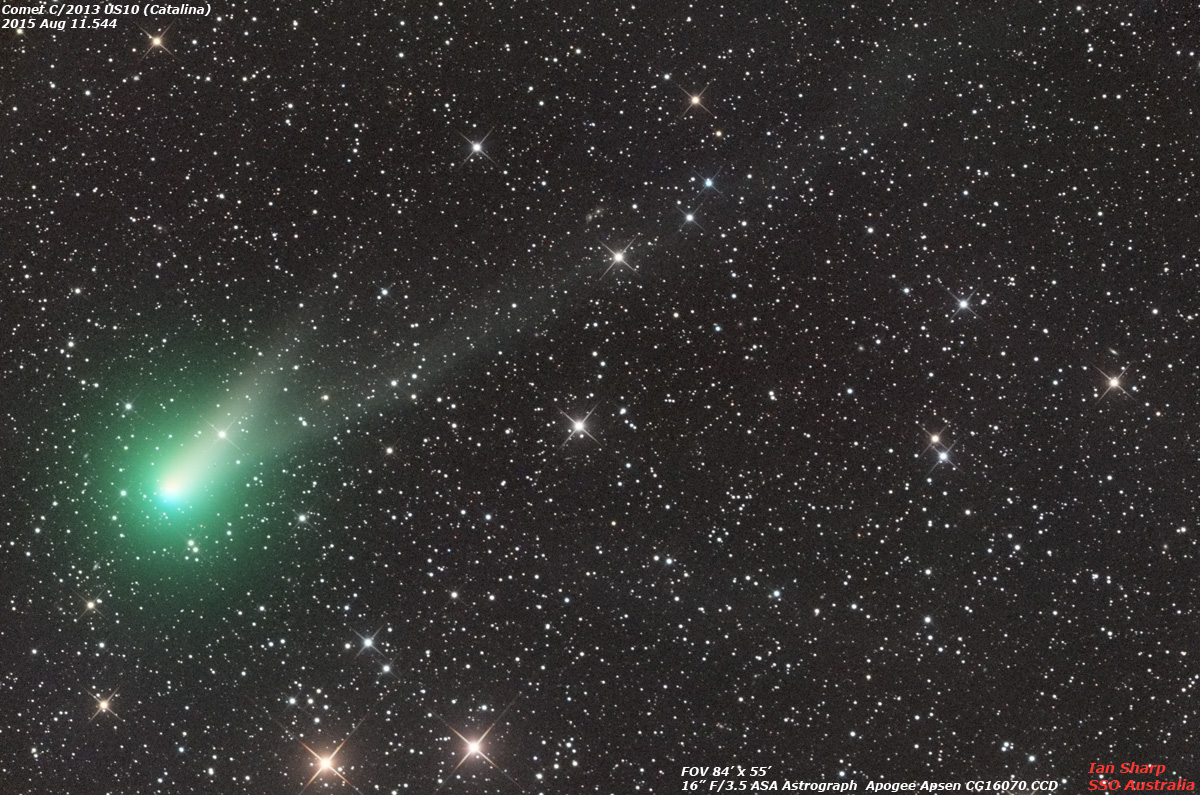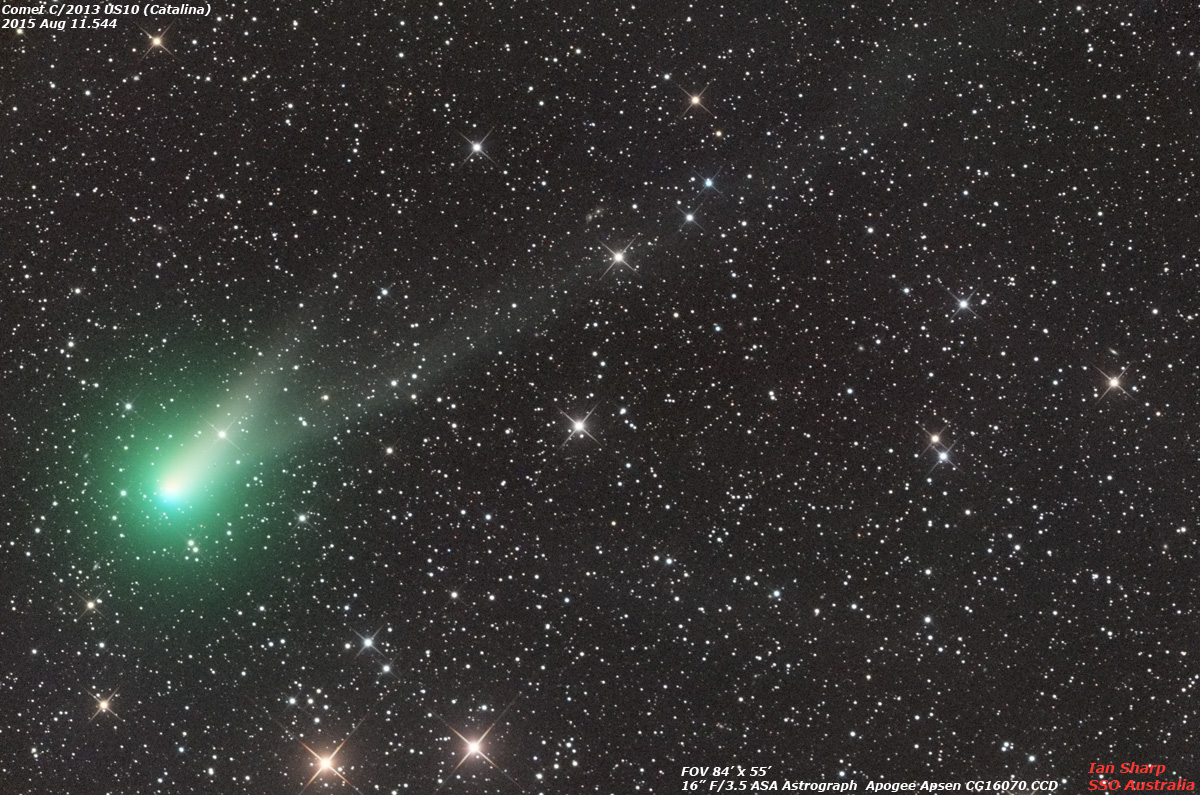
Will Comet Catalina become visible to the unaided eye? Given the unpredictability of comets, no one can say for sure, but it seems like a good bet. The comet was discovered in 2013 by observations of the Catalina Sky Survey. Since then, Comet C/2013 US10 (Catalina) has steadily brightened and is currently brighter than 8th magnitude, making it visible with binoculars and long-duration camera images. As the comet further approaches the inner Solar System it will surely continue to intensify, possibly becoming a naked eye object sometime in October and peaking sometime in late November. The comet will reside primarily in the skies of the southern hemisphere until mid-December, at which time its highly inclined orbit will bring it quickly into northern skies. Featured above, Comet Catalina was imaged last week sporting a green coma and two growing tails.
¿El Cometa Catalina será visible a simple vista? Dada la imprevisibilidad de los cometas, nadie puede afirmarlo con certeza, pero parece una buena apuesta. El cometa fue descubierto en 2013 mediante observaciones del Catalina Sky Survey. Desde entonces, el cometa C/2013 US10 (Catalina) ha ido aumentando gradualmente su brillo y actualmente es más brillante que la magnitud 8, lo que lo hace visible con binoculares y con imágenes obtenidas mediante exposiciones prolongadas con cámaras. A medida que el cometa se acerque más al sistema solar interno, sin duda continuará intensificándose, posiblemente convirtiéndose en un objeto visible a simple vista hacia finales de octubre y alcanzando su punto máximo en algún momento de finales de noviembre. El cometa permanecerá principalmente en el cielo del hemisferio sur hasta mediados de diciembre, momento en el cual su órbita altamente inclinada lo llevará rápidamente al hemisferio norte. En la imagen destacada, el Cometa Catalina fue capturado la semana pasada mostrando una coma de color verde y dos colas en crecimiento.