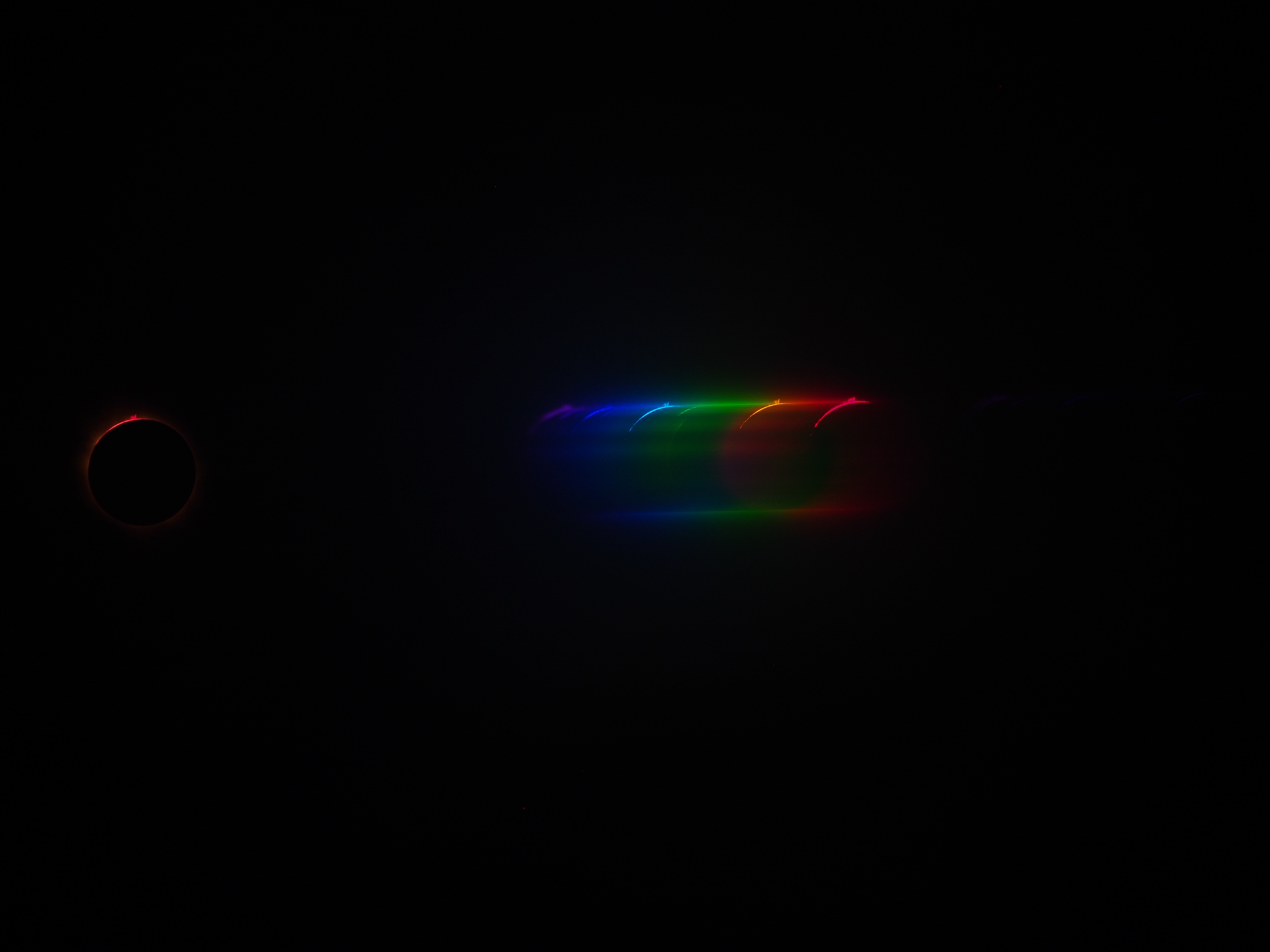
In a flash, the visible spectrum of the Sun changed from absorption to emission on March 9 during the total solar eclipse. That fleeting moment, at the beginning the total eclipse phase, is captured by telephoto lens and diffraction grating in this image from clearing skies over Ternate, Indonesia. At left, the overwhelming light from the Sun is just blocked by the lunar disk. The normally dominant absorption spectrum of the solar photosphere is hidden. What remains, spread by the diffraction grating into the spectrum of colors to the right of the eclipsed Sun, are individual eclipse images. The images appear at each wavelength of light emitted by atoms along the thin visible arc of the solar chromosphere and in an enormous prominence extending beyond the Sun's upper limb. The brightest images, or strongest chromospheric emission lines, are due to Hydrogen atoms that produce the red hydrogen alpha emission at the far right and blue hydrogen beta emission to the left. In between, the bright yellow emission image is caused by atoms of Helium, an element only first discovered in the flash spectrum of the Sun.
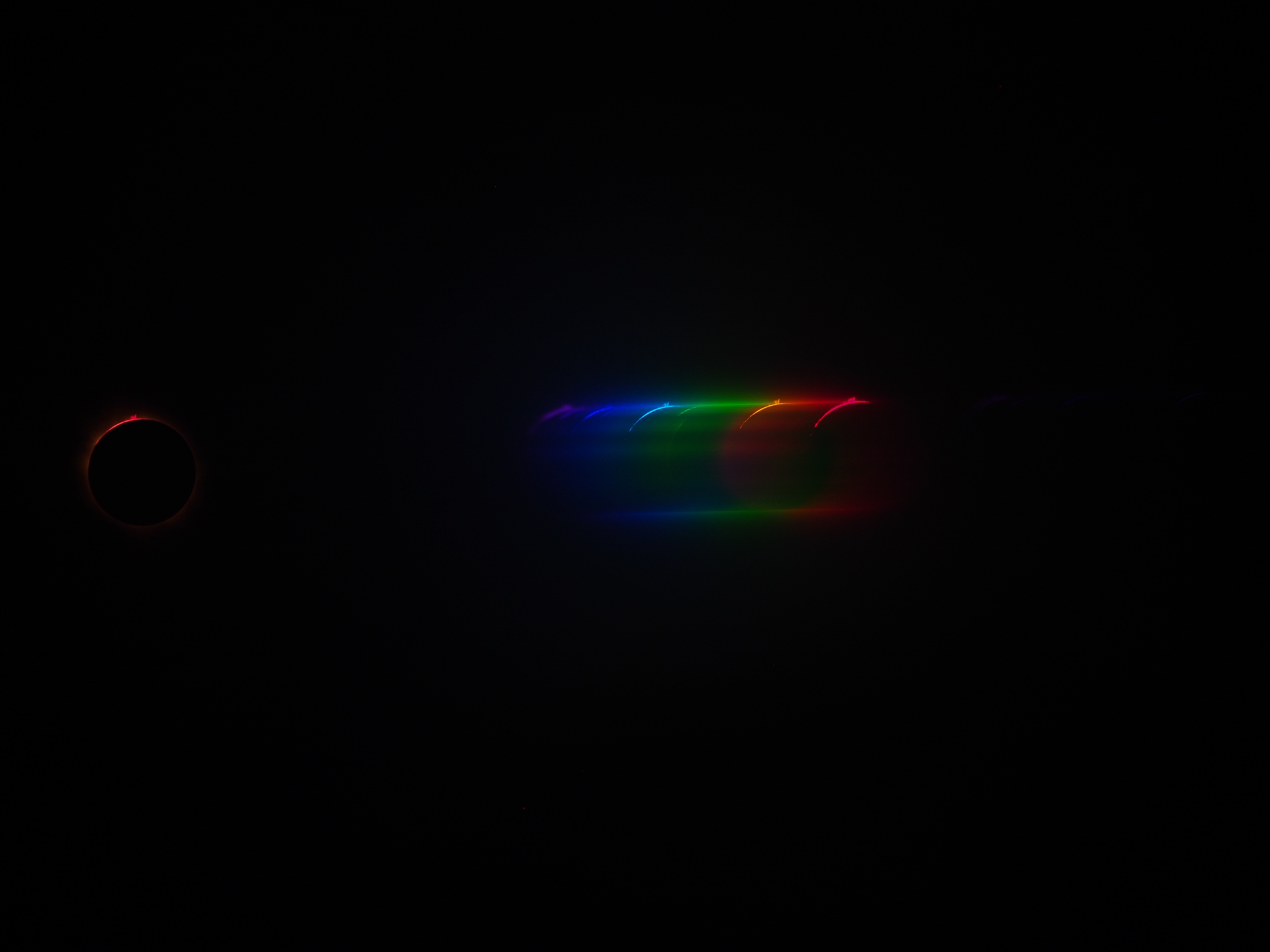
Durante un flash, el espectro visible del Sol cambió de absorción a emisión el 9 de marzo durante el eclipse solar total. Ese breve momento, al comienzo de la fase de eclipse total, fue capturado por una lente teleobjetivo y una rejilla de difracción en esta imagen tomada desde cielos despejados sobre Ternate, Indonesia. A la izquierda, la intensa luz del Sol es bloqueada por el disco lunar. El espectro de absorción normalmente dominante de la fotosfera solar queda oculto. Lo que queda, dispersado por la rejilla de difracción en el espectro de colores a la derecha del Sol eclipsado, son imágenes individuales del eclipse. Estas imágenes aparecen en cada longitud de onda de la luz emitida por los átomos a lo largo del arco visible delgado de la cromosfera solar y en una prominencia enorme que se extiende más allá del borde superior del Sol. Las imágenes más brillantes, o líneas de emisión cromosférica más fuertes, se deben a átomos de hidrógeno que producen la emisión roja de hidrógeno alfa en el extremo derecho y la emisión azul de hidrógeno beta a la izquierda. Entre ellas, la imagen de emisión brillante amarilla es causada por átomos de helio, un elemento que fue descubierto por primera vez en el espectro de flash del Sol.