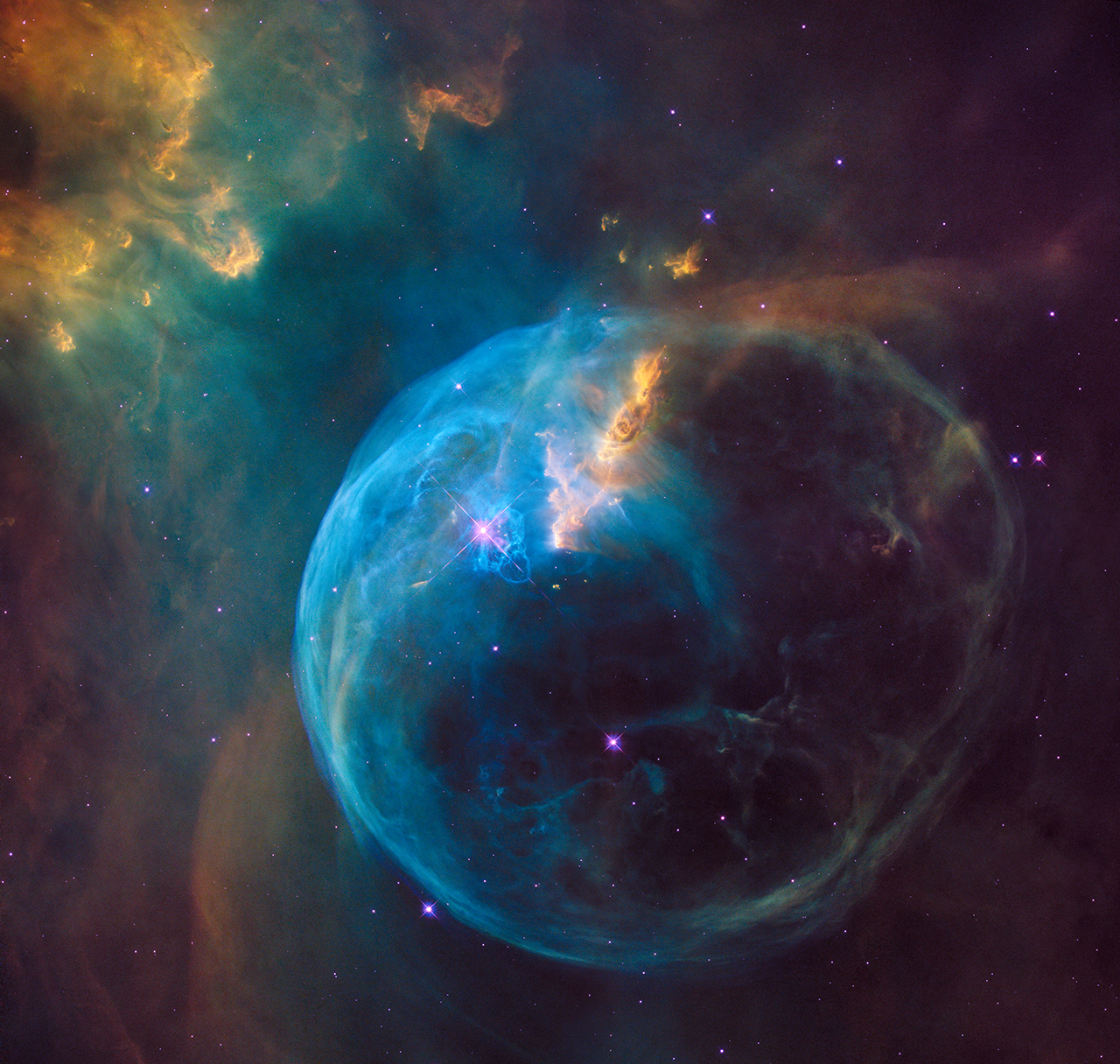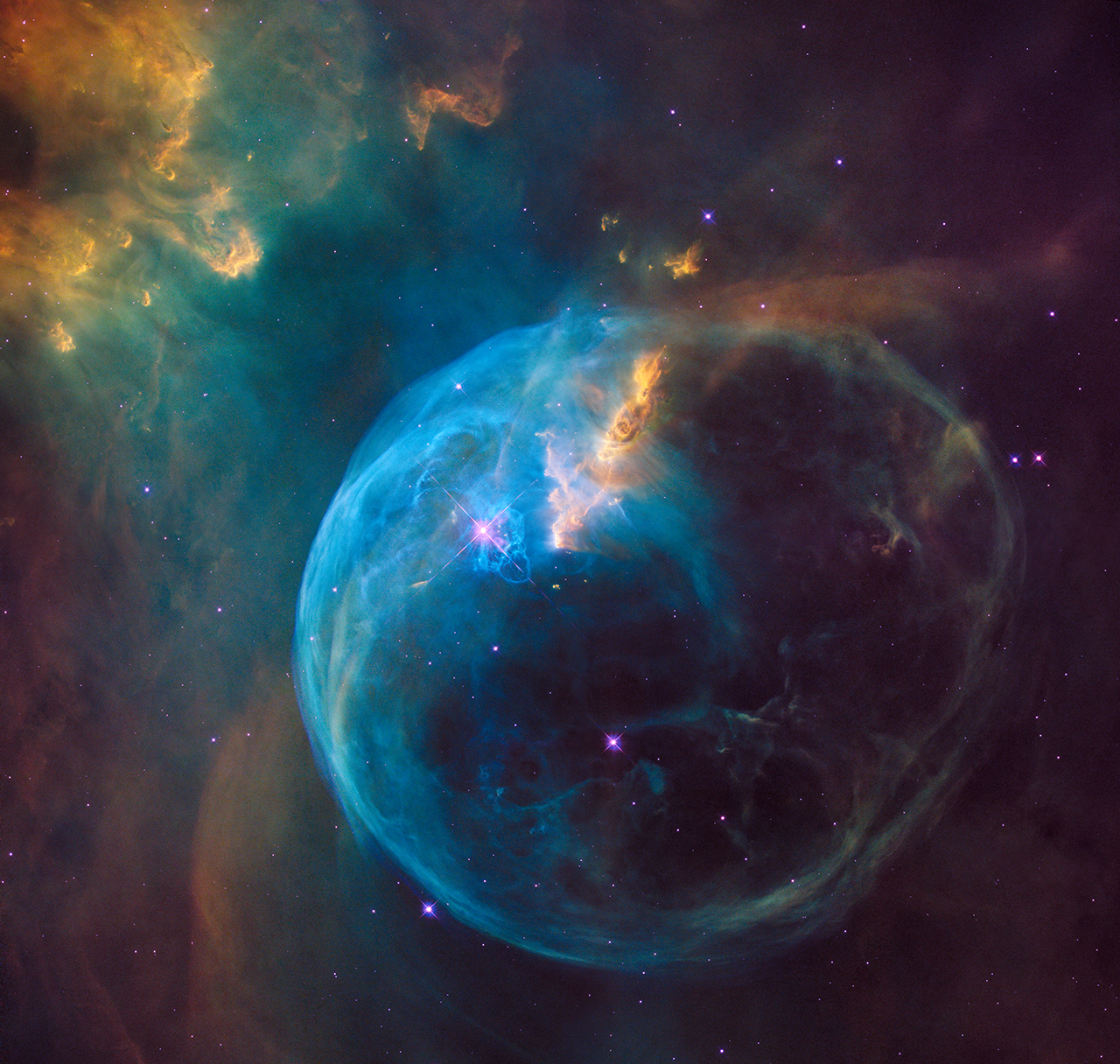
Blown by the wind from a massive star, this interstellar apparition has a surprisingly familiar shape. Cataloged as NGC 7635, it is also known simply as The Bubble Nebula. Although it looks delicate, the 7 light-year diameter bubble offers evidence of violent processes at work. Above and left of the Bubble's center is a hot, O-type star, several hundred thousand times more luminous and around 45 times more massive than the Sun. A fierce stellar wind and intense radiation from that star has blasted out the structure of glowing gas against denser material in a surrounding molecular cloud. The intriguing Bubble Nebula and associated cloud complex lie a mere 7,100 light-years away toward the boastful constellation Cassiopeia. This sharp, tantalizing view of the cosmic bubble is a composite of Hubble Space Telescope image data from 2016, released to celebrate the 26th anniversary of Hubble's launch. Celebrate: Planet Earth Day
Soplada por el viento de una estrella masiva, esta aparición interestelar tiene una forma sorprendentemente familiar. Catalogada como NGC 7635, también es conocida simplemente como La Nebulosa Burbuja. Aunque parece frágil, la burbuja de 7 años luz de diámetro ofrece evidencia de procesos violentos en acción. Arriba y a la izquierda del centro de la Burbuja hay una estrella caliente de tipo O, varias veces más luminosa y alrededor de 45 veces más masiva que el Sol. Un intenso viento estelar y radiación intensa de esa estrella han erosionado la estructura de gas brillante contra el material más denso de una nube molecular circundante. La intrigante Nebulosa Burbuja y su complejo de nubes asociadas se encuentran a tan solo 7100 años luz de distancia, hacia la orgullosa constelación de Casiopea. Esta imagen nítida y tentadora de la burbuja cósmica es una composición de datos de imágenes del Telescopio Espacial Hubble de 2016, lanzada para celebrar el 26 aniversario del lanzamiento del Hubble. Celebrar: Día de la Tierra