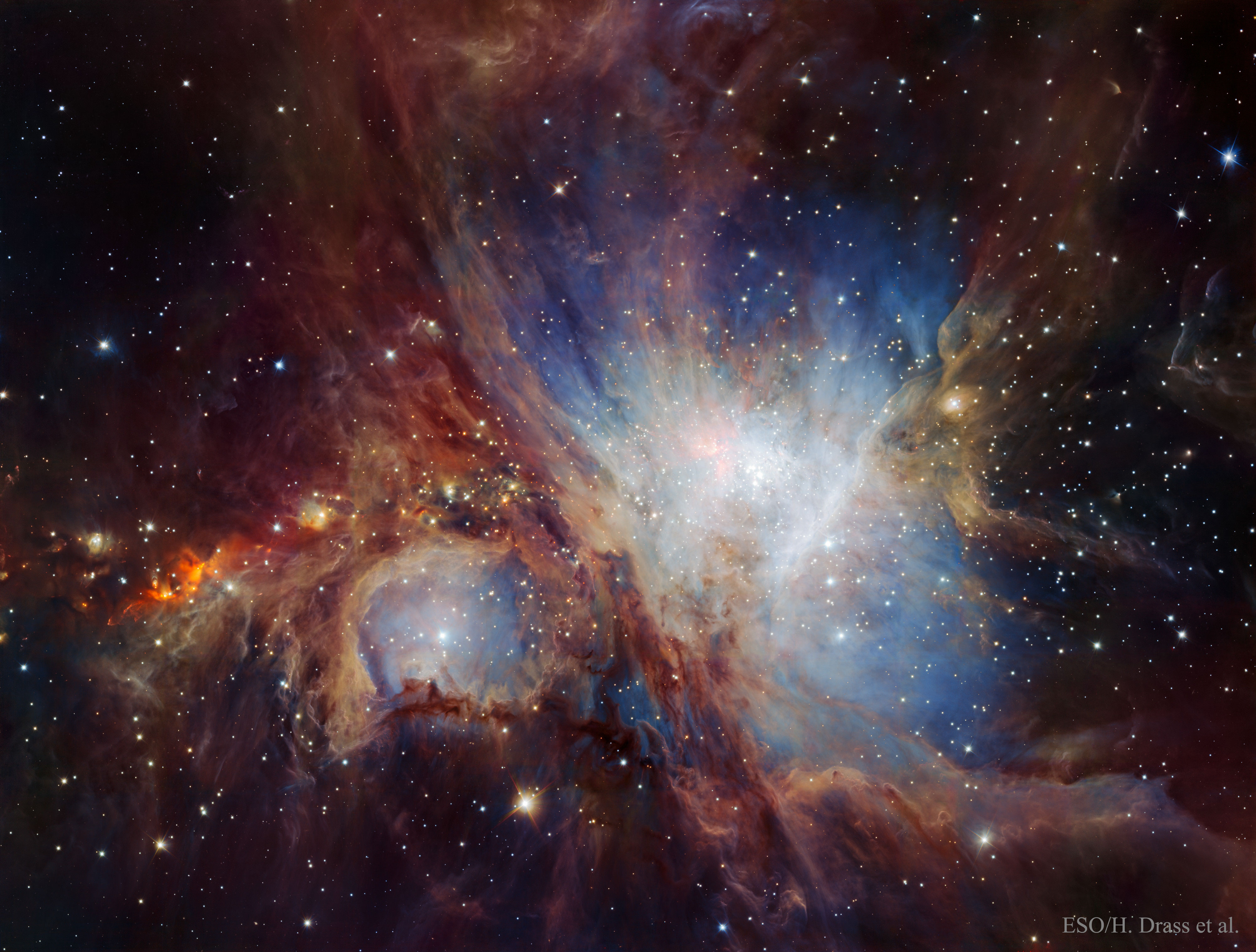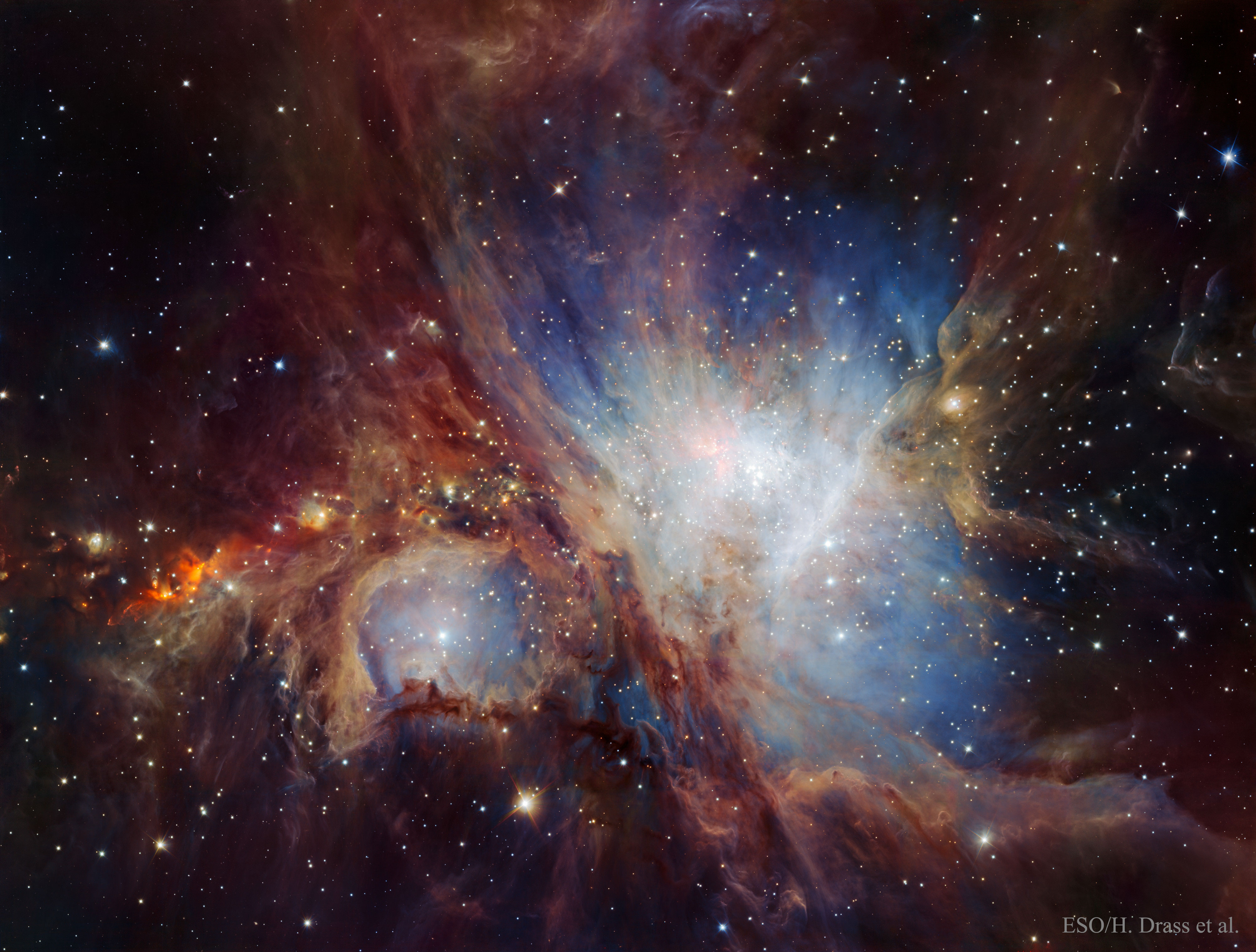
The deepest infrared image of the Orion Nebula has uncovered a bonanza of previously unknown low-mass stars and -- quite possibly -- free floating planets. The picturesque nebula is best known in visible light where it shows a many bright stars and bright glowing gas. Catalogued as M42, the Orion Nebula at a distance of 1300 light years is the closest major star forming region to Earth. One can peer into Orion's pervasive dust in infrared light, as was done again recently with the sophisticated HAWK-I camera attached to one of the European Southern Observatory's Very Large Telescopes in the high mountains of Chile. High resolution versions of the featured infrared deep image show many points of light, many of which are surely brown dwarf stars but some of which are best fit by an unexpectedly high abundance of free-floating planets. Understanding how these low mass objects formed is important to understanding star formation generally and may even help humanity to better understand the early years of our Solar System. Remastered version of this image: Recolored and in greater detail
La imagen infrarroja más profunda de la Nebulosa de Orión ha revelado una gran cantidad de estrellas de baja masa desconocidas previamente y, posiblemente, planetas errantes. La nebulosa, mejor conocida en luz visible donde muestra muchas estrellas brillantes y gas luminoso, está catalogada como M42. A una distancia de 1300 años luz, es la región más cercana de formación estelar importante en el sistema solar. Se puede observar el polvo abundante de Orión en luz infrarroja, como se hizo recientemente con la sofisticada cámara HAWK-I, montada en uno de los Telescopios Very Large de la Observatorio Europeo Austral, ubicados en las altas montañas de Chile. Versiones de alta resolución de la imagen infrarroja profunda mostrada destacan muchos puntos de luz, muchos de los cuales seguramente son enanas marrones, pero algunos de los cuales se ajustan mejor a una sorprendentemente alta abundancia de planetas errantes. Comprender cómo se forman estos objetos de baja masa es importante para comprender en general la formación estelar y podría incluso ayudar a la humanidad a comprender mejor los primeros años de nuestro Sistema Solar. Versión remasterizada de esta imagen: Recoloreada y con mayor detalle.