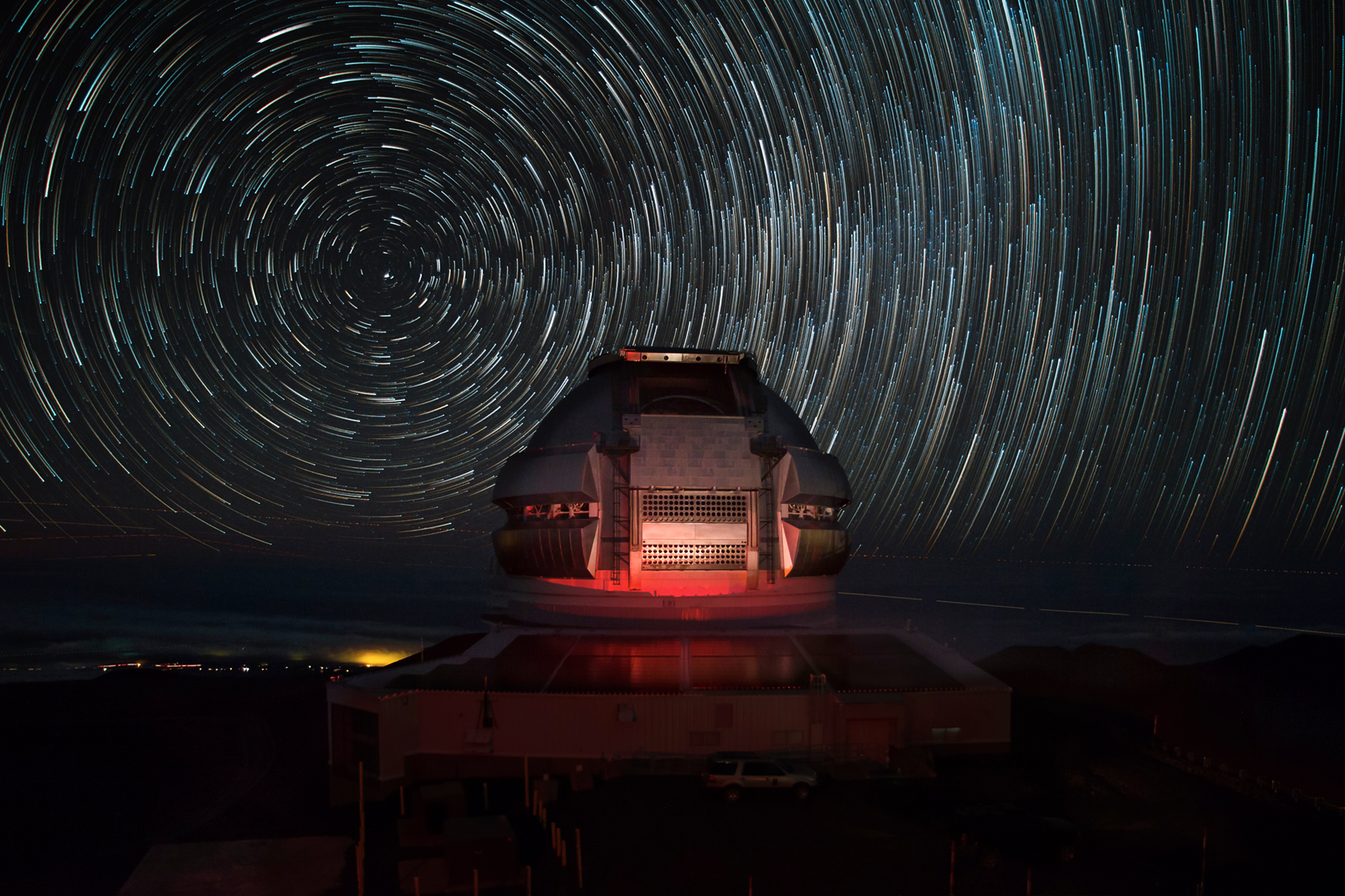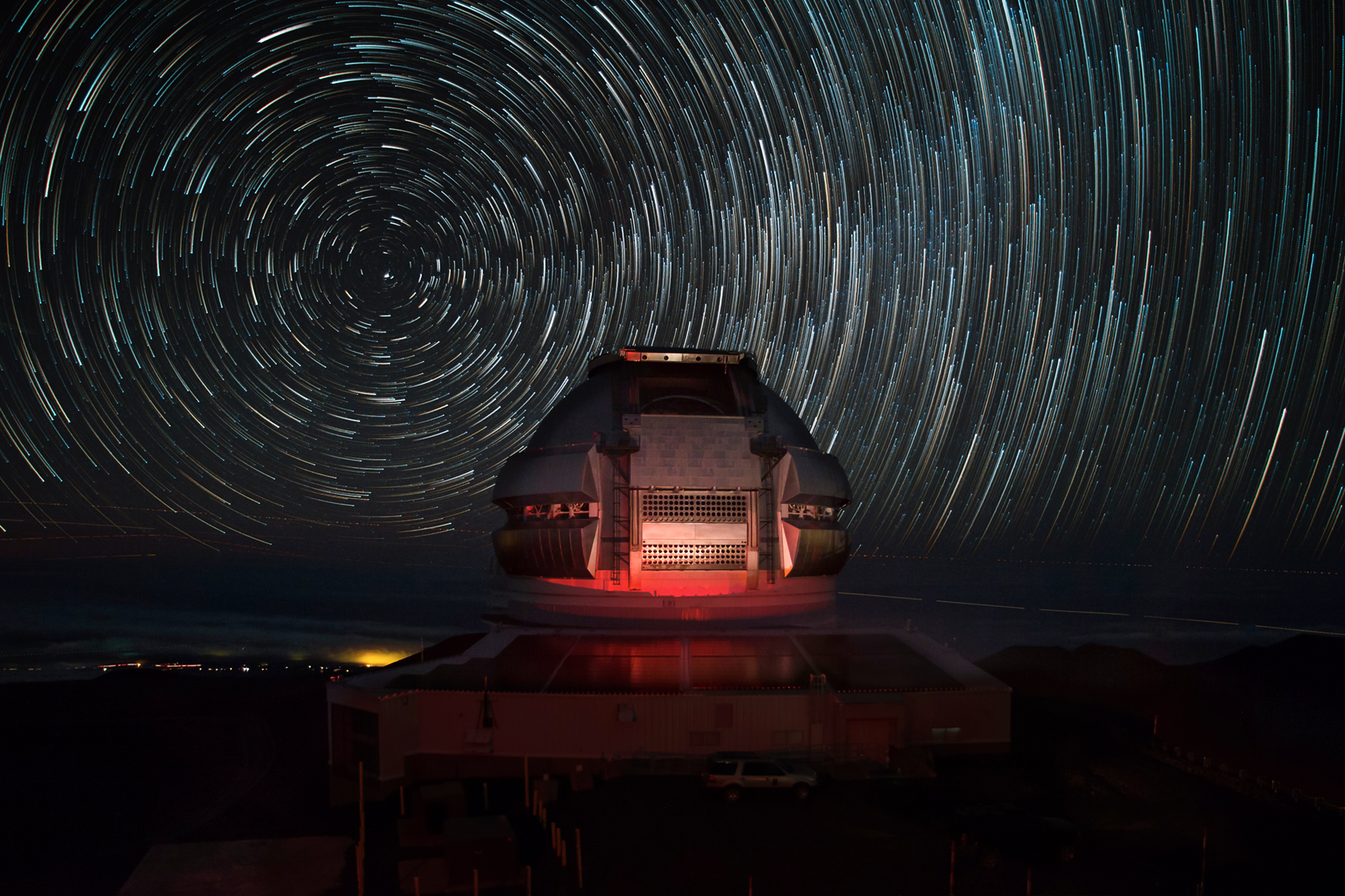
It does look like a flying saucer, but this technologically advanced structure is not here to deliver the wise extraterrestrial from the scifi classic movie The Day the Earth Stood Still. It is here to advance our knowledge of the Universe though. Shown sitting near the top of a mountain in Hawaii, the dome of the Gemini Observatory North houses one of two identical 8.1-meter diameter telescopes. Used with its southern hemisphere twin observatory in Chile, the two can access the entire sky from planet Earth. Constructed from 85 exposures lasting 30 seconds each with camera fixed to a tripod, the image also clearly demonstrates that the Earth did not stand still. Adjusted to be brighter at the ends of their arcs, the concentric star trails centered on the North Celestial Pole are a reflection of Earth's rotation around its axis. Close to the horizon at Hawaiian latitudes, Polaris, the North Star, makes the shortest star trail. The fainter denser forest of star trails toward the right is part of the rising Milky Way.
A simple vista, parece un platillo volador, pero esta estructura tecnológicamente avanzada no ha venido para entregar al extraterrestre sabio del clásico de ciencia ficción La Tierra se detuvo. Su presencia tiene un propósito diferente: avanzar nuestro conocimiento del Universo. Mostrado cerca de la cima de una montaña en Hawái, el domo del Observatorio Gemini del Norte alberga uno de los dos telescopios idénticos de 8,1 metros de diámetro. Usado junto con su observatorio gemelo en el hemisferio sur en Chile, los dos pueden acceder a todo el cielo desde la Tierra. Compuesto por 85 exposiciones de 30 segundos cada una, con la cámara fija a un trípode, la imagen también demuestra claramente que la Tierra no se detuvo. Ajustadas para ser más brillantes en los extremos de sus arcos, las trayectorias estelares concéntricas centradas en el Polo Celeste Norte reflejan la rotación de la Tierra alrededor de su eje. Cerca del horizonte en las latitudes hawaianas, Polaris, la Estrella del Norte, forma la trayectoria estelar más corta. La más tenue y densa forestación de trayectorias estelares hacia la derecha forma parte de la Vía Láctea en su ascenso.