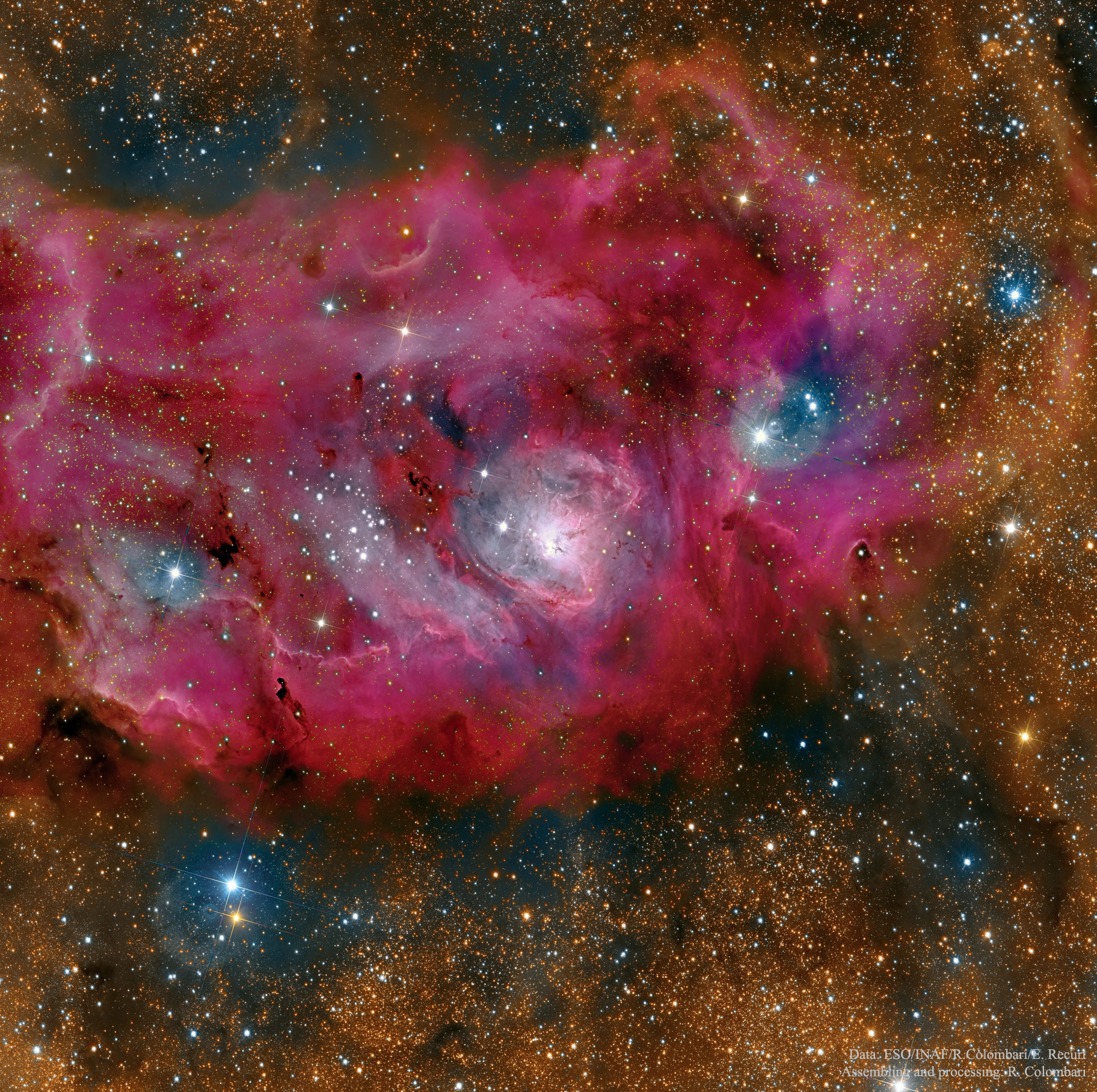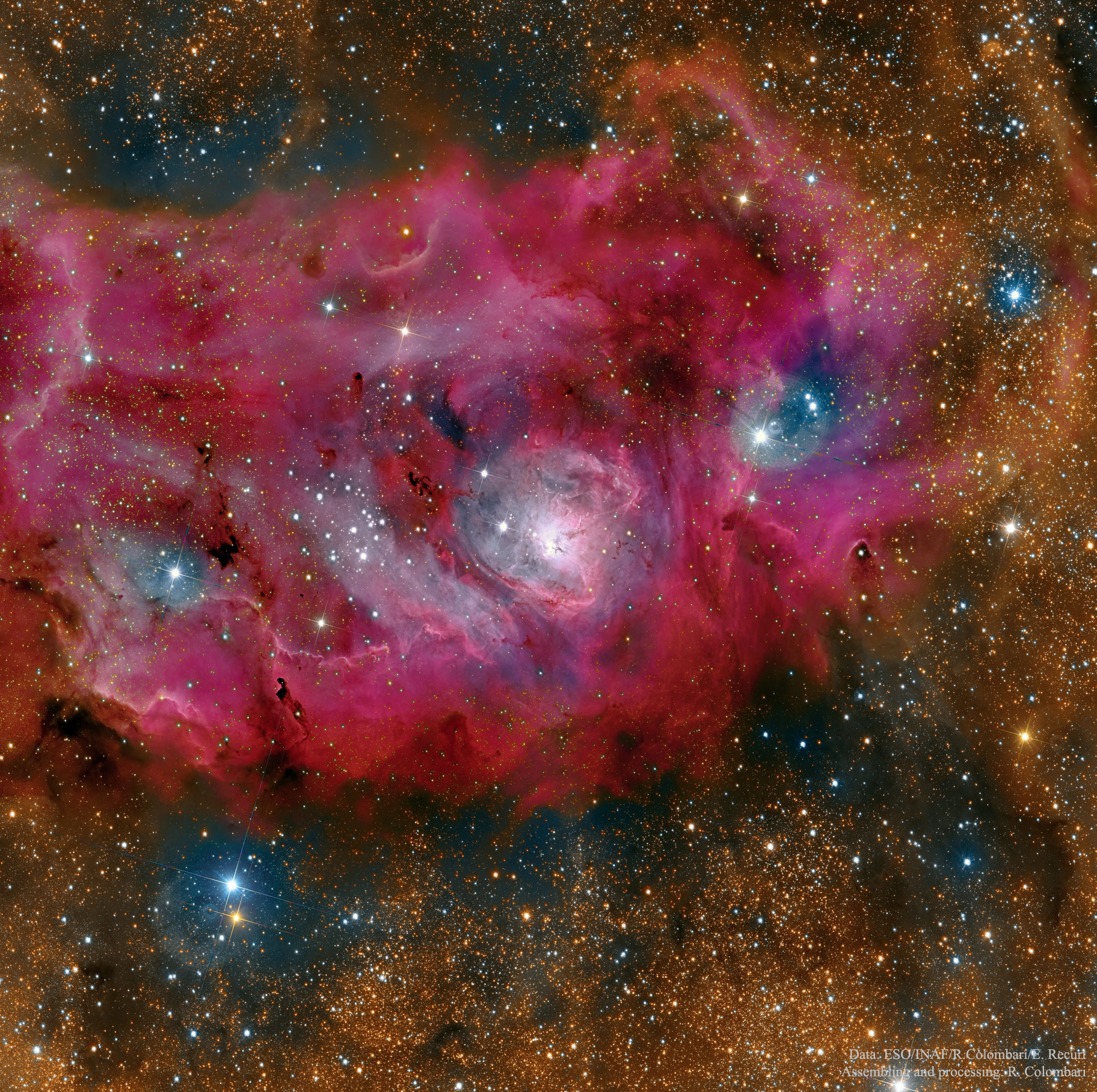
Stars are battling gas and dust in the Lagoon Nebula but the photographers are winning. Also known as M8, this photogenic nebula is visible even without binoculars towards the constellation of Sagittarius. The energetic processes of star formation create not only the colors but the chaos. The red-glowing gas results from high-energy starlight striking interstellar hydrogen gas. The dark dust filaments that lace M8 were created in the atmospheres of cool giant stars and in the debris from supernovae explosions. The light from M8 we see today left about 5,000 years ago. Light takes about 50 years to cross this section of M8. Data used to compose this image was taken with the wide-field camera OmegaCam of the ESO's VLT Survey Telescope (VST). Free Download: APOD 2017 Calendar: NASA Images
Las estrellas están luchando contra el gas y el polvo en la Nebulosa de la Laguna, pero los fotógrafos están ganando. También conocida como M8, esta nebulosa fotogénica es visible incluso sin binoculares hacia la constelación de Sagitario. Los procesos energéticos de formación estelar crean no solo los colores, sino también el caos. El gas que brilla en rojo se debe a la luz de alta energía de las estrellas que incide en el gas de hidrógeno interestelar. Los filamentos oscuros de polvo que recorren M8 se formaron en las atmósferas de estrellas gigantes frías y en los restos de explosiones de supernovas. La luz que vemos hoy en día de M8 salió de allí hace aproximadamente 5,000 años. La luz tarda aproximadamente 50 años en atravesar esta sección de M8. Los datos utilizados para componer esta imagen se tomaron con la cámara de campo amplio OmegaCam del telescopio VLT Survey Telescope (VST) de ESO.