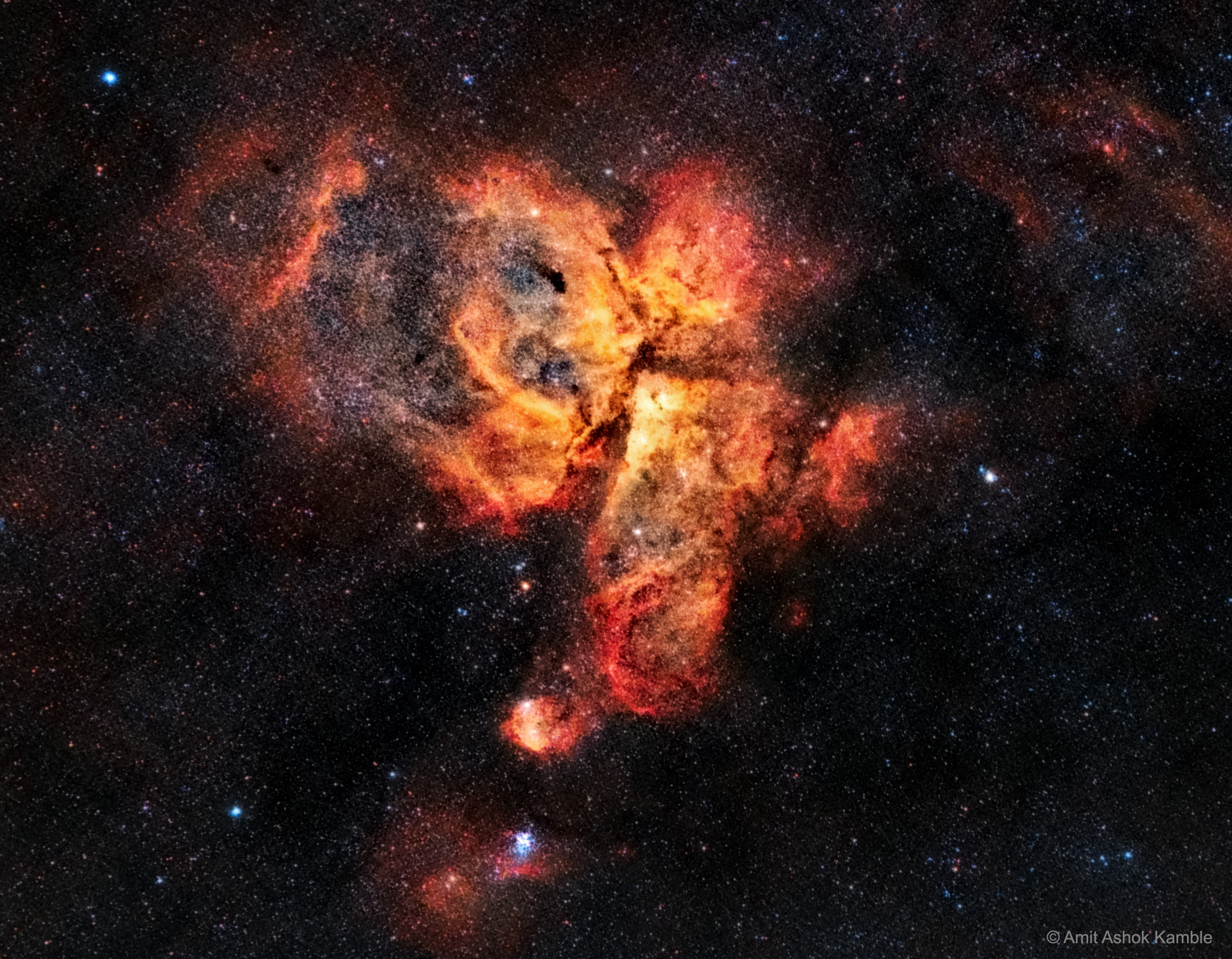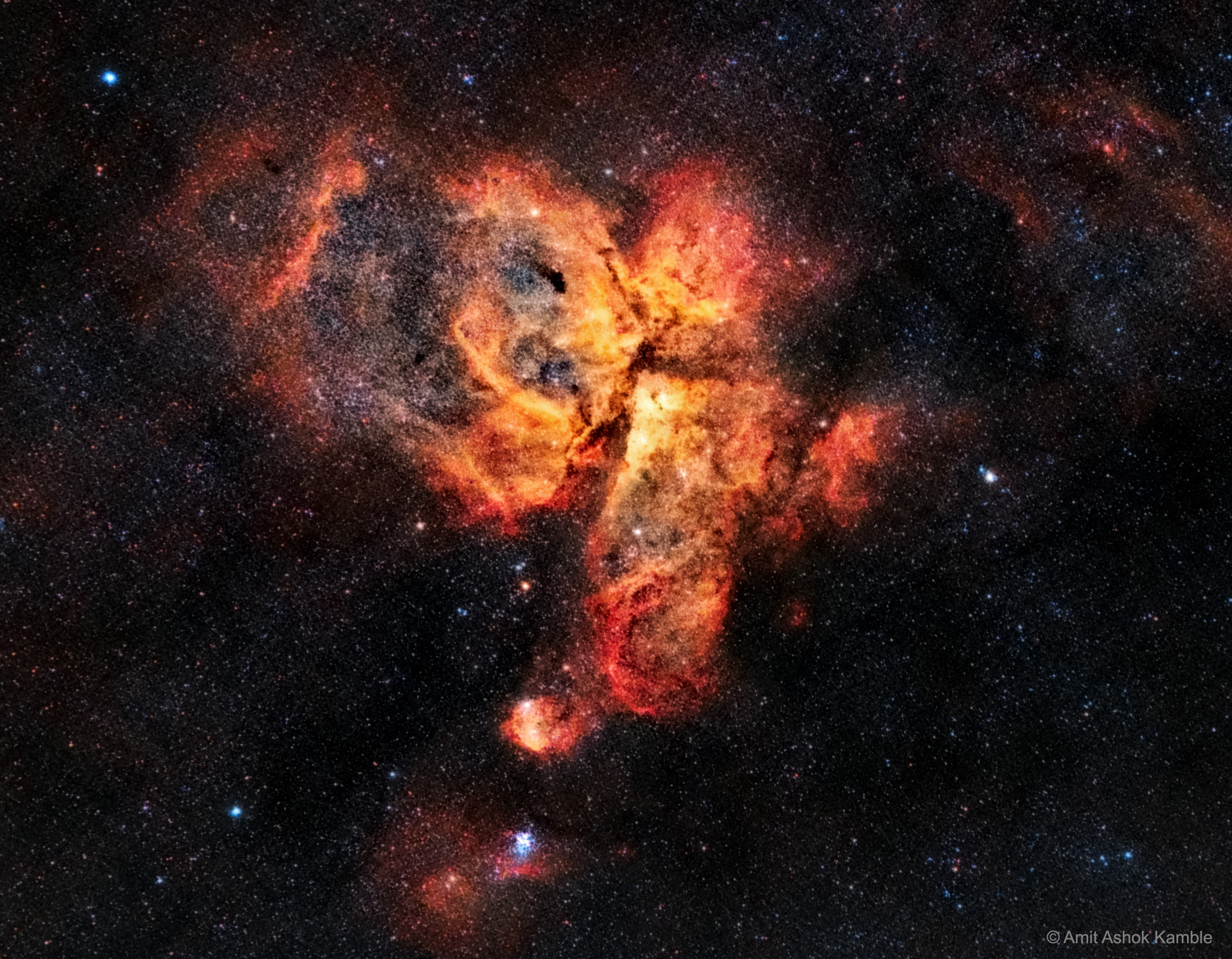
In one of the brightest parts of Milky Way lies a nebula where some of the oddest things occur. NGC 3372, known as the Great Nebula in Carina, is home to massive stars and changing nebulas. The Keyhole Nebula (NGC 3324), the bright structure just to the right of the image center, houses several of these massive stars and has itself changed its appearance. The entire Carina Nebula, captured here, spans over 300 light years and lies about 7,500 light-years away in the constellation of Carina. Eta Carinae, the most energetic star in the nebula, was one of the brightest stars in the sky in the 1830s, but then faded dramatically. While Eta Carinae itself maybe on the verge of a supernova explosion, X-ray images indicate that much of the Great Nebula in Carina has been a veritable supernova factory. Free Presentation: APOD Editor to speak in Prague on June 30
En una de las partes más brillantes de la Vía Láctea se encuentra una nebulosa donde ocurren algunos de los fenómenos más extraños. La NGC 3372, conocida como la Gran Nebulosa en Carina, alberga estrellas masivas y nebulosas en constante cambio. La Nebulosa del Agujero Clave (NGC 3324), la estructura brillante situada justo a la derecha del centro de la imagen, alberga varias de estas estrellas masivas y ha cambiado su apariencia con el tiempo. La nebulosa entera de Carina, capturada aquí, abarca más de 300 años luz y se encuentra a unos 7.500 años luz de distancia, en la constelación de Carina. Eta Carinae, la estrella más energética de la nebulosa, fue una de las estrellas más brillantes del cielo en la década de 1830, pero luego se apagó drásticamente. Aunque Eta Carinae podría estar a punto de explotar como supernova, imágenes en rayos X indican que gran parte de la Gran Nebulosa en Carina ha sido verdaderamente una fábrica de supernovas.