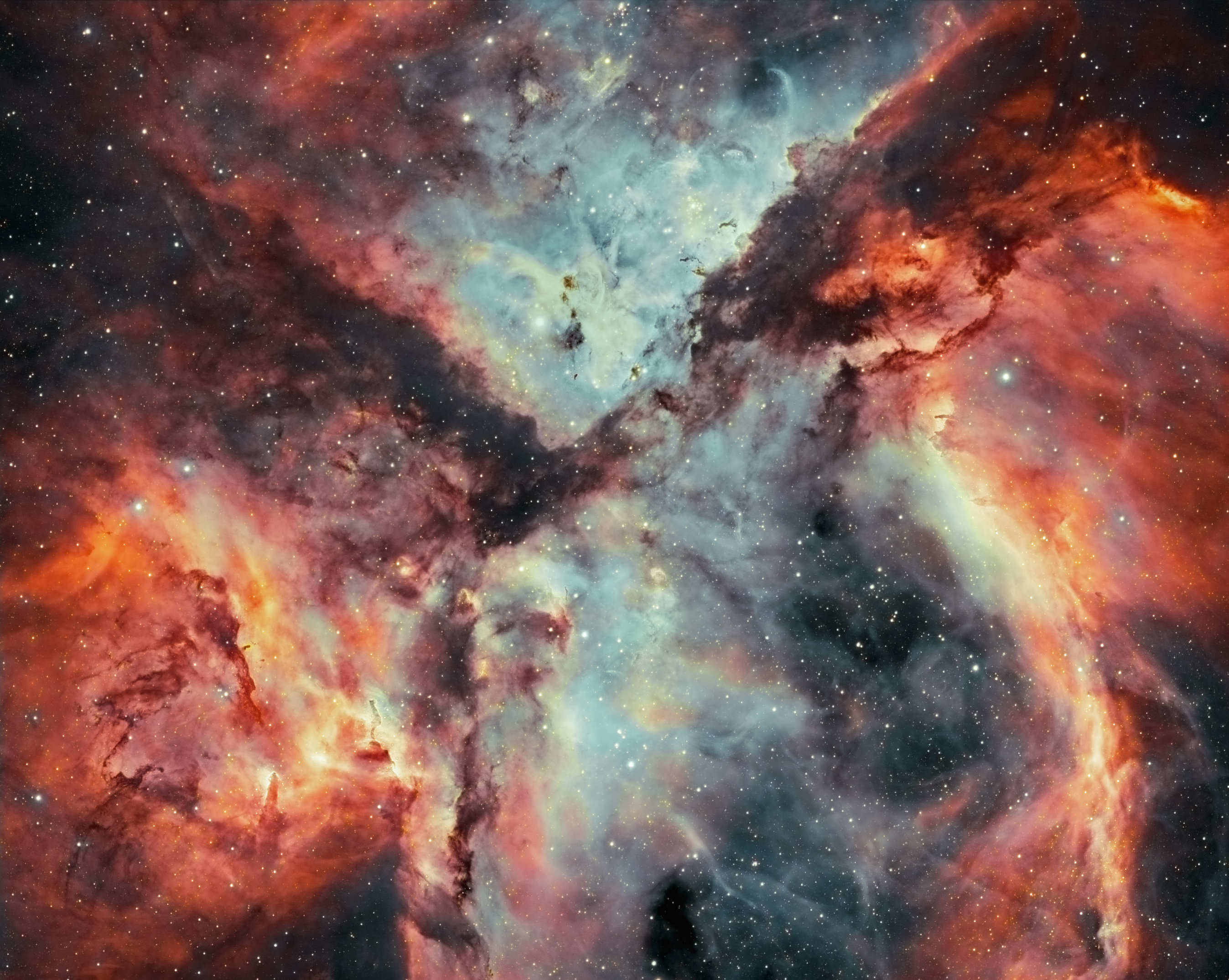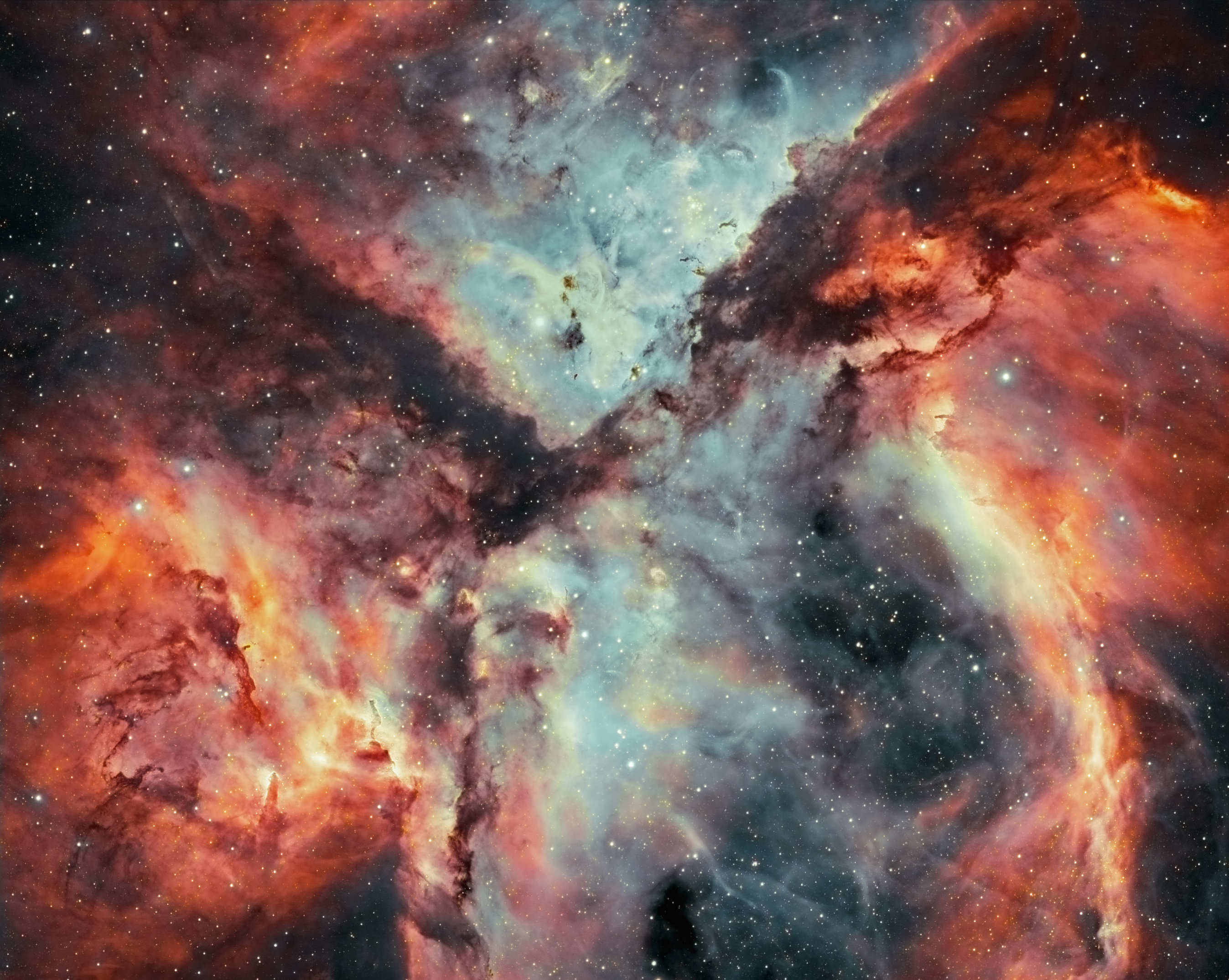
Chaos reigns in the Carina Nebula where massive stars form and die. Striking and detailed, this close-up of a portion of the famous nebula is a combination of light emitted by hydrogen (shown in red) and oxygen (shown in blue). Dramatic dark dust knots and complex features revealed are sculpted by the winds and radiation of Carina's massive and energetic stars. One iconic feature of the Carina Nebula is the dark V-shaped dust lane that occurs in the top half of the image. The Carina Nebula spans about 200 light years, lies about 7,500 light years distant, and is visible with binoculars toward the southern constellation of Carina. In a billion years after the dust settles -- or is destroyed, and the gas dissipates -- or gravitationally condenses, then only the stars will remain -- but not even the brightest ones.
El caos reina en la Nebulosa de Carina, donde se forman y mueren estrellas masivas. Esta imagen detallada de una parte de la famosa nebulosa combina la luz emitida por el hidrógeno (mostrada en rojo) y el oxígeno (mostrada en azul). Dramáticas manchas oscuras de polvo y complejas estructuras reveladas son moldeadas por los vientos y la radiación de las estrellas masivas y energéticas de la Nebulosa de Carina. Una característica icónica de la Nebulosa de Carina es la oscura banda de polvo en forma de V que aparece en la parte superior de la imagen. La Nebulosa de Carina abarca aproximadamente 200 años luz, se encuentra a unos 7.500 años luz de distancia y es visible con binóculos hacia la constelación austral de Carina. En un billón de años, después de que el polvo se asiente — o sea destruido, y el gas se disipe — o se condense gravitatoriamente, solo quedarán las estrellas — pero ni siquiera las más brillantes.