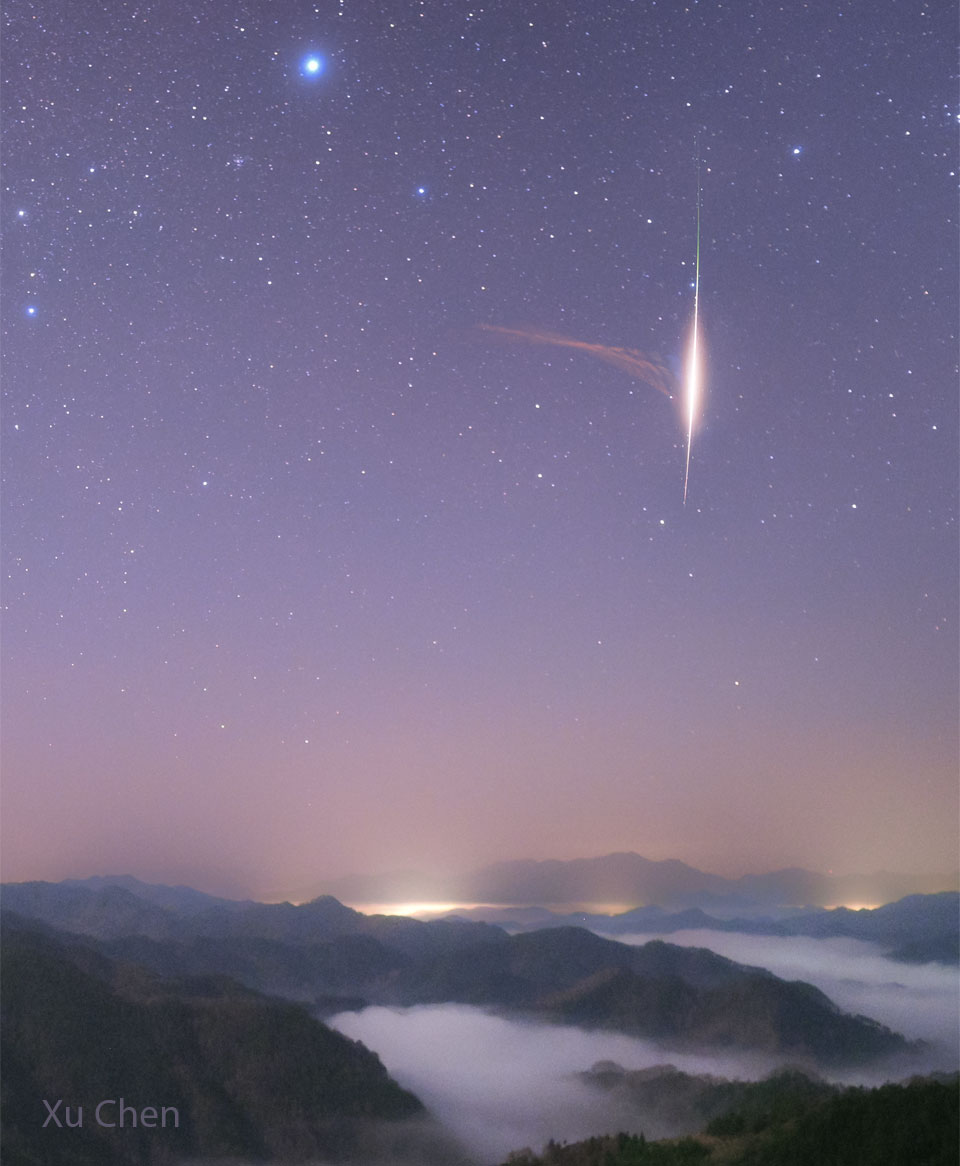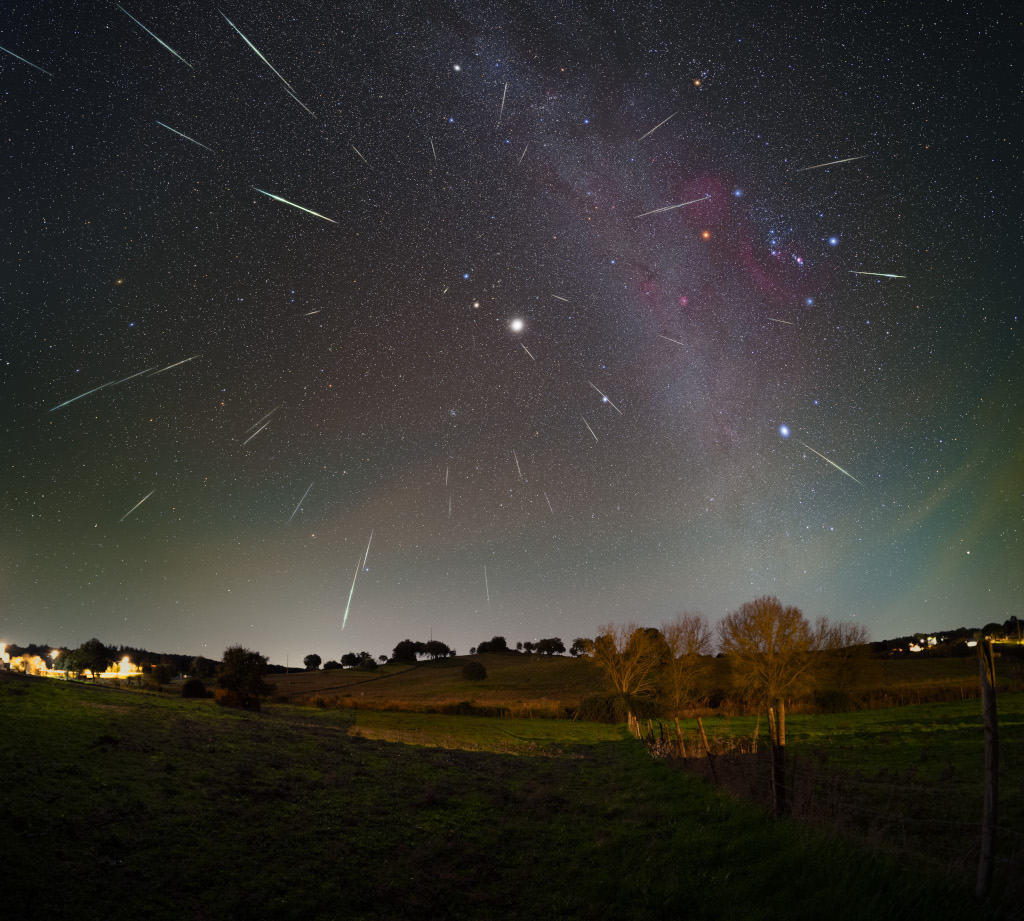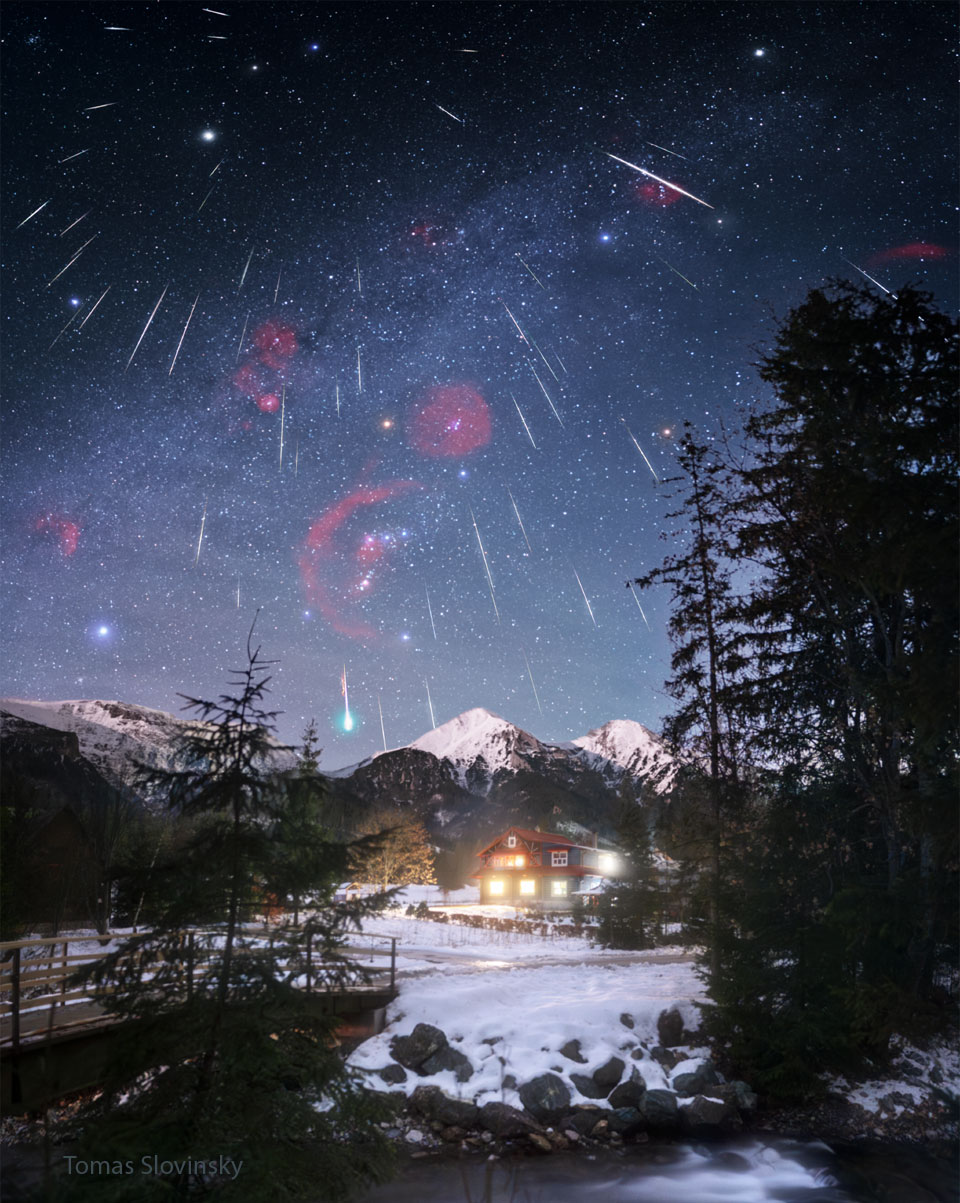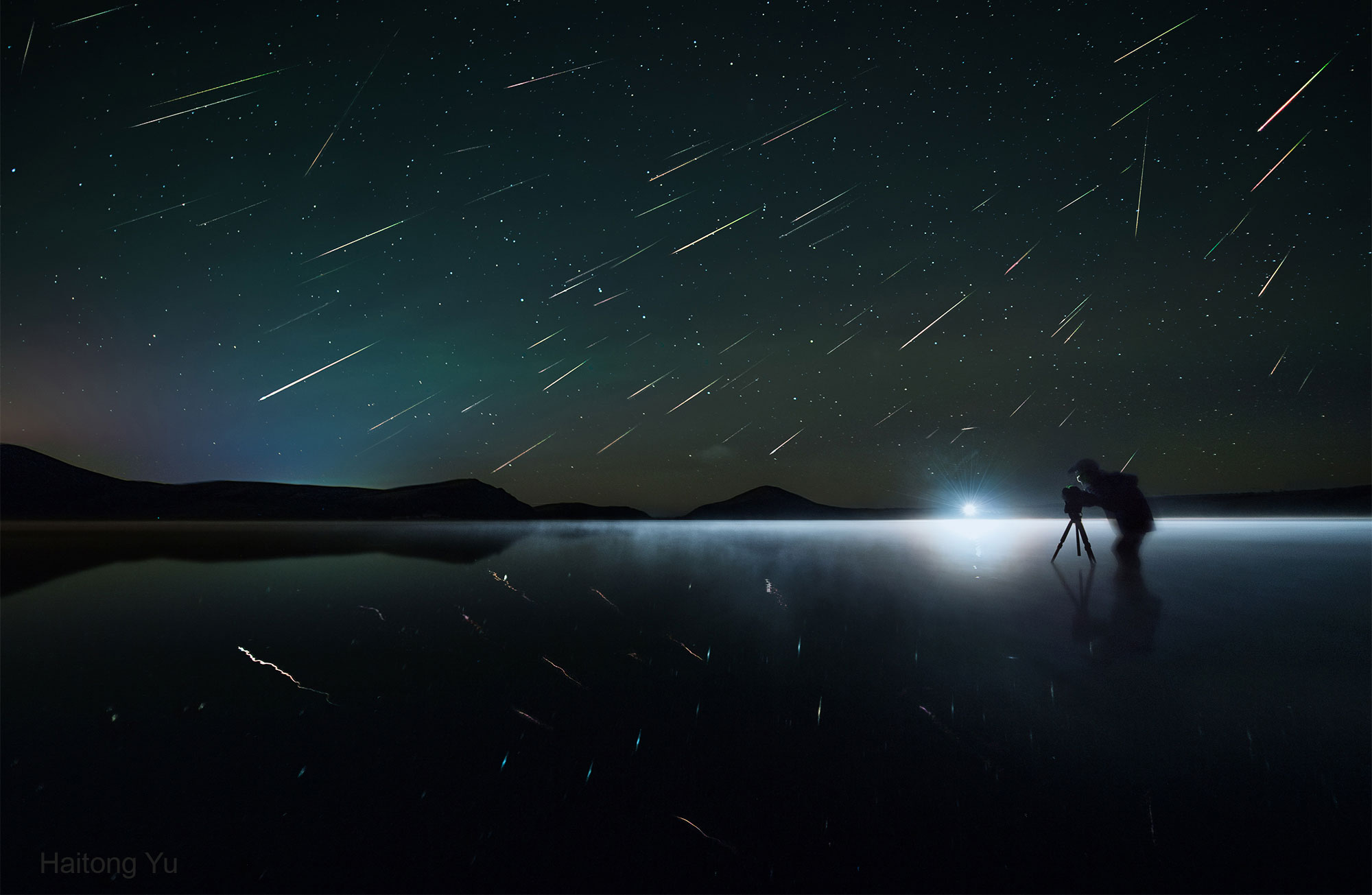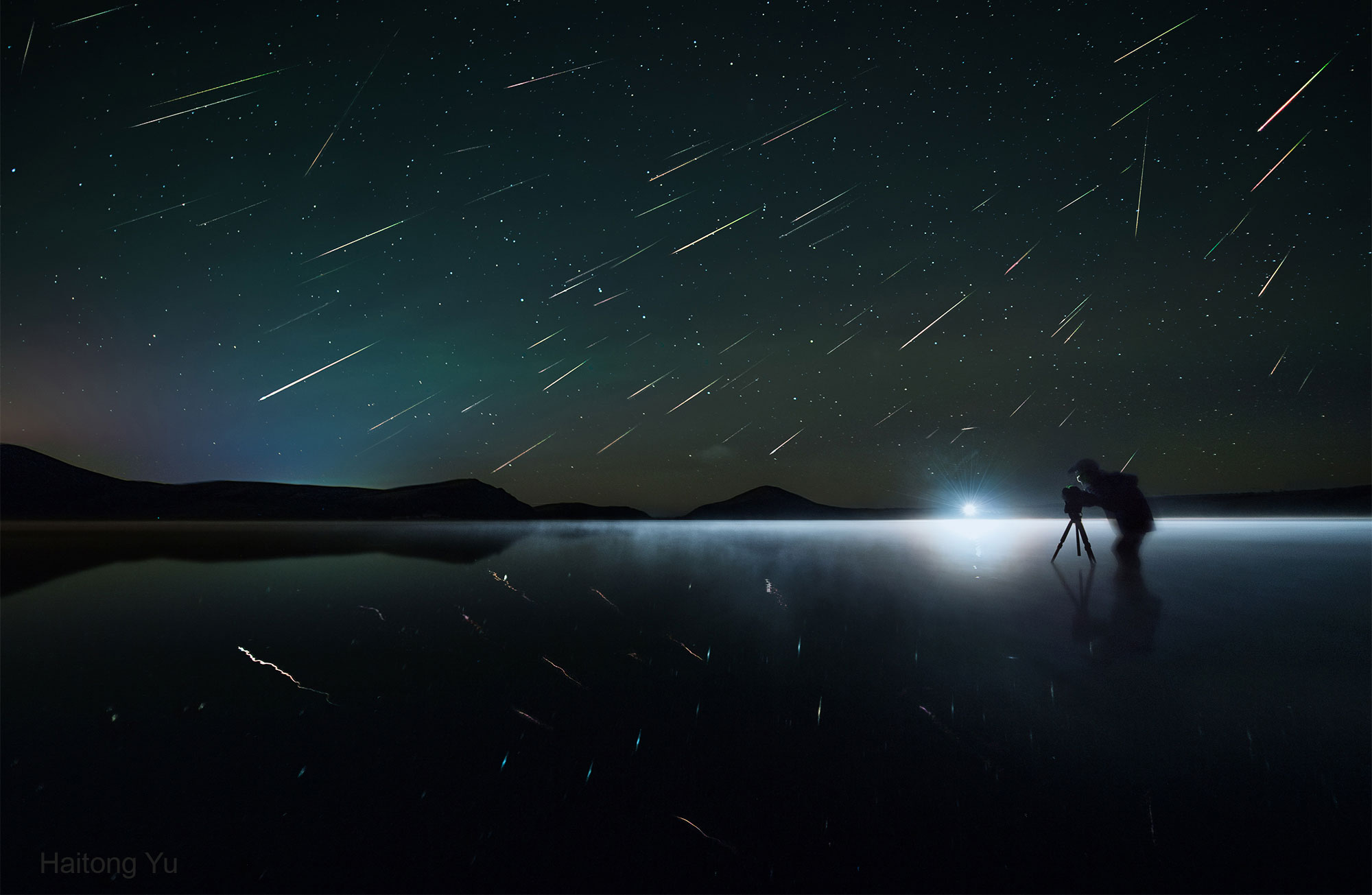
Did you ever get caught in a meteor shower? If yes, then every minute or so the sky sparked with fleeting flashes of light. This was the fate of the pictured astrophotographer during last year's Perseids meteor shower. During the featured three-hour image composite, about 90 Perseids rained down above Lake Duolun of Inner Mongolia, China. If you trace back the meteor streaks, you will find that most of them appear to radiate from a single constellation -- in this case Perseus. In fact, you can even tell which meteors are not Perseids because they track differently. Tonight promises to be another good night to get caught in a meteor shower because it is the peak for the Geminids. Gemini, the shower radiant, should rise shortly after sunset and be visible most of the night. Free APOD Lectures: January 5 in NYC & January 9 in DC
¿Alguna vez has estado atrapado en una lluvia de meteoros? Si es así, entonces cada minuto o así el cielo se iluminaba con destellos fugaces de luz. Este fue el destino del fotógrafo astronómico de la imagen durante la lluvia de meteoros de las Perseidas del año pasado. Durante la composición de tres horas que se muestra, aproximadamente 90 Perseidas cayeron sobre el lago Duolun de Mongolia Interior, China. Si trazas los rastros de los meteoros, encontrarás que la mayoría de ellos parecen originarse de una única constelación — en este caso, Perseo. De hecho, incluso puedes identificar cuáles meteoros no son Perseidas, ya que siguen trayectorias diferentes. Esta noche promete ser otra buena noche para estar atrapado en una lluvia de meteoros, ya que es el pico de la lluvia de las Geminidas. Géminis, el punto de radiación de la lluvia, debería aparecer poco después del atardecer y estar visible durante la mayor parte de la noche.