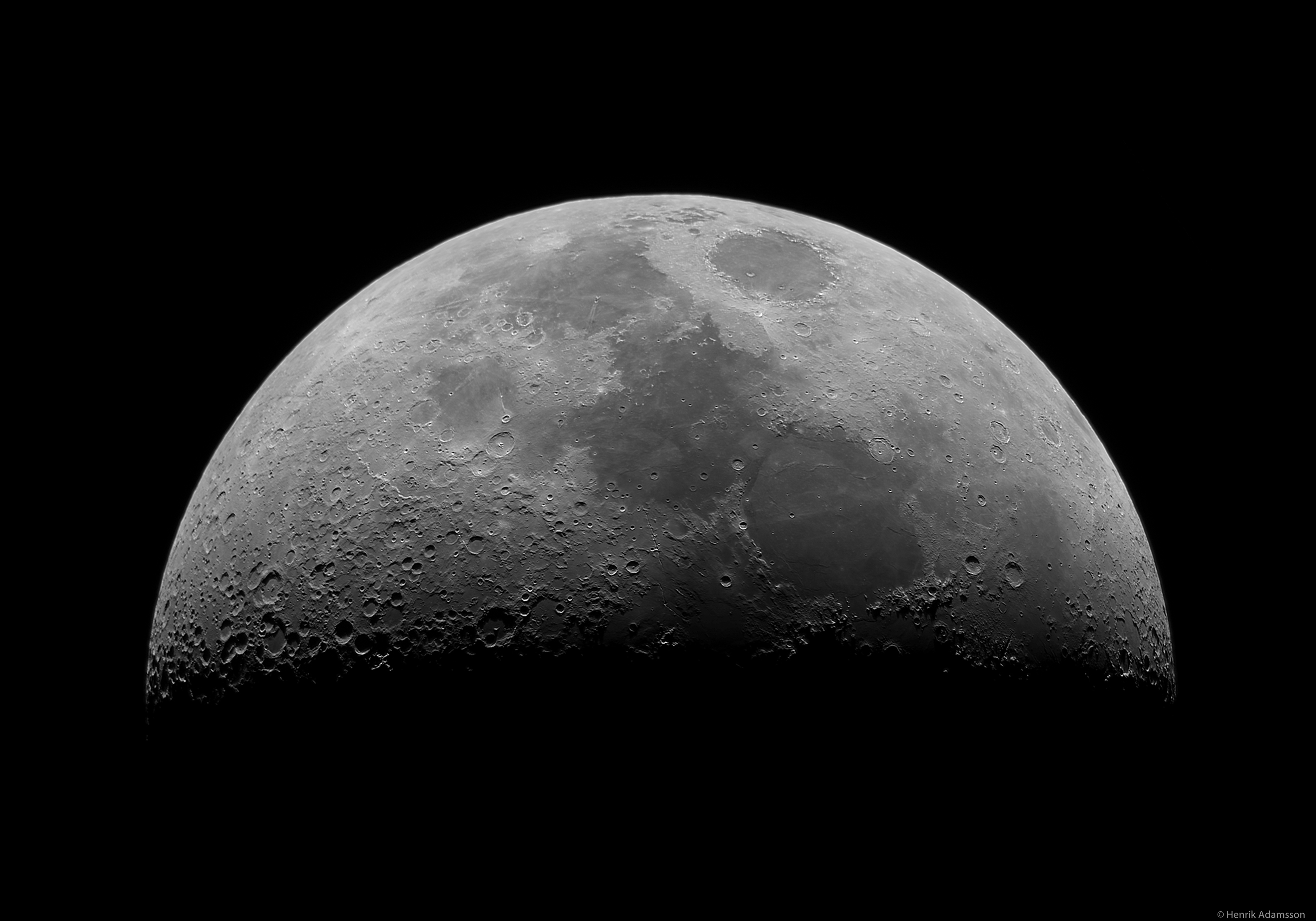
The striking X in this lunarscape is easily visible in binoculars or a small telescope, but not too many have seen it. The catch is, this lunar X is fleeting and only apparent in the hours before the Moon's first quarter phase. Along the shadow line between lunar day and night, the X illusion is produced by a configuration of craters seen here toward the left, Blanchinus, La Caille and Purbach. Near the Moon's first quarter phase, an astronaut standing close to the craters' position would see the slowly rising Sun very near the horizon. Temporarily, crater walls would be in sunlight while crater floors would still be in darkness. Seen from planet Earth, contrasting sections of bright walls against the dark floors by chance look remarkably like an X. This sharp image of the Lunar X was captured on February 22nd. For extra credit, sweep your gaze along the lunar terminator and you can also spot the Lunar V.
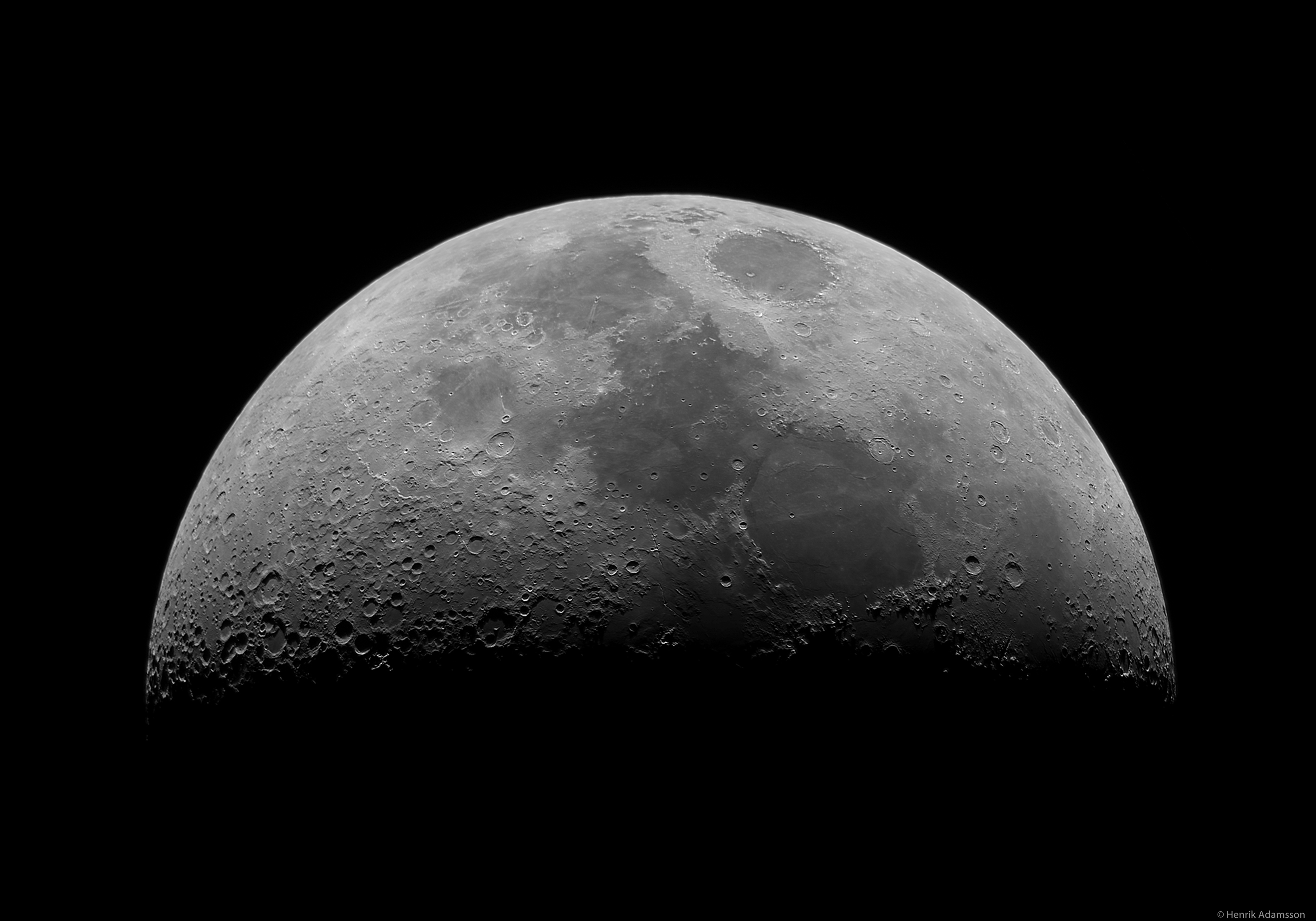
La llamativa X en esta escena lunar es fácilmente visible con binoculares o un pequeño telescopio, pero no muchos la han visto. El problema es que esta X lunar es efímera y solo es visible durante las horas anteriores a la fase de cuarto creciente de la Luna. A lo largo de la línea de sombra entre el día y la noche lunar, la ilusión de la X es producida por una configuración de cráteres que se ven aquí hacia la izquierda: Blanchinus, La Caille y Purbach. Cerca de la fase de cuarto creciente de la Luna, un astronauta parado cerca de la posición de los cráteres vería el Sol ascendiendo lentamente muy cerca del horizonte. Temporalmente, las paredes de los cráteres estarían iluminadas por el Sol, mientras que sus fondos aún permanecerían en la oscuridad. Visto desde la Tierra, las secciones brillantes de las paredes en contraste con los oscuros fondos de los cráteres por casualidad se parecen notablemente a una X. Esta imagen nítida de la X Lunar fue capturada el 22 de febrero. Para crédito adicional, desplaza tu mirada a lo largo del terminador lunar y también podrás localizar la V Lunar.