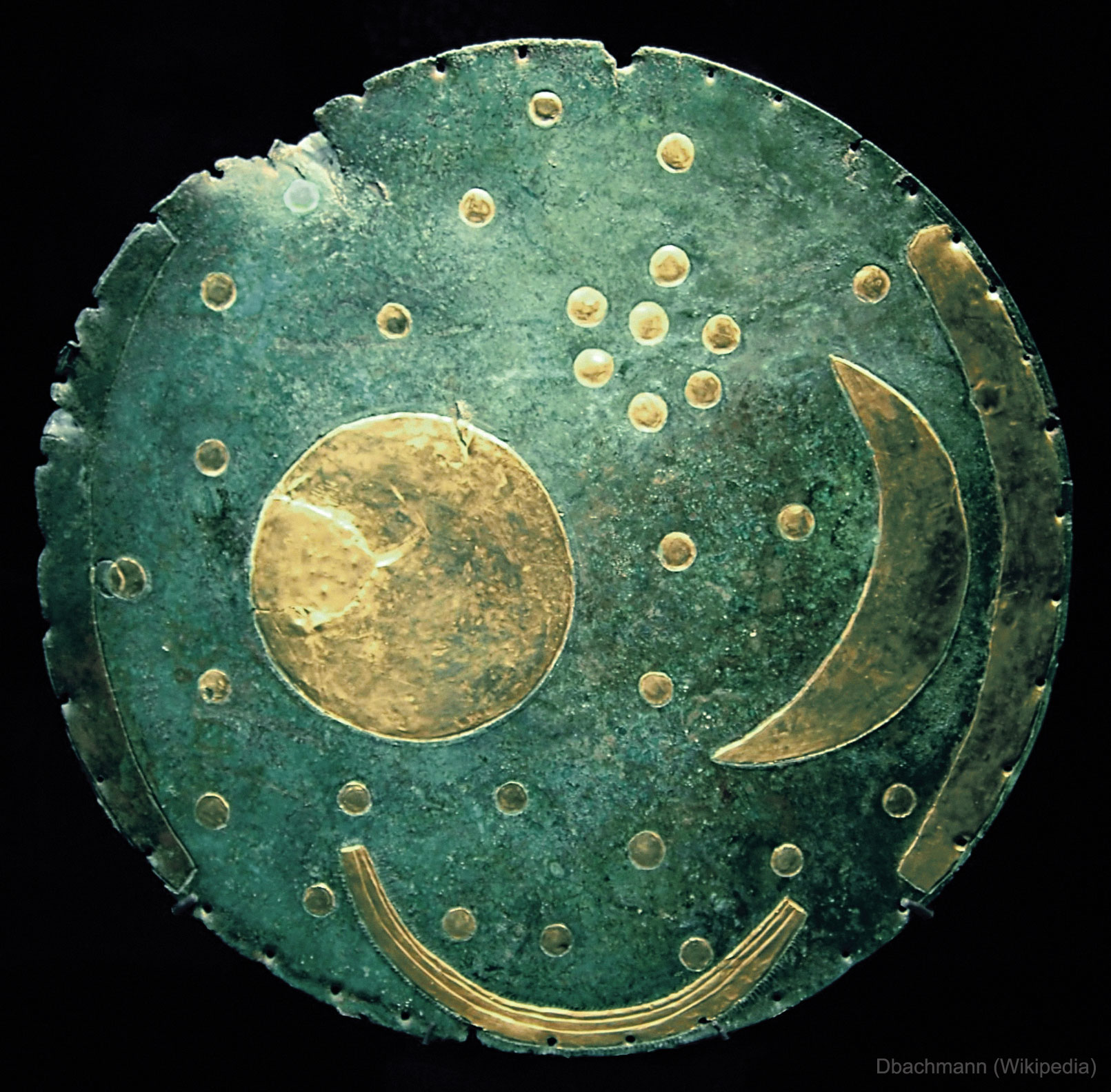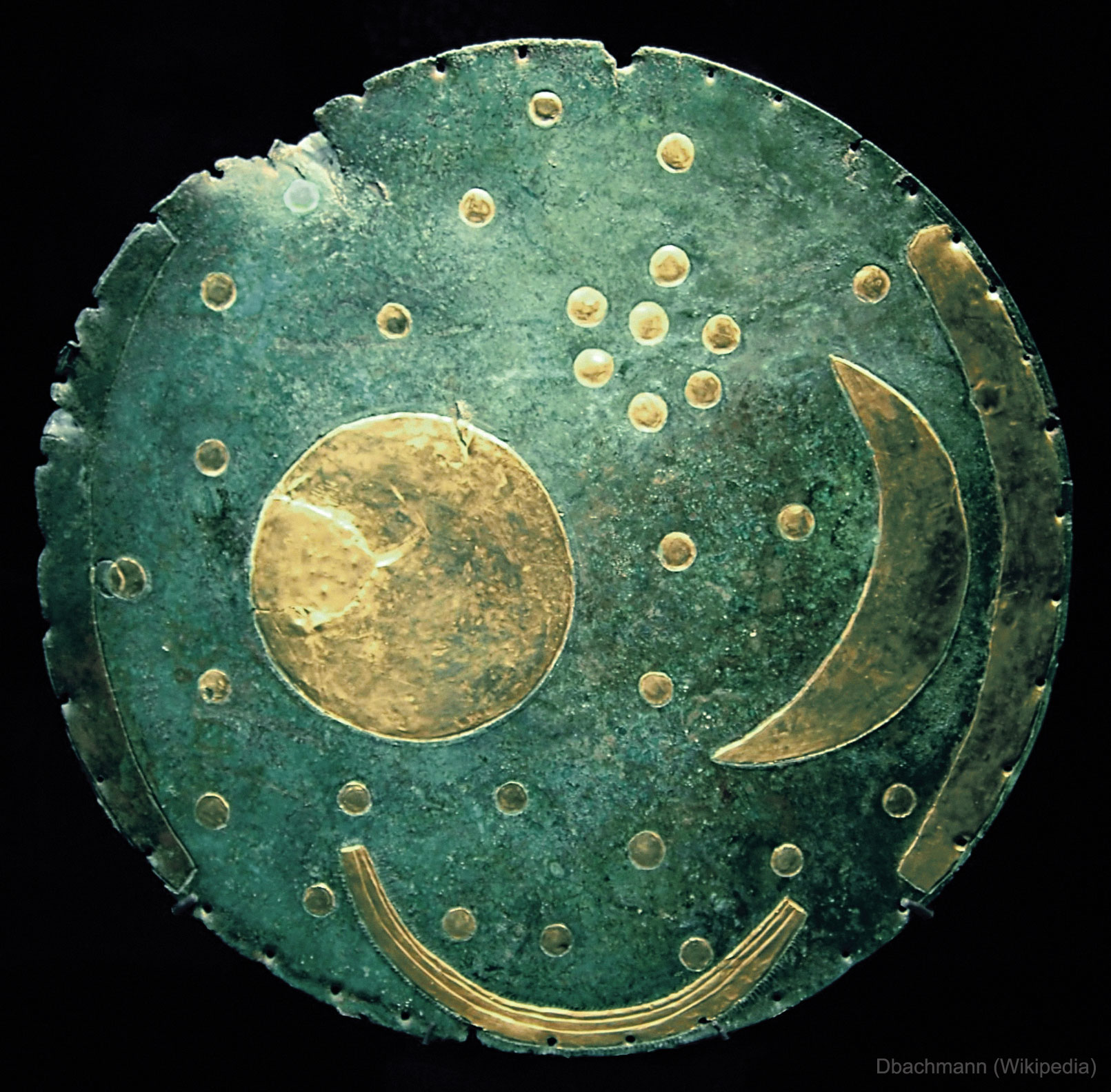
Some consider it the oldest known illustration of the night sky. But what, exactly, does it depict, and why was it made? The Nebra sky disk was found with a metal detector in 1999 by treasure hunters near Nebra, Germany, in the midst of several bronze-age weapons. The ancient artifact spans about 30 centimeters and has been associated with the Unetice culture that inhabited part of Europe around 1600 BC. Reconstructed, the dots are thought to represent stars, with the cluster representing the Pleiades, and the large circle and the crescent representing the Sun and Moon. The purpose of the disk remains unknown -- hypotheses including an astronomical clock, a work of art, and a religious symbol. Valued at about $11 million, some believe that the Nebra sky disk is only one of a pair, with the other disk still out there waiting to be discovered.
Algunos lo consideran la ilustración más antigua conocida del cielo nocturno. Pero ¿qué representa exactamente, y por qué fue creado? El disco celeste de Nebra fue encontrado con un detector de metales en 1999 por cazatesoros cerca de Nebra, Alemania, junto a varios armamentos de la Edad del Bronce. El antiguo artefacto tiene aproximadamente 30 centímetros de diámetro y se ha asociado con la cultura Unetice, que habitó parte de Europa alrededor del 1600 a.C. Reconstituido, se cree que los puntos representan estrellas, con el grupo representando a las Pléyades, y el gran círculo y el creciente representando al Sol y la Luna. El propósito del disco sigue siendo desconocido, con hipótesis que incluyen un reloj astronómico, una obra de arte y un símbolo religioso. Valorado en aproximadamente 11 millones de dólares, algunos creen que el disco celeste de Nebra es solo uno de un par, con el otro disco aún por descubrir.