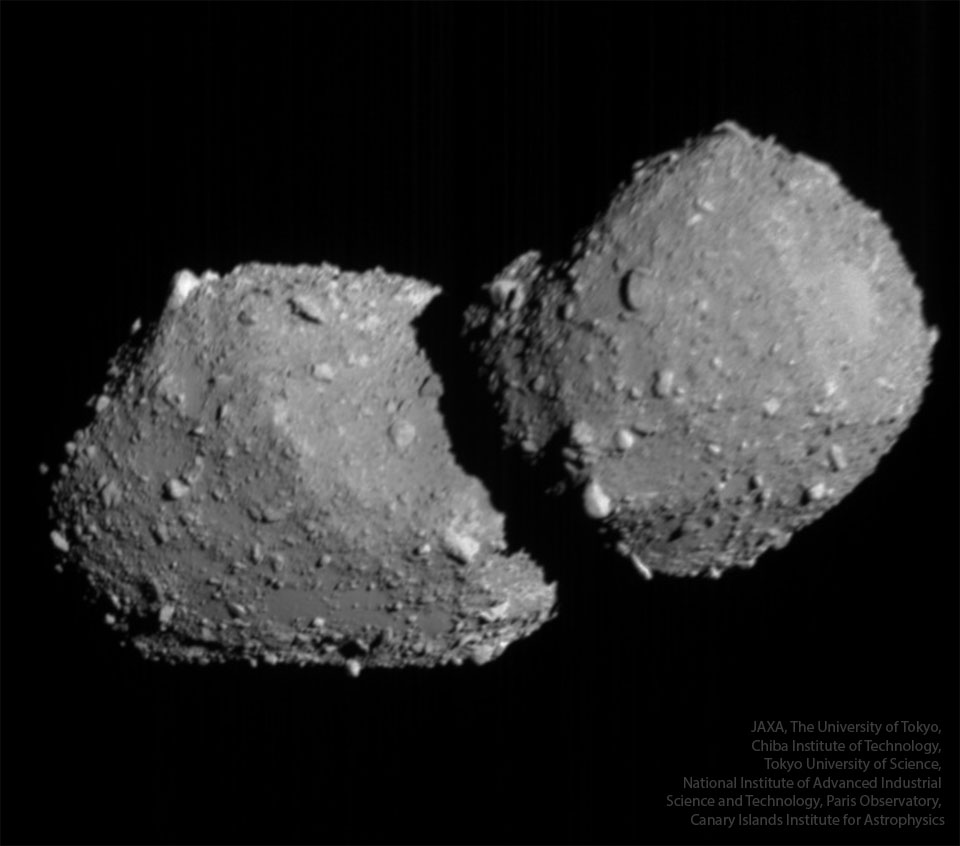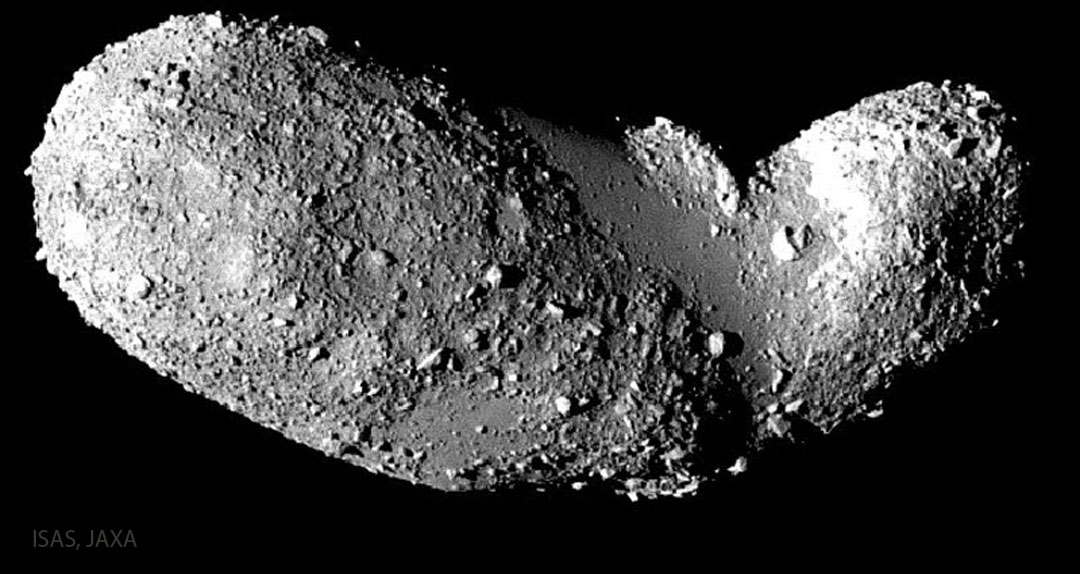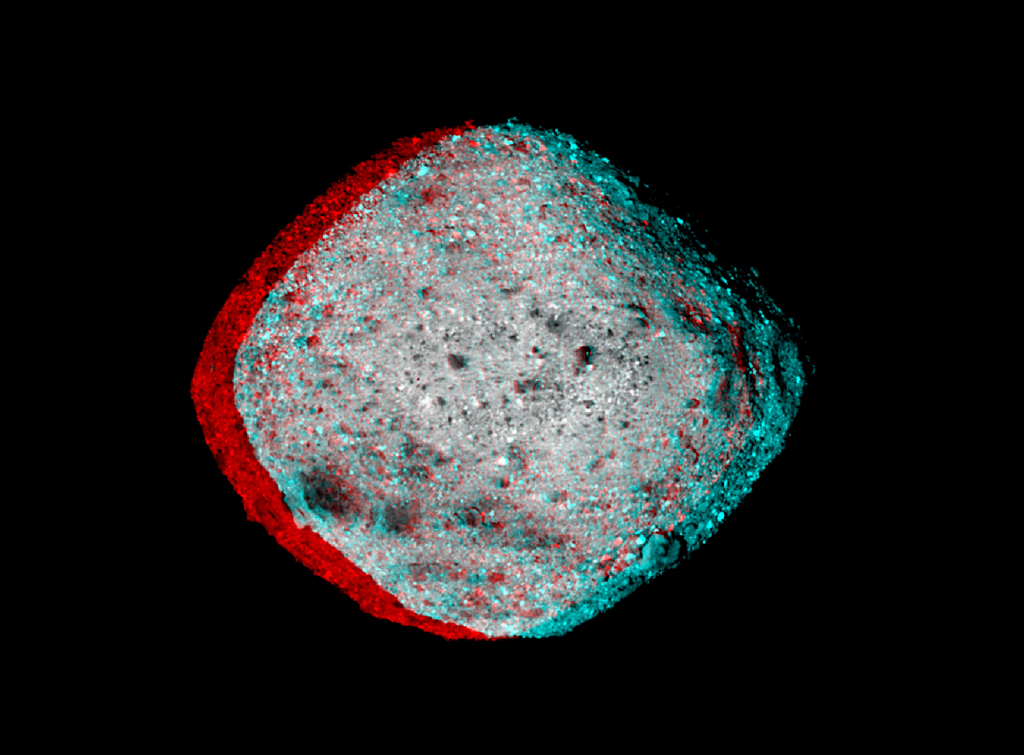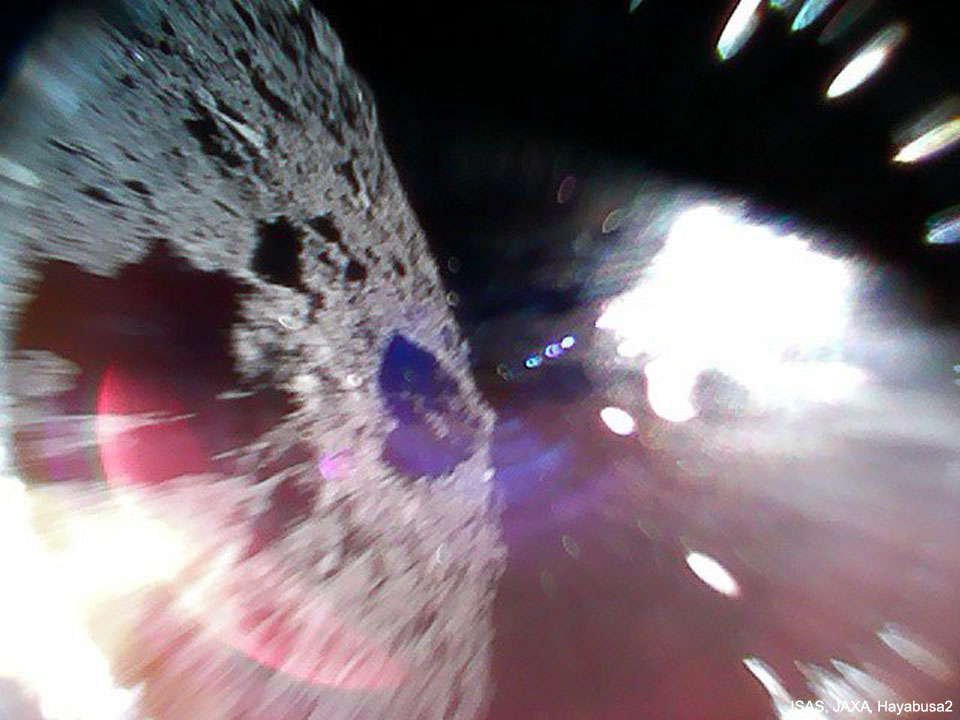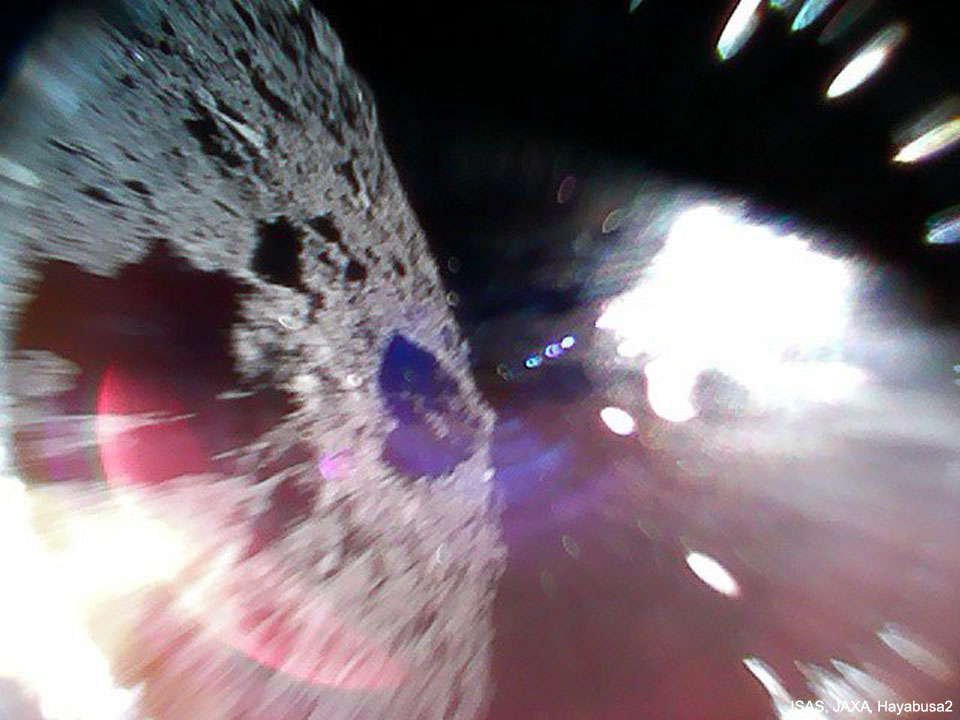
Two small robots have begun hopping around the surface of asteroid Ryugu. The rovers, each the size of a small frying pan, move around the low gravity of kilometer-sized 162173 Ryugu by hopping, staying aloft for about 15 minutes and typically landing again several meters away. On Saturday, Rover 1A returned an early picture of its new home world, on the left, during one of its first hops. On Friday, lander MINERVA-II-1 detached from its mothership Hayabusa2, dropped Rovers 1A and 1B, and then landed on Ryugu. Studying Ryugu could tell humanity not only about Ryugu's surface and interior, but about what materials were available in the early Solar System for the development of life. Two more hopping rovers are planned for release, and Hayabusa2 itself is scheduled to collect a surface sample from Ryugu and return it to Earth for detailed analysis before 2021.
Dos pequeños robots han comenzado a saltar sobre la superficie del asteroide Ryugu. Los rovers, de tamaño similar a una pequeña sartén, se mueven sobre la baja gravedad del asteroide 162173 Ryugu saltando, permaneciendo en el aire durante aproximadamente 15 minutos y aterrizando típicamente varios metros más allá. El sábado, el rover 1A regresó una imagen temprana de su nuevo mundo, mostrada a la izquierda, durante uno de sus primeros saltos. El viernes, el módulo de aterrizaje MINERVA-II-1 se separó de su nave nodriza Hayabusa2, dejó caer los rovers 1A y 1B, y luego aterrizó en Ryugu. Estudiar Ryugu podría revelar no solo información sobre su superficie y su interior, sino también sobre los materiales disponibles en el Sistema Solar primitivo para el desarrollo de la vida. Se planea liberar dos rovers adicionales, y la nave Hayabusa2 está programada para recoger una muestra de la superficie de Ryugu y devolverla a la Tierra para un análisis detallado antes de 2021.