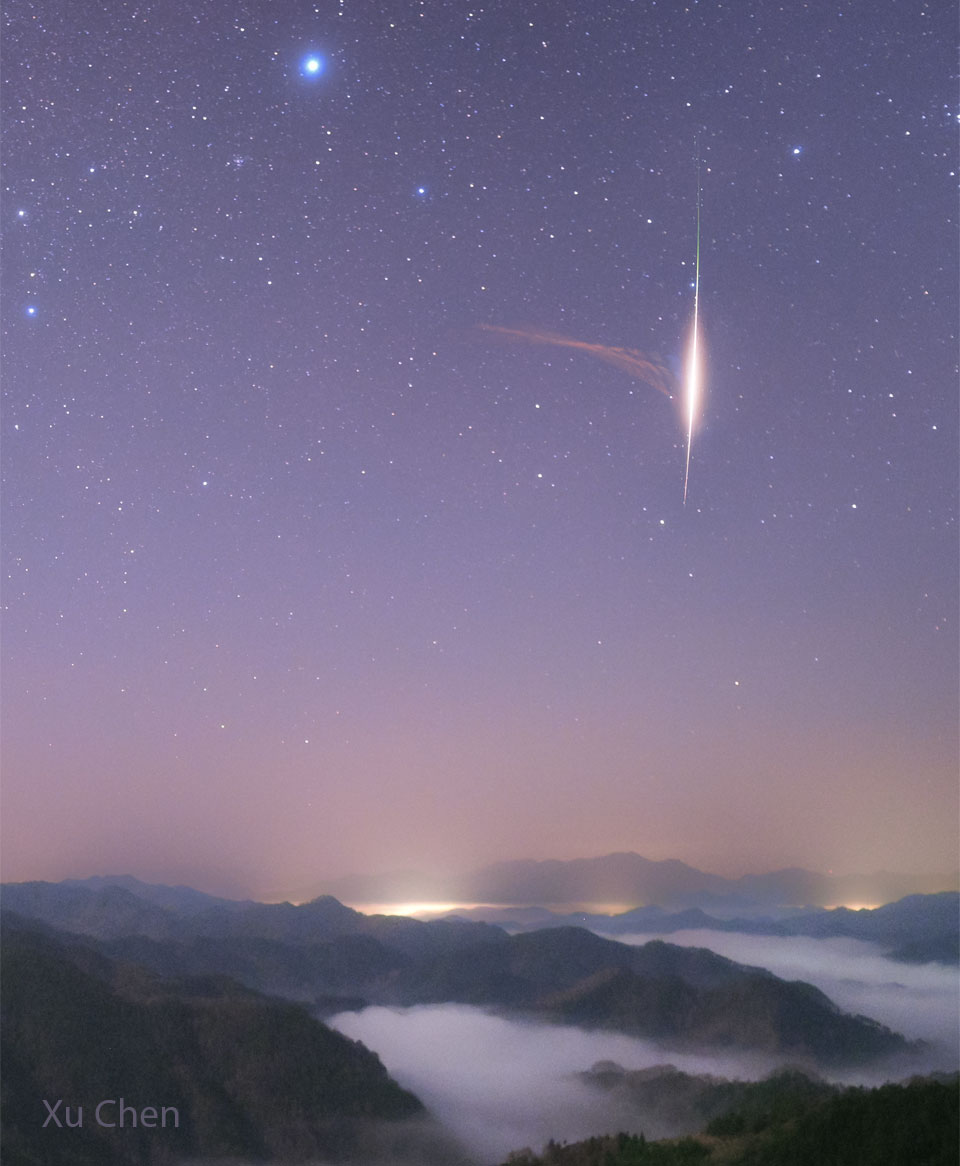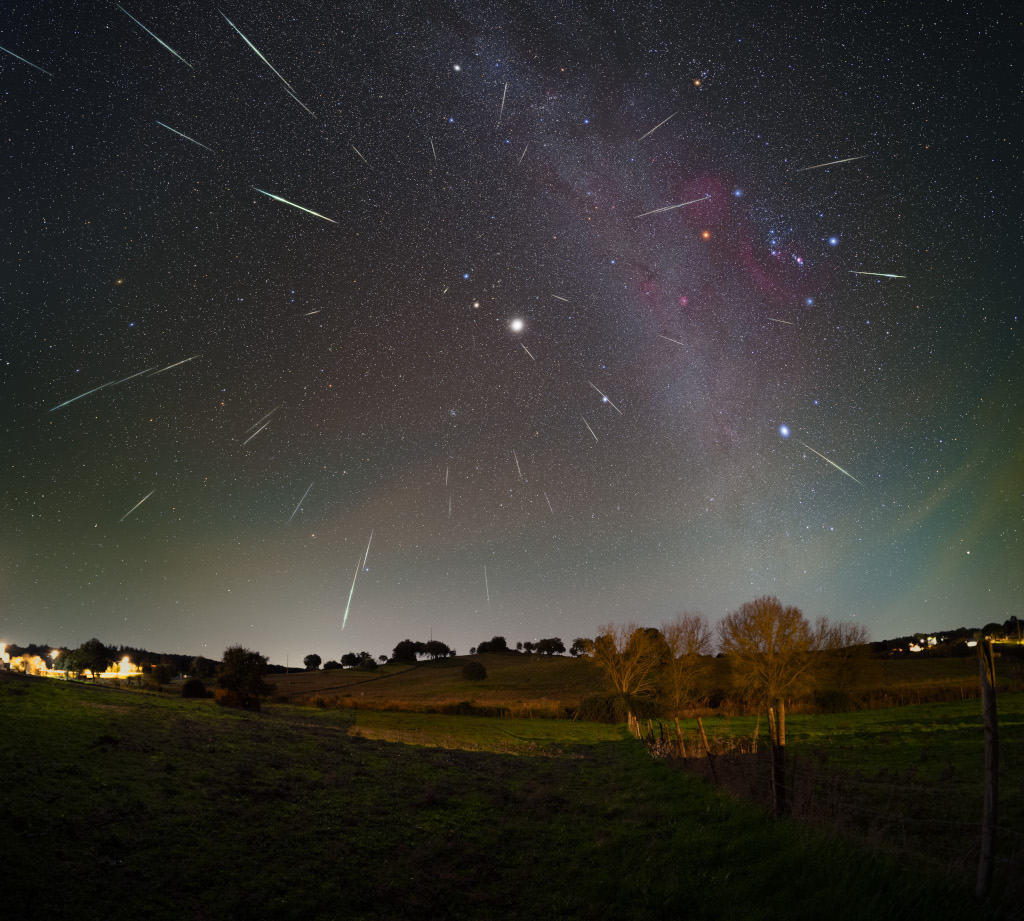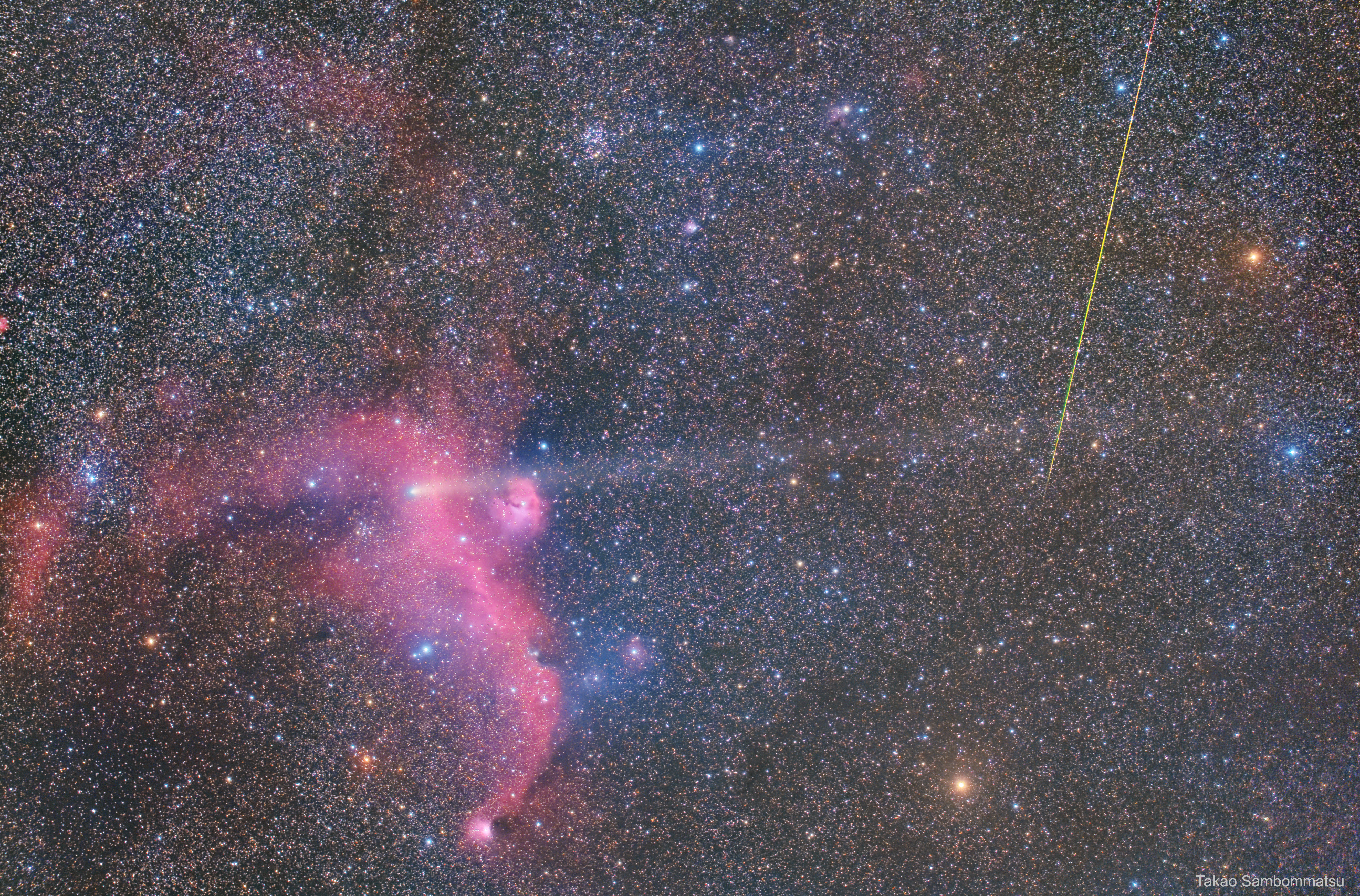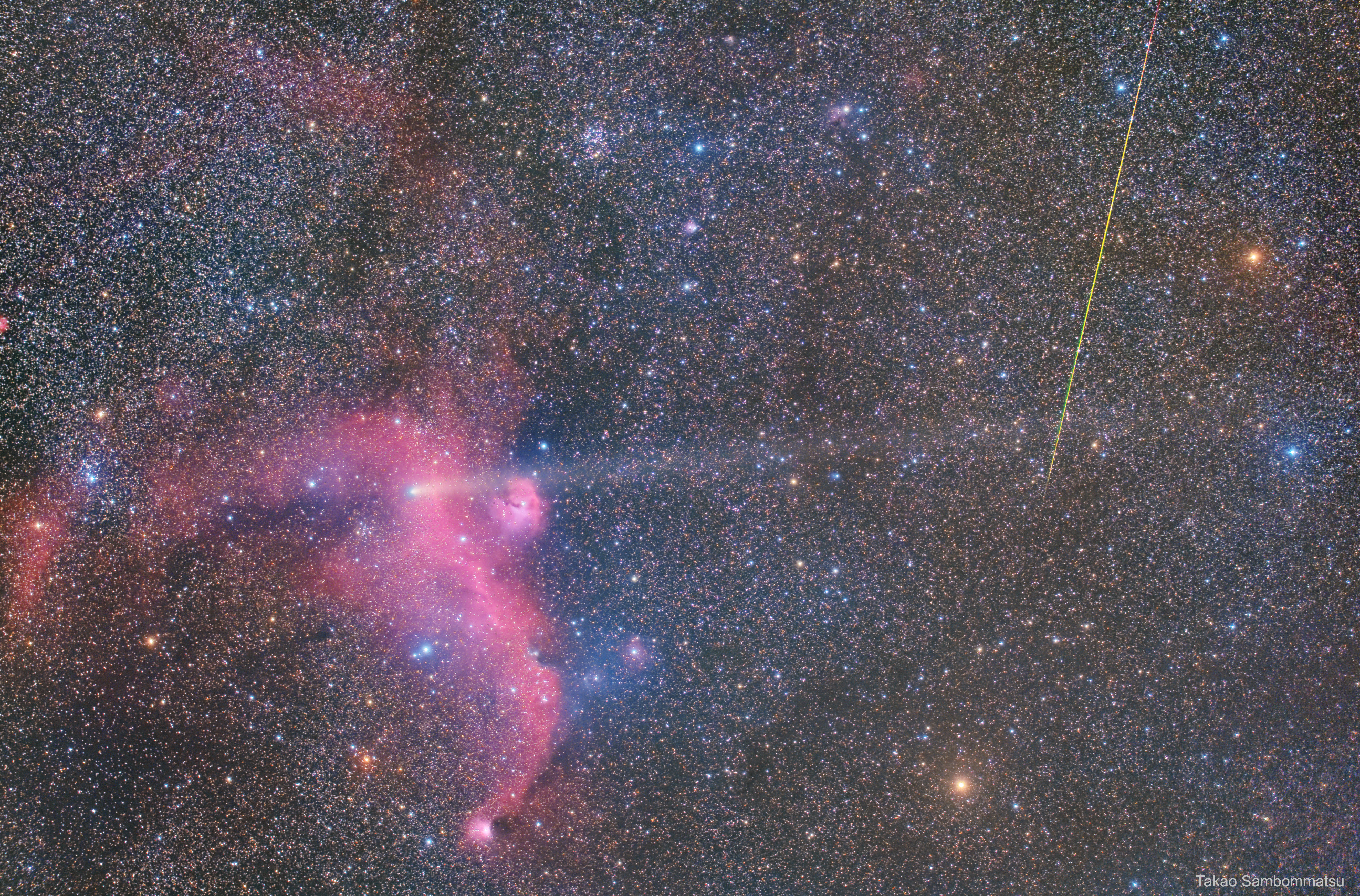
A meteor, a comet, and a photogenic nebula have all been captured in this single image. The closest and most fleeting is the streaking meteor on the upper right -- it was visible for less than a second. The meteor, which disintegrated in Earth's atmosphere, was likely a small bit of debris from the nucleus of Comet 21P/Giacobini-Zinner, coincidentally the comet captured in the same image. Comet 21P, pictured across the inner Solar System from Earth, is distinctive for its long dust tail spread horizontally across the image center. This comet has been visible with binoculars for the past few months but is now fading as it heads back out to the orbit of Jupiter. Farthest out at 3,500 light years distant is the IC 2177, the Seagull Nebula, visible on the left. The comparatively vast Seagull Nebula, with a wingspan on order 250 light-years, will likely remain visible for hundreds of thousands of years. Long exposures, taken about two weeks ago from Iwaki-City in Japan, were combined to capture the image's faintest elements. You, too, could see a meteor like this -- and perhaps sooner than you might think: tonight is the peak of the Orionids meteor shower.
Un meteorito, un cometa y una nebulosa fotogénica han sido capturados en esta única imagen. El más cercano y efímero es el meteorito que se ve en la parte superior derecha, visible durante menos de un segundo. El meteorito, que se desintegró en la atmósfera terrestre, probablemente era un pequeño fragmento del núcleo del cometa 21P/Giacobini-Zinner, coincidentemente el cometa capturado en la misma imagen. El cometa 21P, mostrado desde la Tierra en el sistema solar interior, es distintivo por su larga cola de polvo extendida horizontalmente a través del centro de la imagen. Este cometa ha sido visible con binoculares durante los últimos meses, pero ahora está desapareciendo a medida que se aleja hacia la órbita de Júpiter. A 3500 años luz de distancia, la más lejana, se encuentra la IC 2177, la Nebulosa Gaviota, visible a la izquierda. La comparativamente vasta Nebulosa Gaviota, con un envergadura de alrededor de 250 años luz, probablemente permanecerá visible durante cientos de miles de años. Exposiciones largas, tomadas hace aproximadamente dos semanas desde Iwaki-City en Japón, se combinaron para capturar los elementos más tenues de la imagen. Tú también podrías ver un meteorito como este, y quizás antes de lo que piensas: esta noche es el pico de la lluvia de meteoros de las Orionídeas.