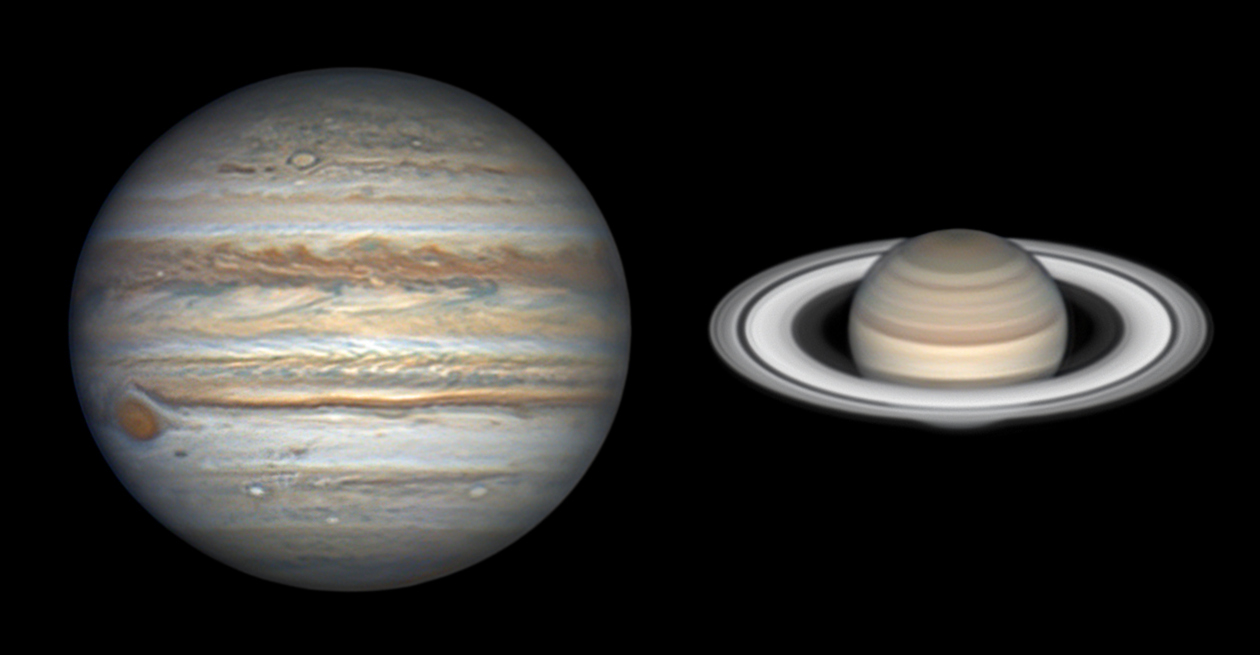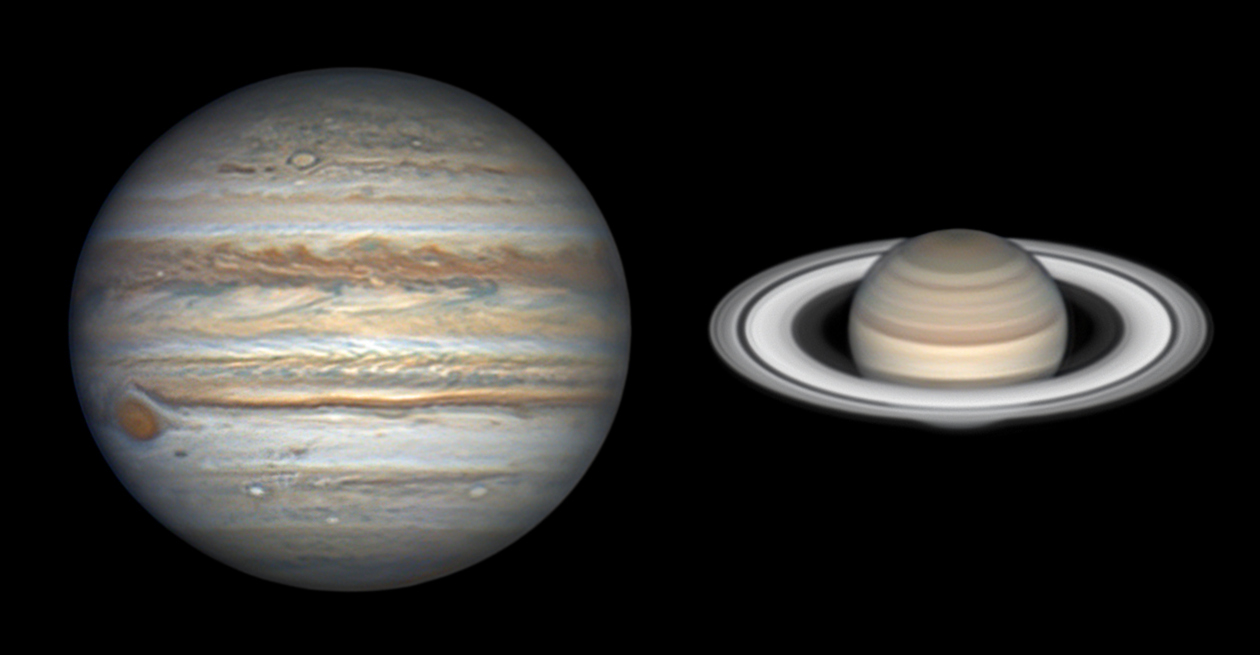
As Comet NEOWISE sweeps through northern summer skies, Jupiter and Saturn are shining brightly, near opposition. With Jupiter opposite the Sun on July 14 and Saturn on July 21, the giant planets are still near their closest to planet Earth in 2020. Sharing the constellation Sagittarius they are up all night, and offer their best and brightest views at the telescope. Both captured on July 22 from a balcony in Paris these two sharp telescopic images don't disappoint, showing off what the giant planets are famous for, Saturn's bright rings and Jupiter's Great Red Spot. These giants of the Solar System are worth following during 2020. On December 21, skygazers can watch the once-in-20-year great conjunction of Jupiter and Saturn. Comet NEOWISE images from planet Earth: July 28, 27, 26, 25, 24
Mientras el cometa NEOWISE recorre los cielos del verano boreal, Júpiter y Saturno brillan intensamente, cerca de la oposición. Con Júpiter opuesto al Sol el 14 de julio y Saturno el 21 de julio, los planetas gigantes aún están cerca de su punto más cercano a la Tierra en 2020. Compartiendo la constelación de Sagitario, permanecen visibles toda la noche, y ofrecen sus mejores y más brillantes vistas a través del telescopio. Ambos fueron capturados el 22 de julio desde un balcón en París, estas dos imágenes telescópicas nítidas no decepcionan, mostrando lo que los planetas gigantes son famosos por: los anillos brillantes de Saturno y la Mancha Roja de Júpiter. Estos gigantes del Sistema Solar valen la pena seguirlos durante 2020. El 21 de diciembre, los observadores del cielo podrán ver la gran conjunción de Júpiter y Saturno, un fenómeno que ocurre una vez cada 20 años. Imágenes del cometa NEOWISE desde la Tierra: 28, 27, 26, 25, 24 de julio.