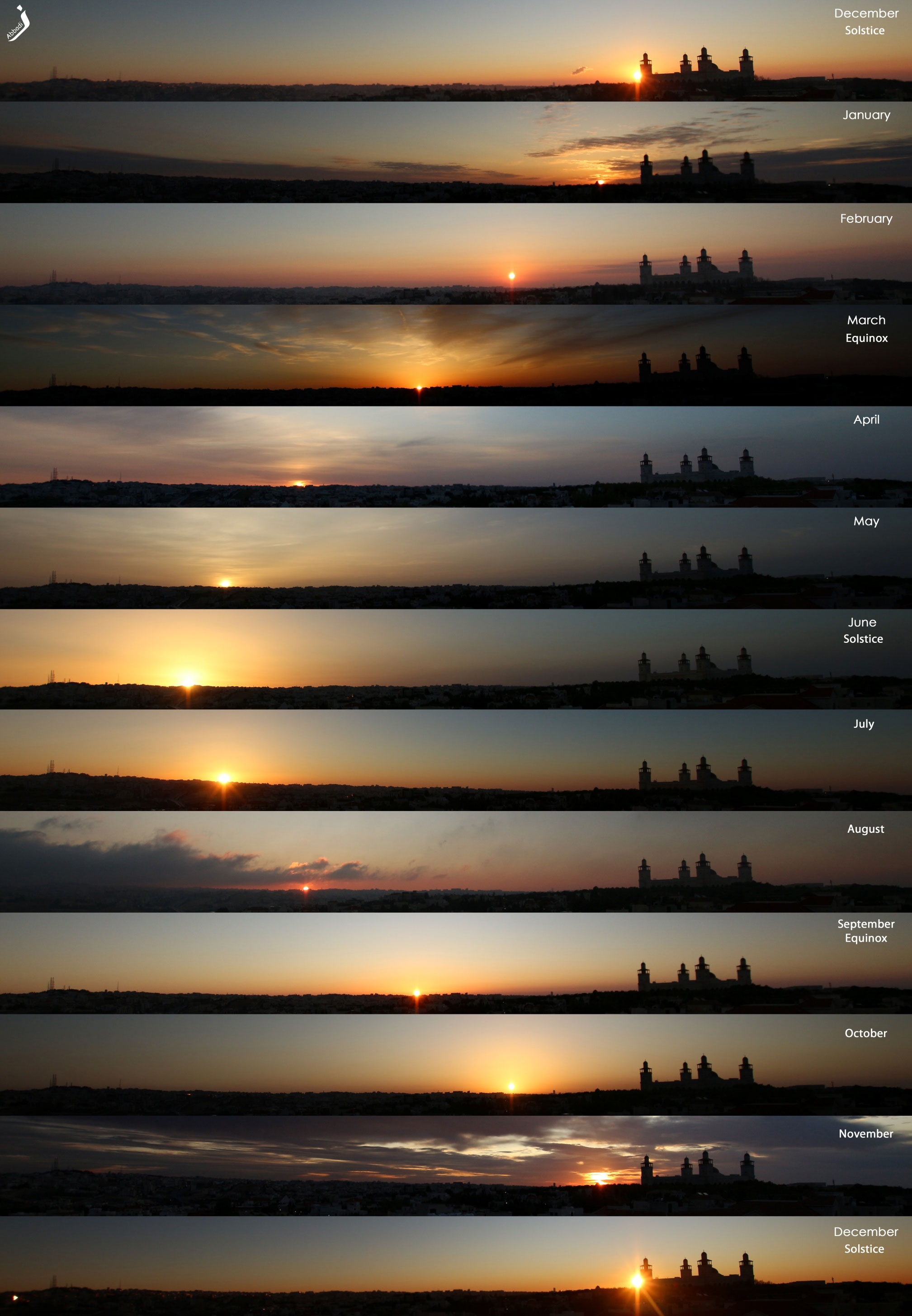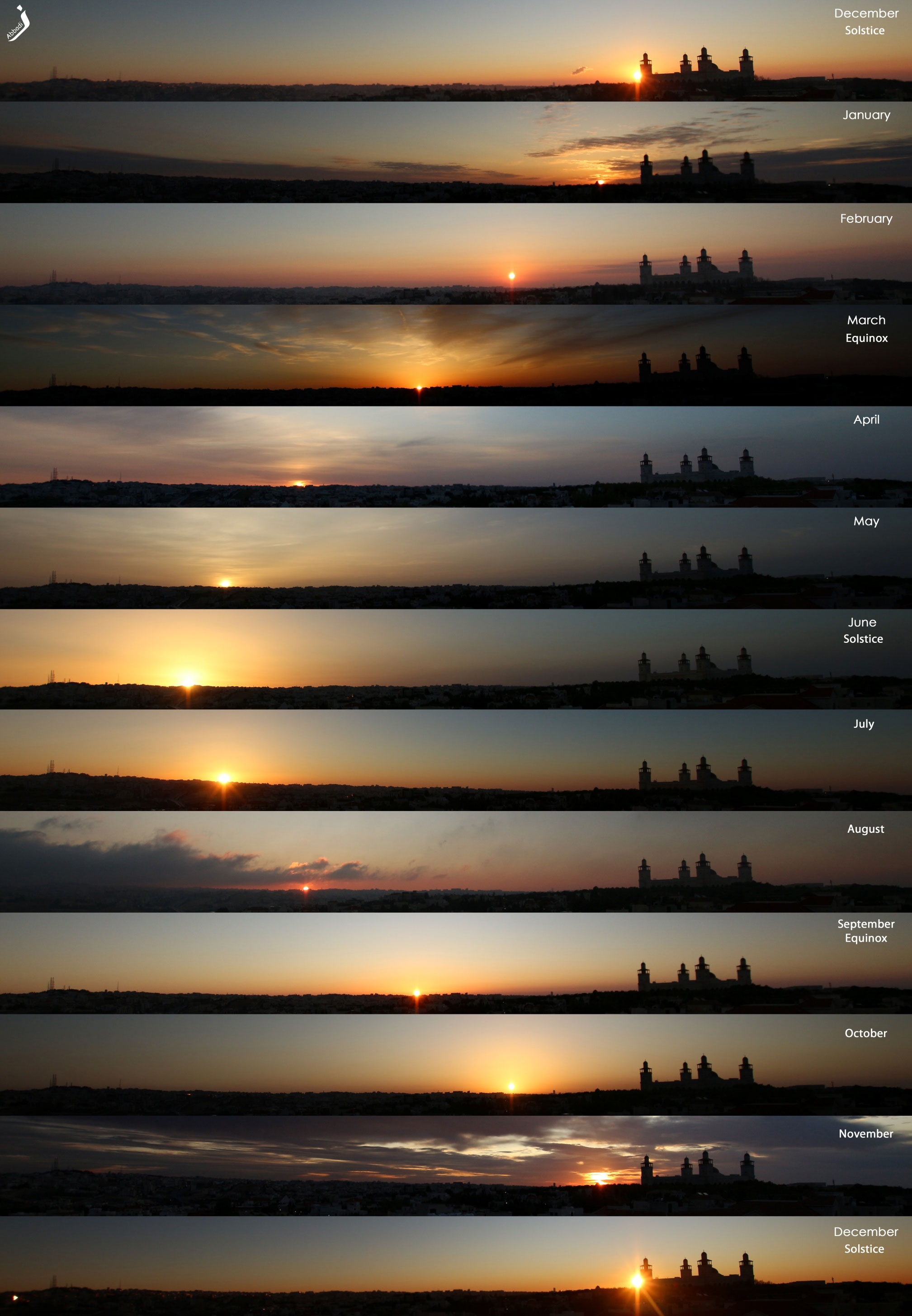
Does the Sun always rise in the same direction? No. As the months change, the direction toward the rising Sun changes, too. The featured image shows the direction of sunrise every month during 2019 as seen from near the city of Amman, Jordan. The camera in the image is always facing due east, with north toward the left and south toward the right. Although the Sun always rises in the east in general, it rises furthest to the south of east on the December solstice, and furthest north of east on the June solstice. Today is the December solstice, the day of least sunlight in the Northern Hemisphere and of most sunlight in the Southern Hemisphere. In many countries, the December Solstice is considered an official change in season: for example the first day of winter in the North. Solar heating and stored energy in the Earth's surface and atmosphere are near their lowest during winter, making the winter months usually the coldest of the year. On the brighter side, in the north, daylight hours will now increase every day from until June. Sunset: The Great Conjunction of Jupiter & Saturn
¿Siempre amanece el Sol en la misma dirección? No. A medida que cambian los meses, también cambia la dirección hacia la que amanece el Sol. La imagen mostrada presenta la dirección del amanecer cada mes durante el año 2019, vista desde cerca de la ciudad de Ammán, Jordania. La cámara en la imagen siempre mira exactamente hacia el este, con el norte a la izquierda y el sur a la derecha. Aunque el Sol siempre amanece en el este en general, amanece más al sur del este en el solsticio de diciembre, y más al norte del este en el solsticio de junio. Hoy es el solsticio de diciembre, el día con menos luz solar en el Hemisferio Norte y con más luz solar en el Hemisferio Sur. En muchos países, el solsticio de diciembre se considera un cambio oficial de estación: por ejemplo, el primer día de invierno en el norte. El calentamiento solar y la energía almacenada en la superficie y la atmósfera de la Tierra alcanzan sus mínimos durante el invierno, lo que hace que los meses de invierno suelen ser los más fríos del año. Por otro lado, en el norte, las horas de luz del día comenzarán a aumentar cada día hasta junio. Puesta de Sol: La Gran Conjunction de Júpiter y Saturno