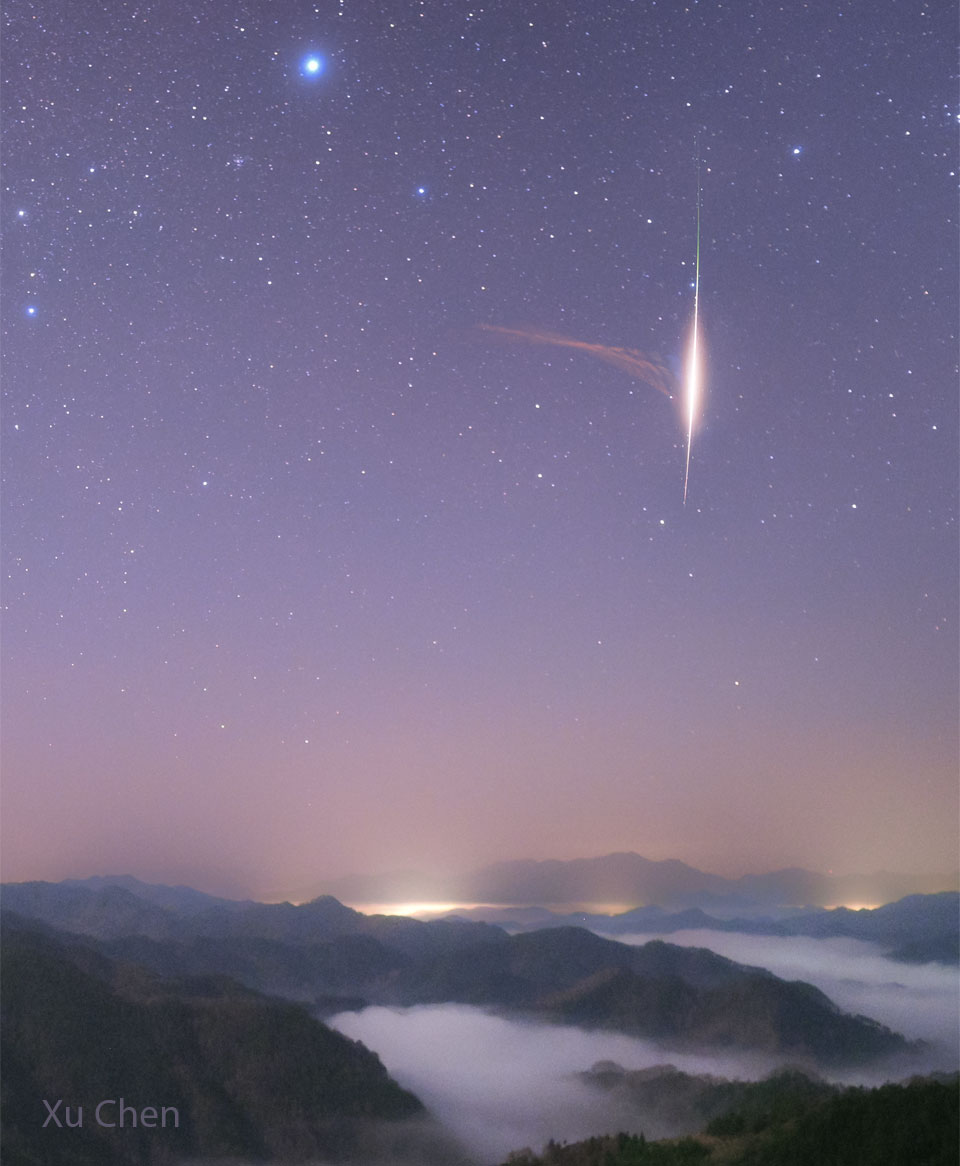
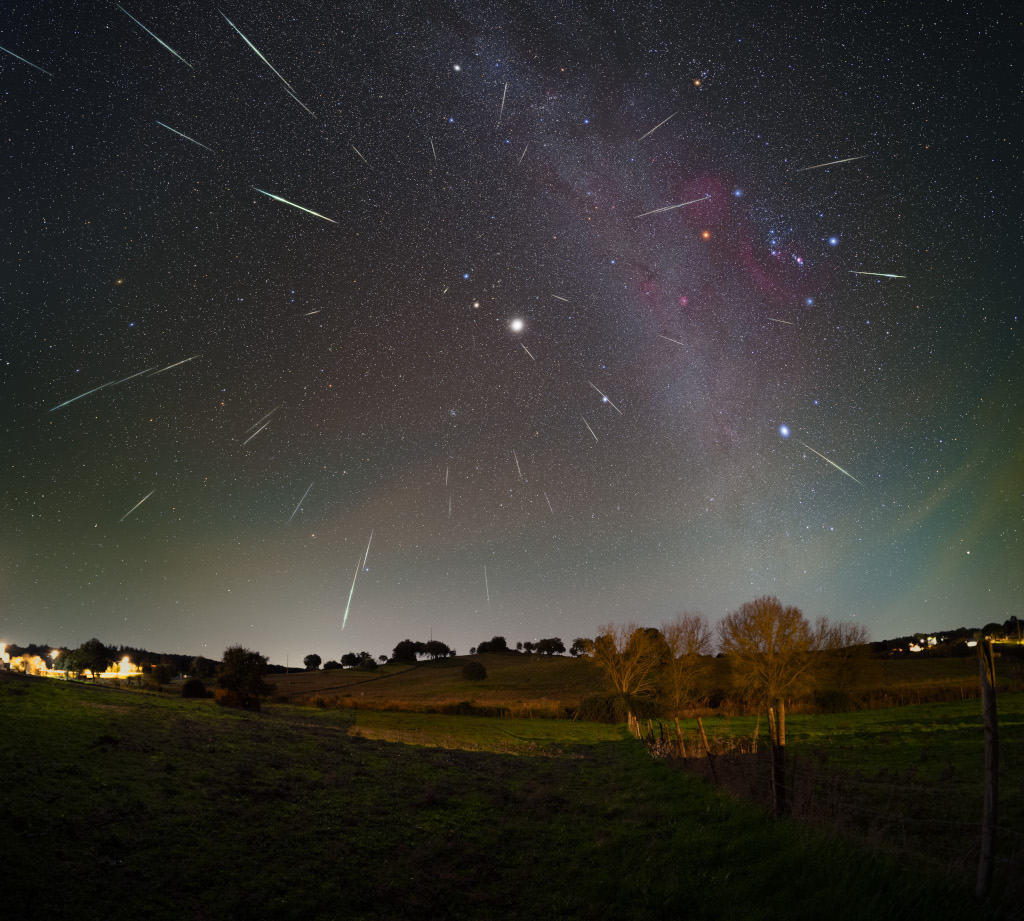
Yes, but have you ever heard a meteor? Usually, meteors are too far away to make any audible sound. However, a meteor will briefly create an ionization trail that can reflect a distant radio signal. If the geometry is right, you may momentarily hear -- through your radio -- a distant radio station even over static. In the featured video, the sounds of distant radio transmitters were caught reflecting from large meteor trails by a sensitive radio receiver -- at the same time the bright streaks were captured by an all-sky video camera. In the video, the bright paths taken by four fireballs across the sky near Lamy, New Mexico, USA, are shown first. Next, after each static frame, a real-time video captures each meteor streaking across the sky, now paired with the sound recorded from its radio reflection. Projecting a meteor trail down to the Earth may lead to finding its impact site (if any), while projecting its trail back into the sky may lead to identifying its parent comet or asteroid. Almost Hyperspace: Random APOD Generator
Sí, pero ¿alguna vez has escuchado un meteoro? Por lo general, los meteoros están demasiado lejos como para producir algún sonido audible. Sin embargo, un meteoro crea brevemente una trayectoria de ionización que puede reflejar una señal de radio distante. Si la geometría es adecuada, podrías escuchar momentáneamente, a través de tu radio, una emisora lejana incluso sobre el ruido estático. En el video destacado, los sonidos de emisores de radio distantes fueron captados reflejándose desde las trayectorias de grandes meteoros por un receptor de radio sensible — al mismo tiempo en que las brillantes trayectorias fueron capturadas por una videocámara de cielo abierto. En el video, se muestran primero las brillantes trayectorias de cuatro bolas de fuego que cruzan el cielo cerca de Lamy, Nuevo México, Estados Unidos. Luego, después de cada imagen estática, un video en tiempo real captura cada meteoro cruzando el cielo, ahora emparejado con el sonido grabado de su reflexión de radio. Proyectar una trayectoria de meteoro hacia la Tierra puede llevar a encontrar su sitio de impacto (si lo hubiera), mientras que proyectar su trayectoria hacia atrás en el cielo puede llevar a identificar su cometa o asteroide de origen.