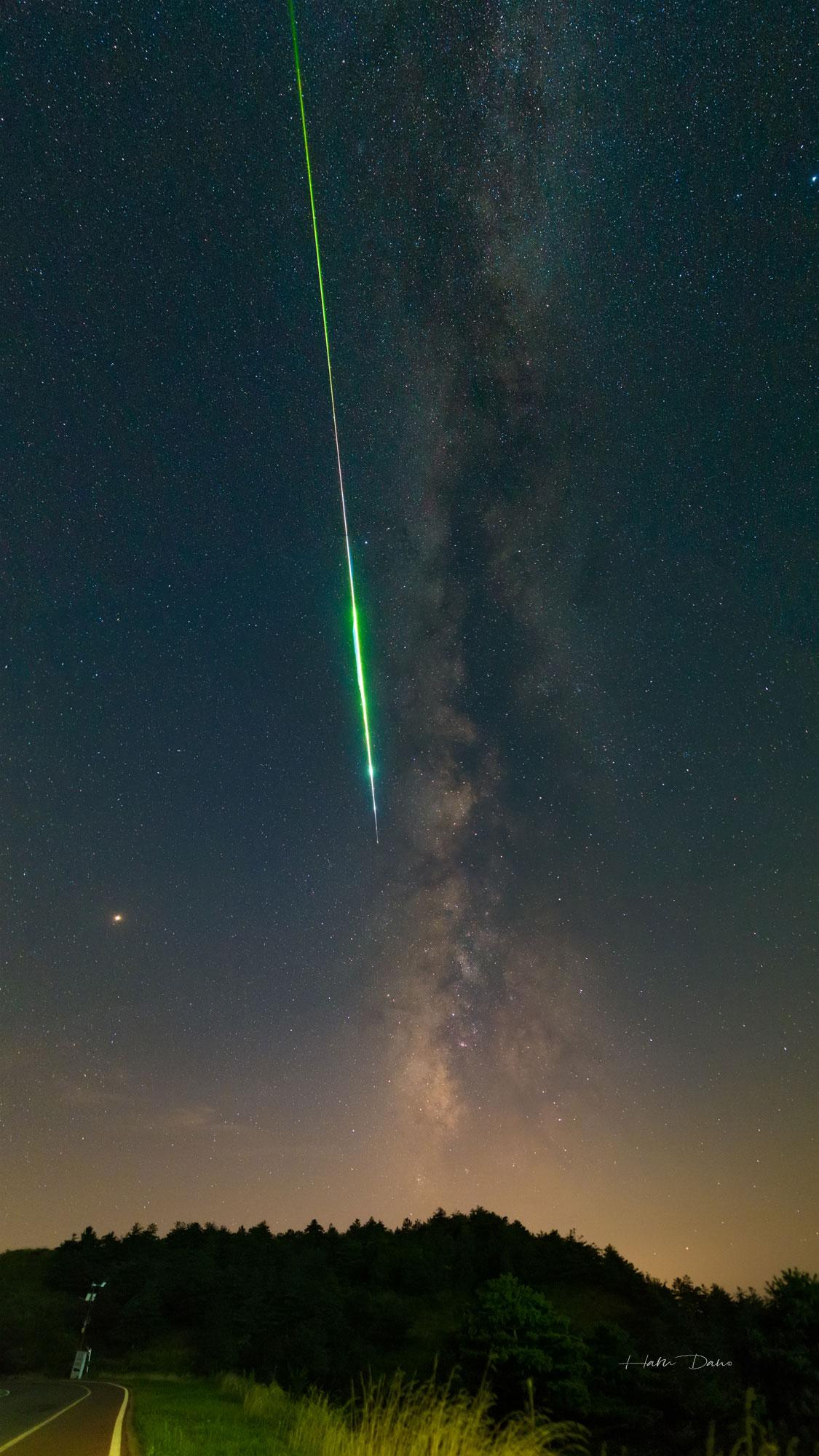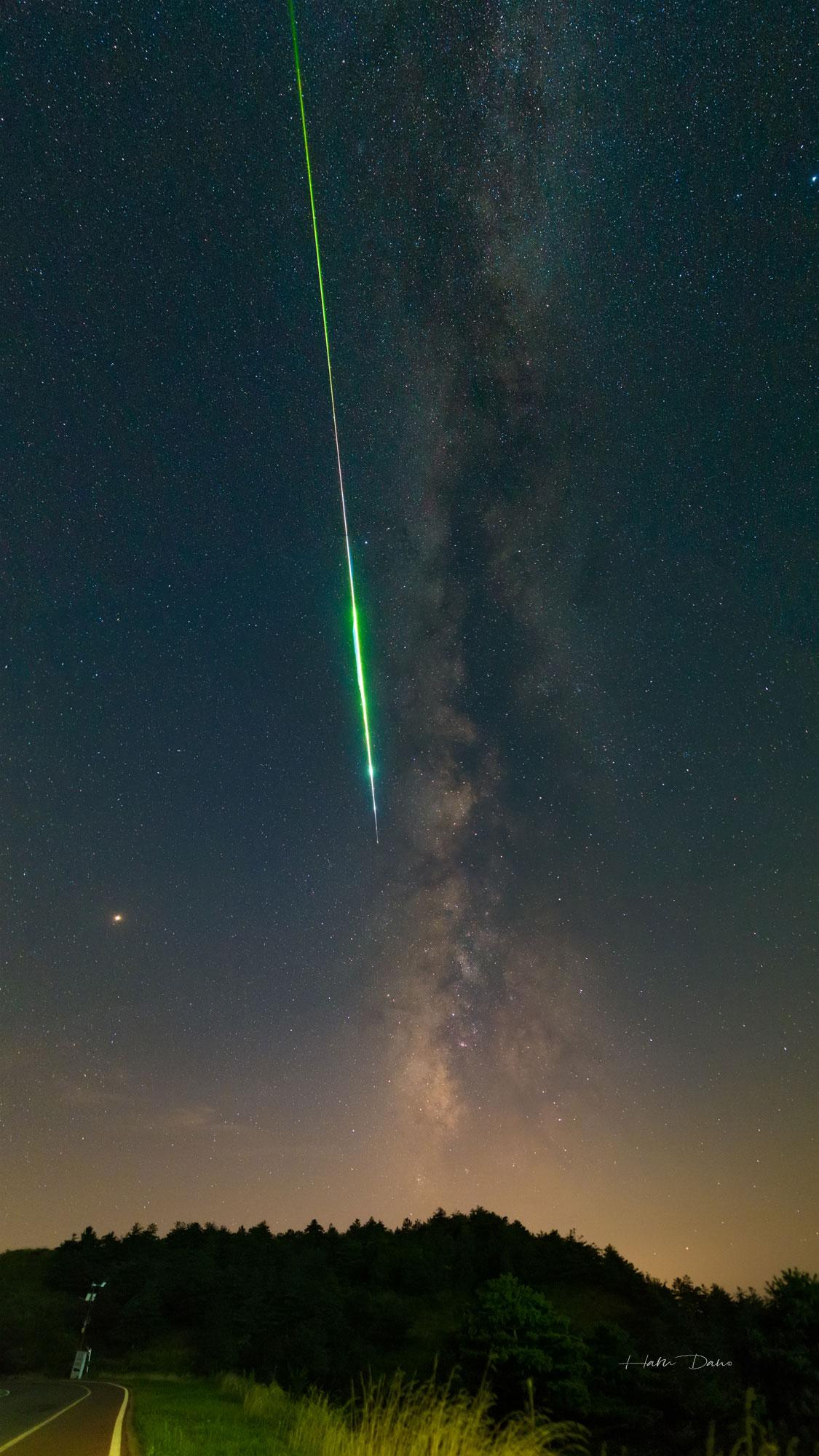
It was bright and green and flashed as it moved quickly along the Milky Way. It left a trail that took 30 minutes to dissipate. Given the day, August 12, and the direction, away from Perseus, it was likely a small bit from the nucleus of Comet Swift-Tuttle plowing through the Earth's atmosphere -- and therefore part of the annual Perseids meteor shower. The astrophotographer captured the fireball as it shot across the sky in 2018 above a valley in Yichang, Hubei, China. The meteor's streak, also caught on video, ended near the direction of Mars on the lower left. Next week, the 2021 Perseids meteor shower will peak again. This year the Moon will set shortly after the Sun, leaving a night sky ideal for seeing lots of Perseids from dark and clear locations across planet Earth. Follow APOD in English on: Facebook, Instagram, or Twitter
Era brillante y verde, y parpadeaba mientras se movía rápidamente a lo largo de la Vía Láctea. Dejó una estela que tardó 30 minutos en disiparse. Dado el día, el 12 de agosto, y la dirección, alejándose de Perseo, probablemente era un pequeño fragmento del núcleo del cometa Swift-Tuttle que se movía a través de la atmósfera terrestre, y por lo tanto parte de la lluvia anual de meteoros de los Perseidas. El fotógrafo astronómico capturó la bola de fuego mientras cruzaba el cielo en 2018 sobre un valle en Yichang, Hubei, China. La estela del meteoro, también registrada en video, terminó cerca de la dirección de Marte en la parte inferior izquierda. La próxima semana, la lluvia de meteoros de los Perseidas de 2021 alcanzará su máximo nuevamente. Este año, la Luna se pondrá poco después del Sol, dejando un cielo nocturno ideal para observar muchos Perseidas desde lugares oscuros y despejados en toda la Tierra.