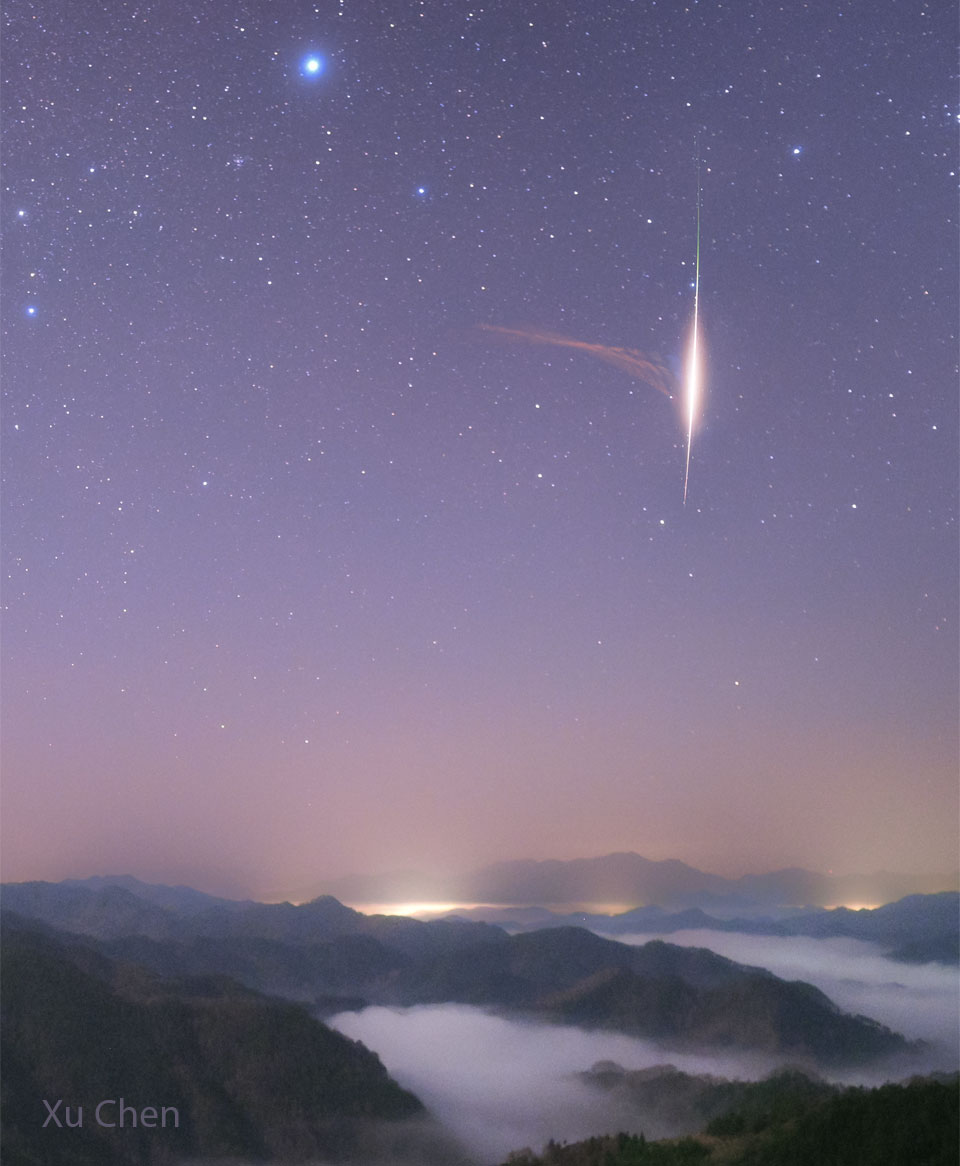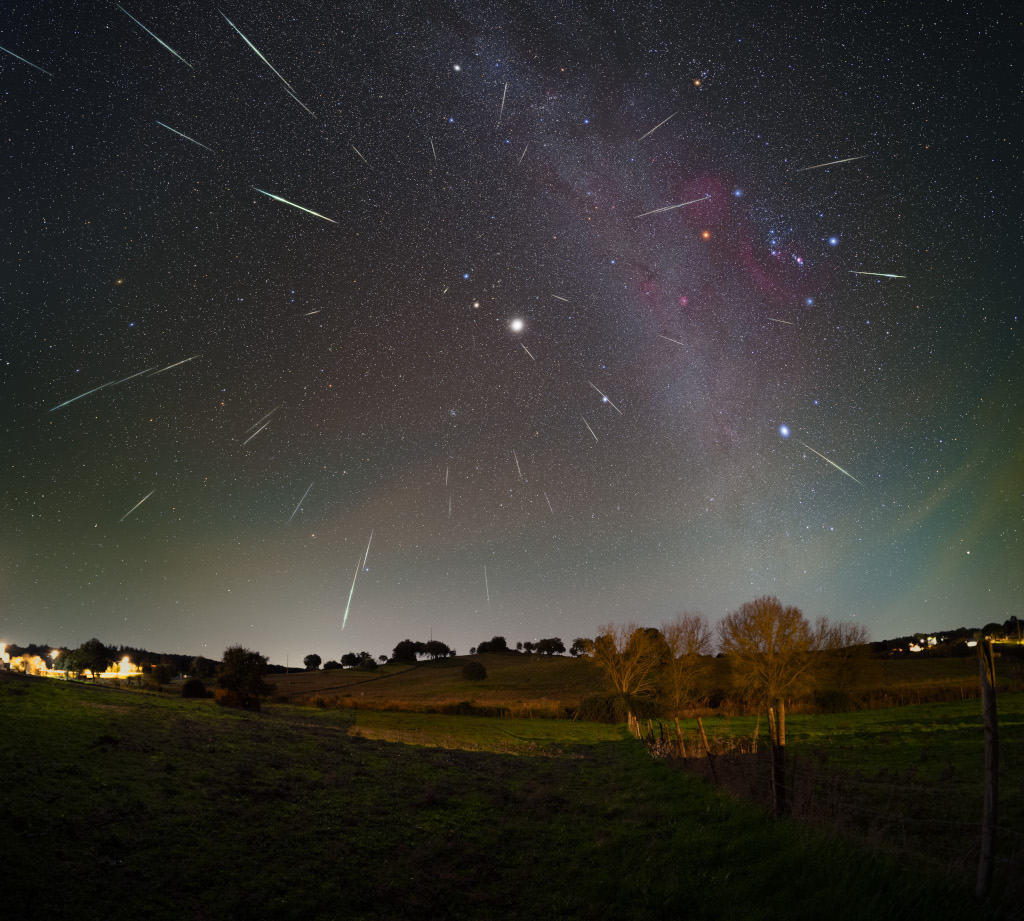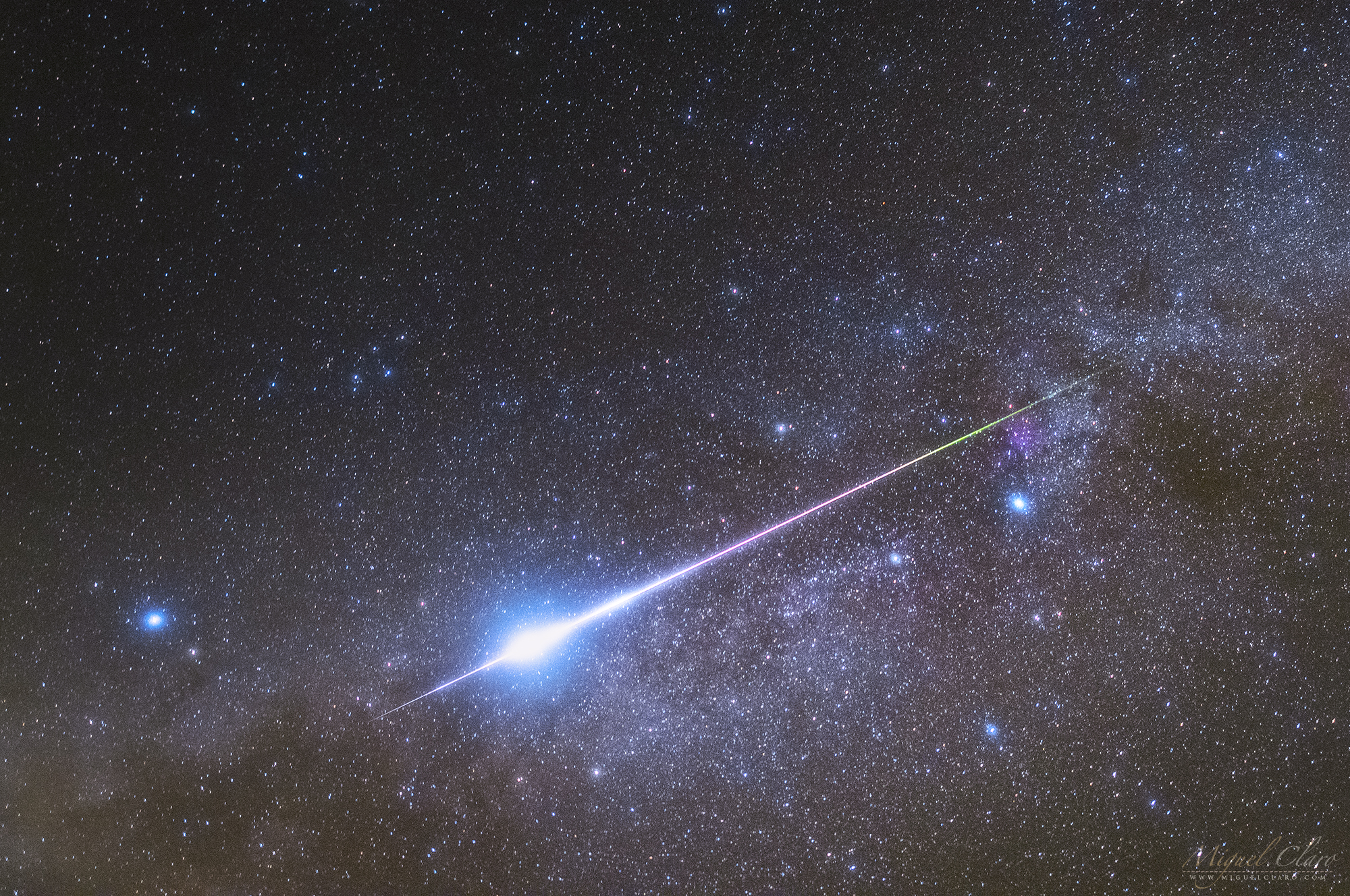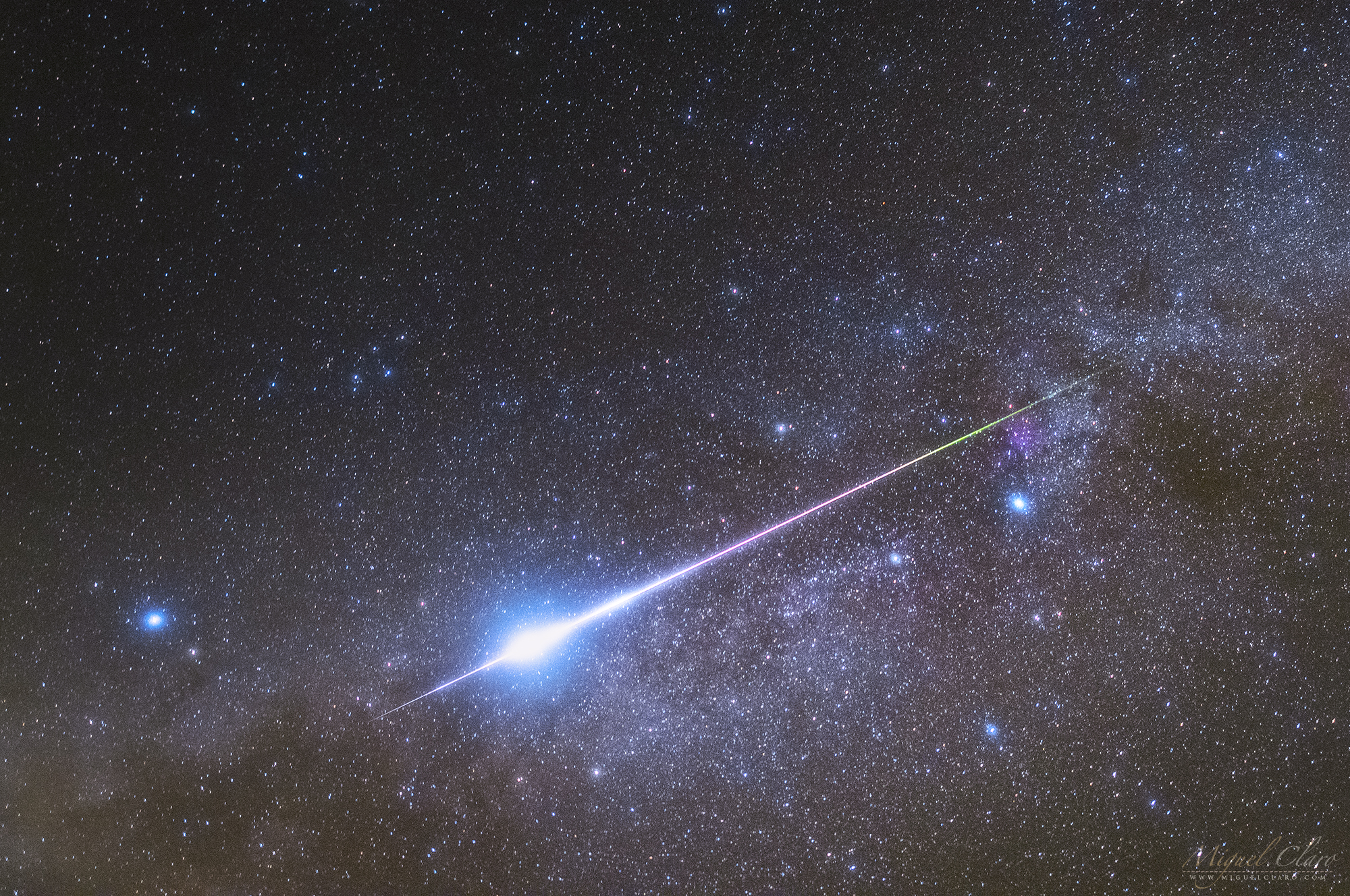
Plowing through Earth's atmosphere at 60 kilometers per second, this bright perseid meteor streaks along a starry Milky Way. Captured in dark Portugal skies on August 12, it moves right to left through the frame. Its colorful trail starts near Deneb (alpha Cygni) and ends near Altair (alpha Aquilae), stars of the northern summer triangle. In fact this perseid meteor very briefly outshines both, two of the brightest stars in planet Earth's night. The trail's initial greenish glow is typical of the bright perseid shower meteors. The grains of cosmic sand, swept up dust from periodic comet Swift-Tuttle, are moving fast enough to excite the characteristic green emission of atomic oxygen at altitudes of 100 kilometers or so before vaporizing in an incandescent flash. Notable APOD Image Submissions: Perseid Meteor Shower 2021
Crédito: NASA, CGRO SSC Planteándose a través de la atmósfera terrestre a 60 kilómetros por segundo, este meteorito brillante de las Perseidas se desplaza a lo largo de una Vía Láctea estrellada. Capturado en los cielos oscuros de Portugal el 12 de agosto, se mueve de derecha a izquierda a través del marco. Su rastro colorido comienza cerca de Deneb (alfa Cygni) y termina cerca de Altair (alfa Aquilae), estrellas del triángulo estival del norte. De hecho, este meteorito de las Perseidas supera brevemente a ambos, dos de las estrellas más brillantes en la noche terrestre. El brillo inicial verde del rastro es típico de los meteoros brillantes de la lluvia de meteoritos de las Perseidas. Los granos de arena cósmica, polvo recogido del cometa periódico Swift-Tuttle, se mueven lo suficientemente rápido como para excitar la emisión característica del oxígeno atómico en color verde a altitudes de unos 100 kilómetros antes de vaporizarse en un destello incandescente.