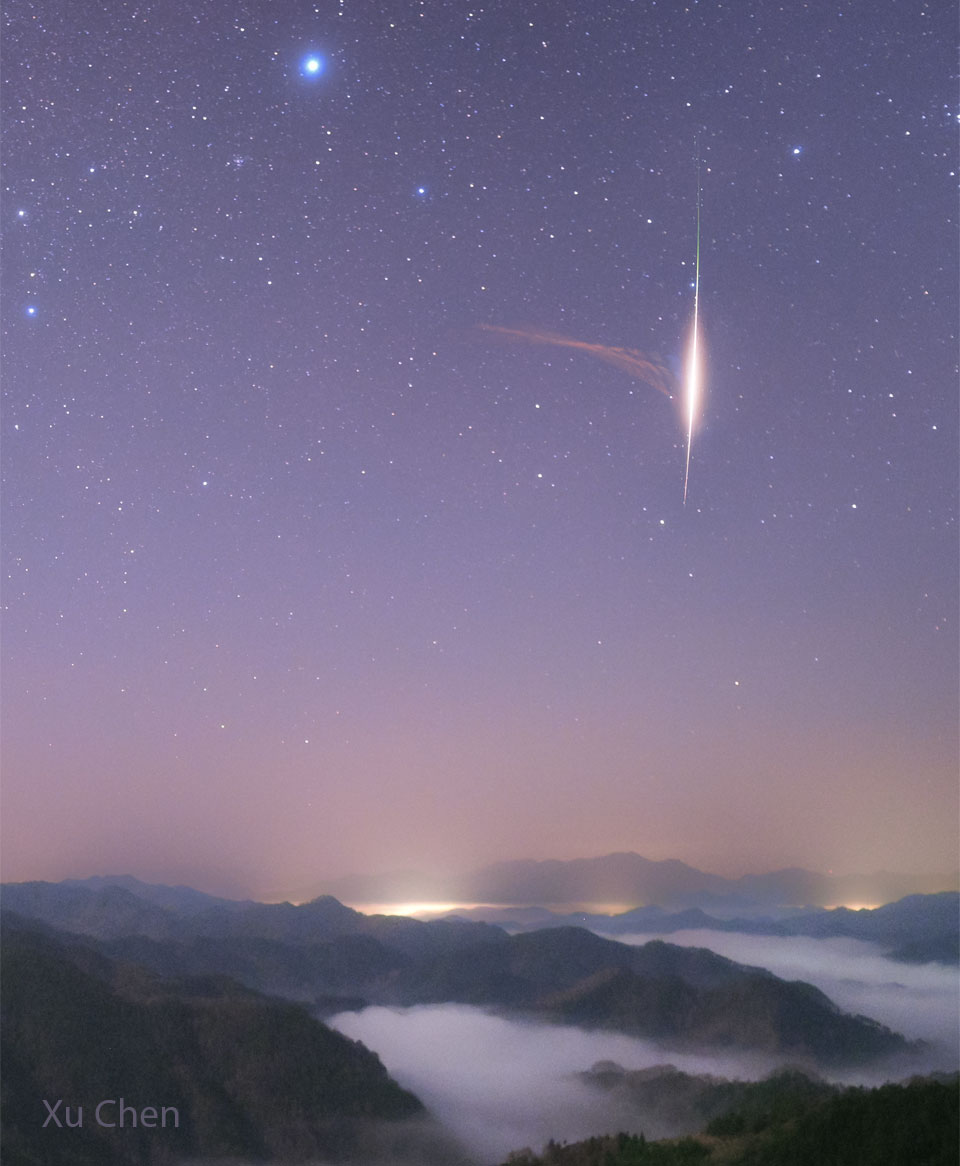
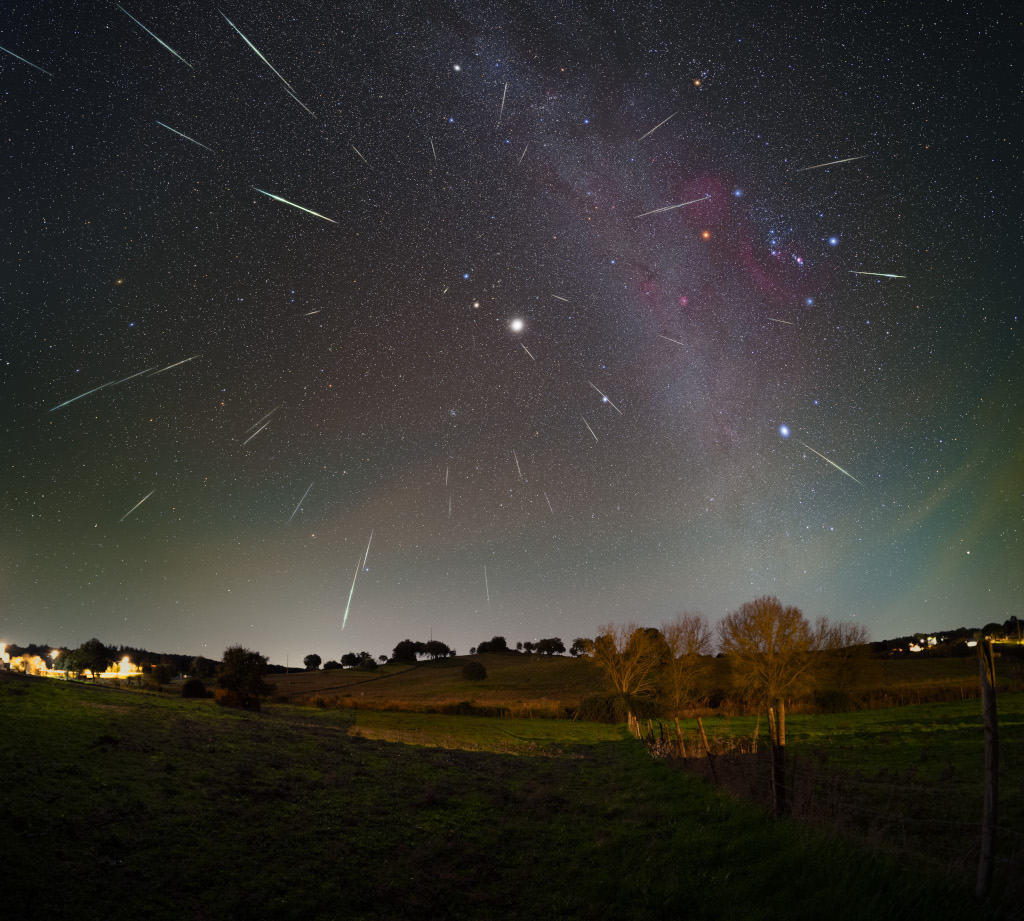
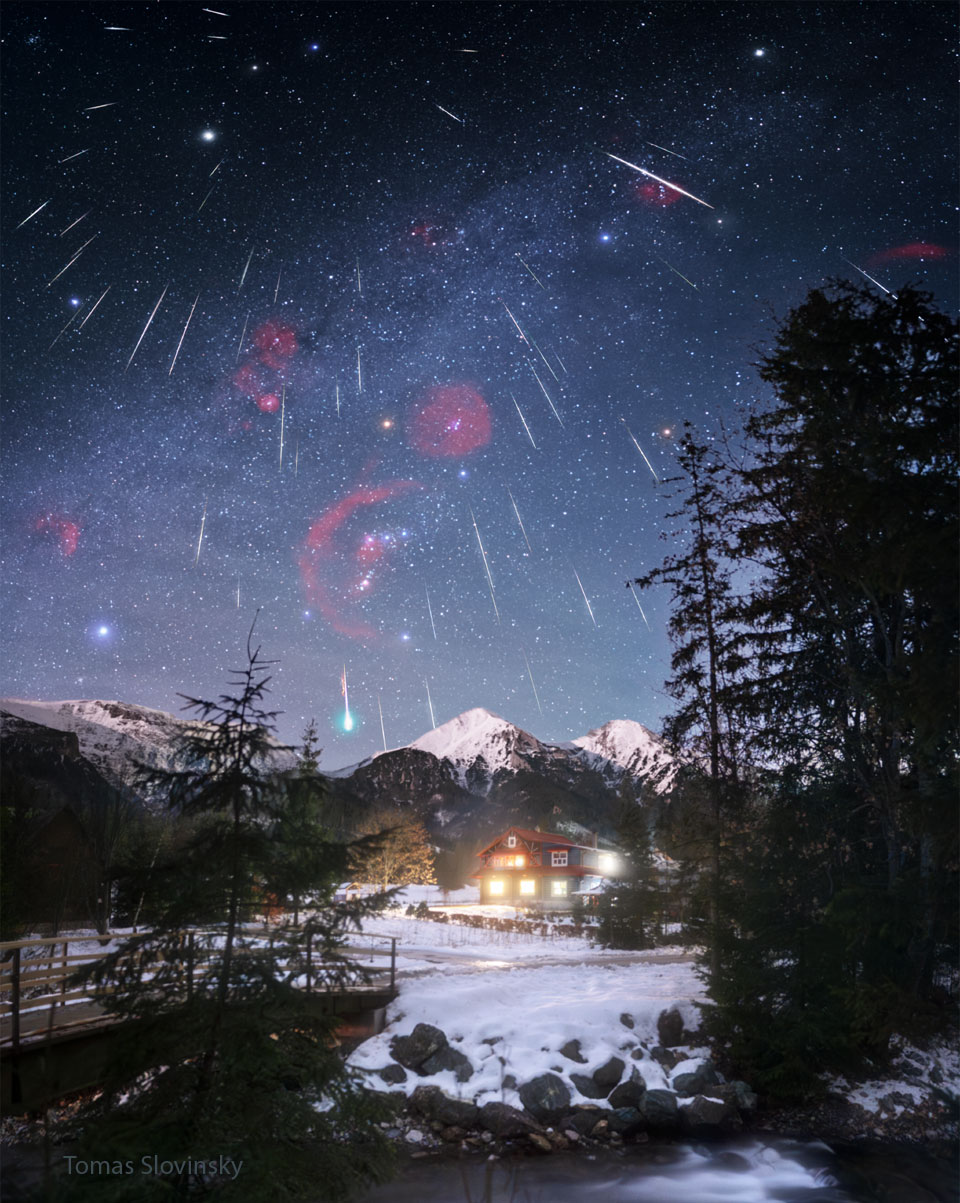
Have you ever experienced a meteor shower? To help capture the wonder, a video was taken during the peak of the recent Perseid meteor shower above the Indian Astronomical Observatory in Hanle, India, high up in the Himalayan mountains. Night descends as the video begins, with the central plane of our Milky Way Galaxy approaching from the left and Earth-orbiting satellites zipping by overhead. During the night, the flash of meteors that usually takes less than a second is artificially extended. The green glow of most meteors is typically caused by vaporizing nickel. As the video continues, Orion rises and meteors flare above the 2-meter Himalayan Chandra Telescope and the seven barrels of the High Energy Gamma Ray Telescope (Hagar). The 2 minute 30 second movie ends with the Sun rising, preceded by a false dawn of zodiacal light.
¿Alguna vez has experimentado una lluvia de meteoros? Para capturar su magia, se grabó un video durante el pico de la reciente lluvia de meteoros de los Perseidas sobre la Observatorio Astronómico Indio en Hanle, India, ubicado alto en las montañas del Himalaya. La noche comienza a caer cuando inicia el video, con el plano central de nuestra Galaxia Vía Láctea acercándose desde la izquierda y satélites en órbita terrestre desplazándose por encima. Durante la noche, el destello de los meteoros, que normalmente dura menos de un segundo, se extiende artificialmente. El brillo verde de la mayoría de los meteoros es típicamente causado por la vaporización de níquel. A medida que avanza el video, Orión se eleva y los meteoros brillan sobre el Telescopio Himalayan Chandra de 2 metros y los siete detectores del Telescopio de Rayos Gamma de Alta Energía (Hagar). La película de 2 minutos y 30 segundos termina con la salida del Sol, precedida por una aurora falsa de luz zodiacal.