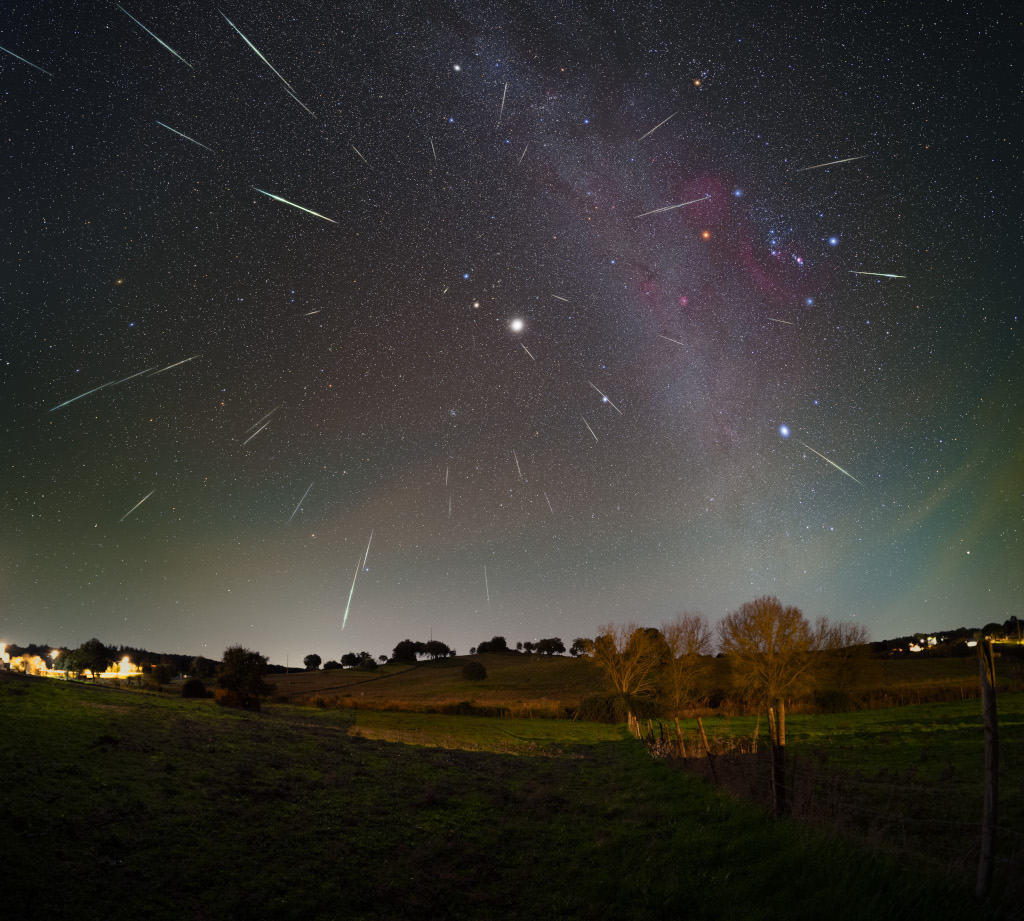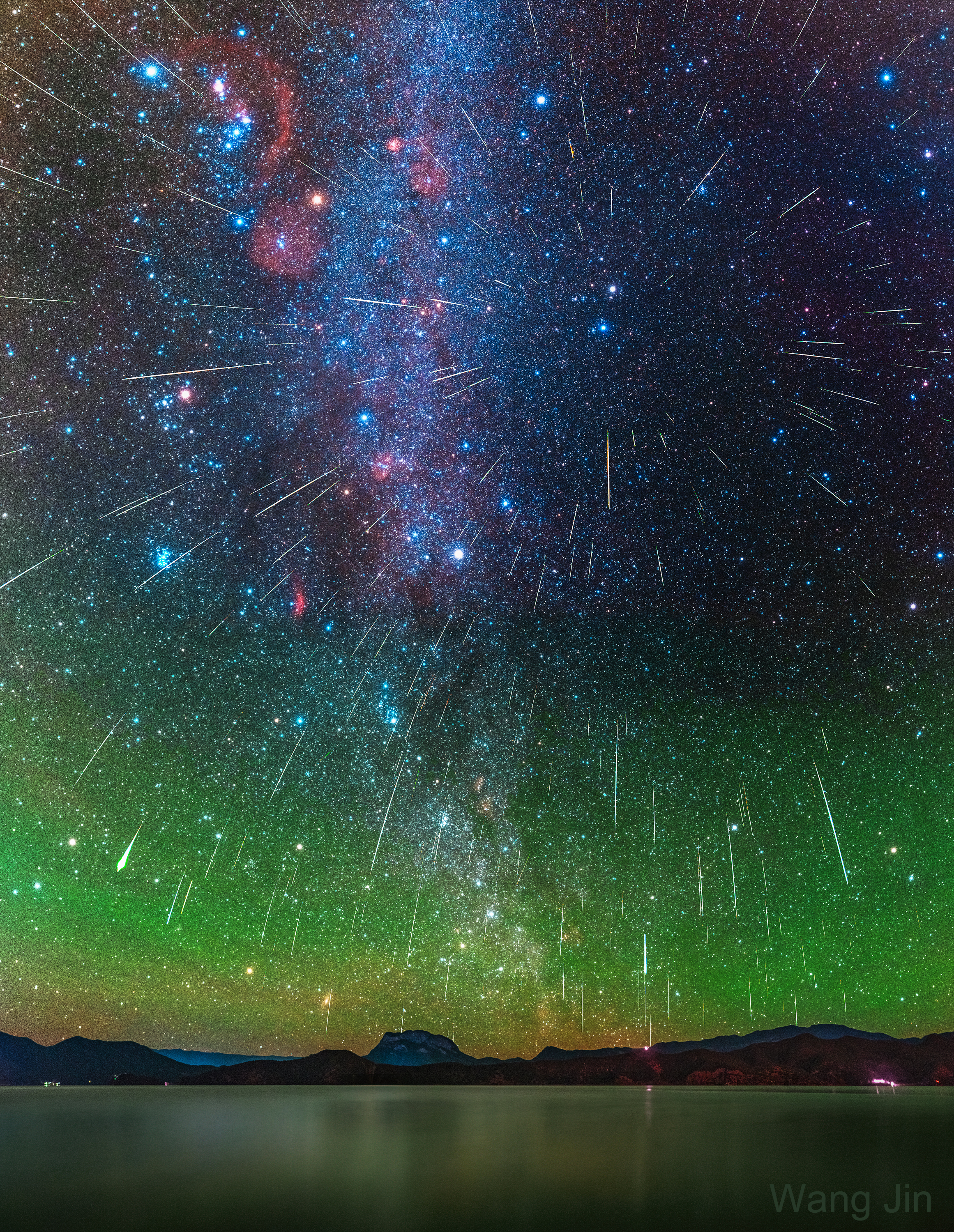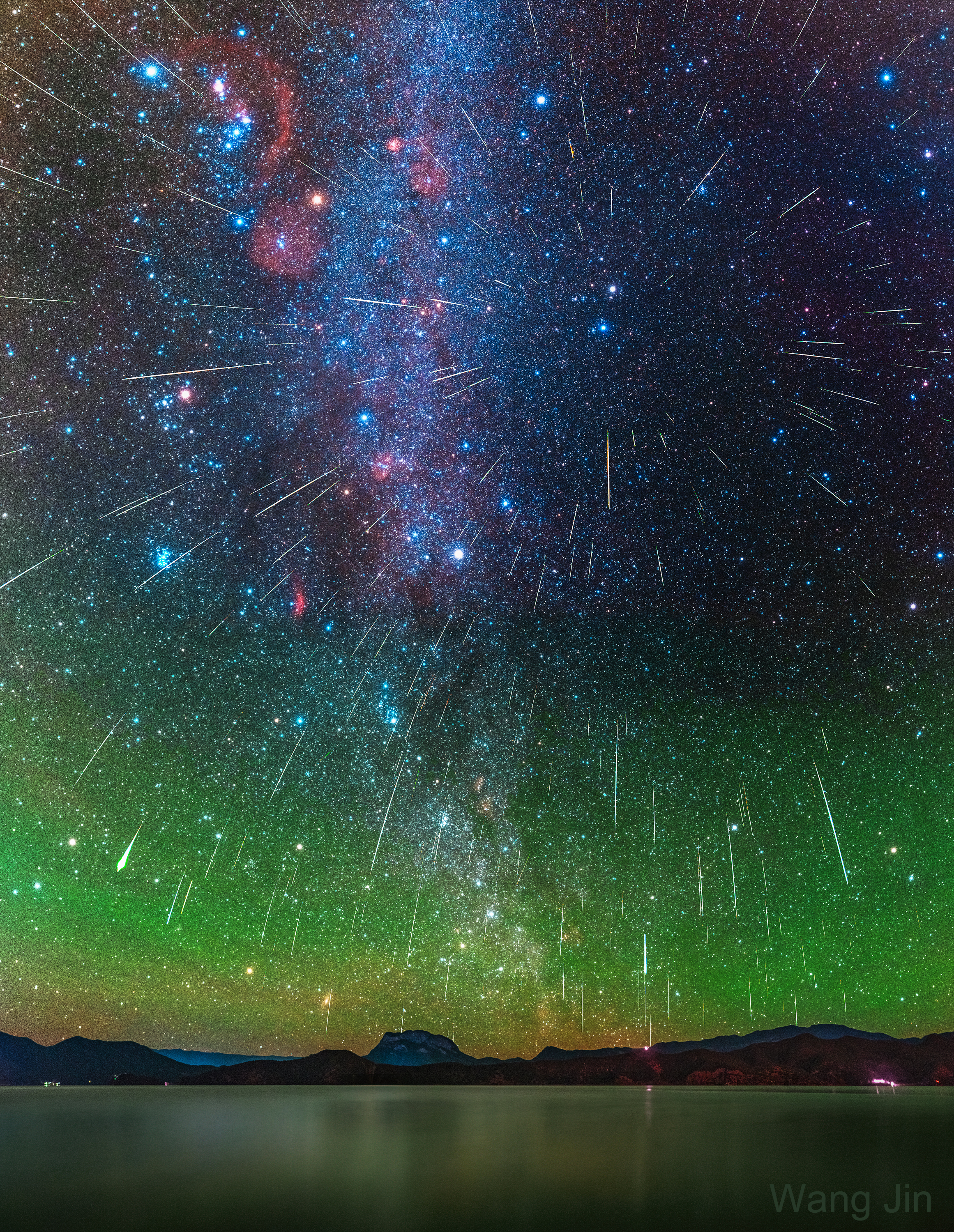
Where are all of these meteors coming from? In terms of direction on the sky, the pointed answer is the constellation of Gemini. That is why the major meteor shower in December is known as the Geminids -- because shower meteors all appear to come from a radiant toward Gemini. Three dimensionally, however, sand-sized debris expelled from the unusual asteroid 3200 Phaethon follows a well-defined orbit about our Sun, and the part of the orbit that approaches Earth is superposed in front of the constellation of Gemini. Therefore, when Earth crosses this orbit, the radiant point of falling debris appears in Gemini. Featured here, a composite of many images taken during the 2020 Geminids meteor shower shows over 200 bright meteors that streaked through the sky during the night December 14. The best meteor shower in November, the Leonids, peaks tonight and tomorrow. Unfortunately, this year, dim meteors during the early-morning peak will be hard to see against a sky lit by a bright gibbous moon. Still, a few bright Leonid meteors should be visible each hour.
¿De dónde vienen todos estos meteoros? En términos de dirección en el cielo, la respuesta precisa es la constelación de Géminis. Por eso, la lluvia de meteoros principal en diciembre se conoce como las Geminidas, porque los meteoros de la lluvia parecen provenir todos de un punto radiante hacia Géminis. En tres dimensiones, sin embargo, el material de tamaño de grano de arena expulsado del inusual asteroide 3200 Fáeton sigue una órbita bien definida alrededor de nuestro Sol, y la parte de la órbita que se acerca a la Tierra se superpone frente a la constelación de Géminis. Por lo tanto, cuando la Tierra cruza esta órbita, el punto radiante de los escombros en caída aparece en Géminis. En la imagen destacada, una composición de muchas imágenes tomadas durante la lluvia de meteoros Geminidas de 2020 muestra más de 200 meteoros brillantes que cruzaron el cielo durante la noche del 14 de diciembre. La mejor lluvia de meteoros de noviembre, las Leonidas, alcanza su máximo esta noche y mañana. Desafortunadamente, este año, los meteoros tenues durante el pico de la madrugada serán difíciles de ver contra un cielo iluminado por una luna gibosa brillante. Sin embargo, deberían ser visibles unos pocos meteoros Leonidas brillantes cada hora.