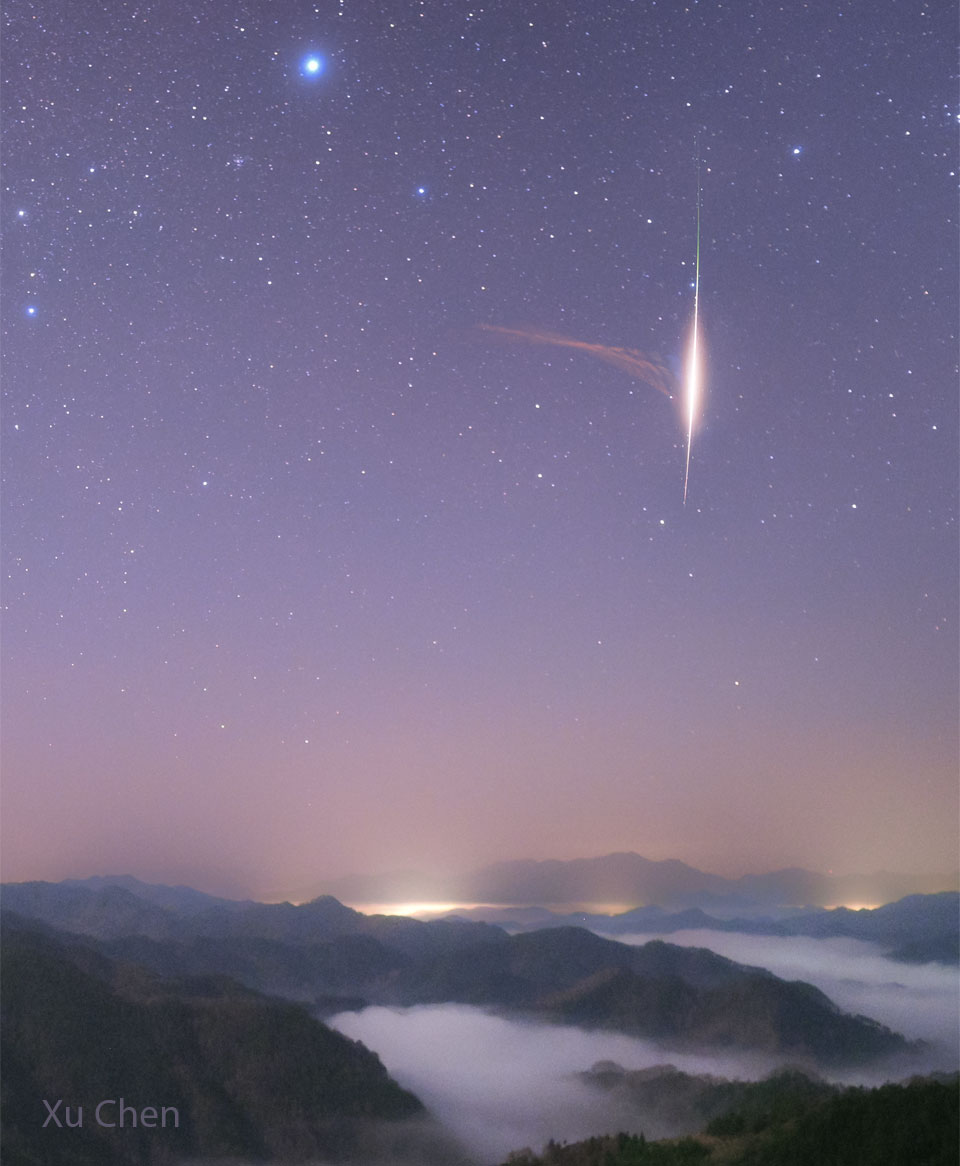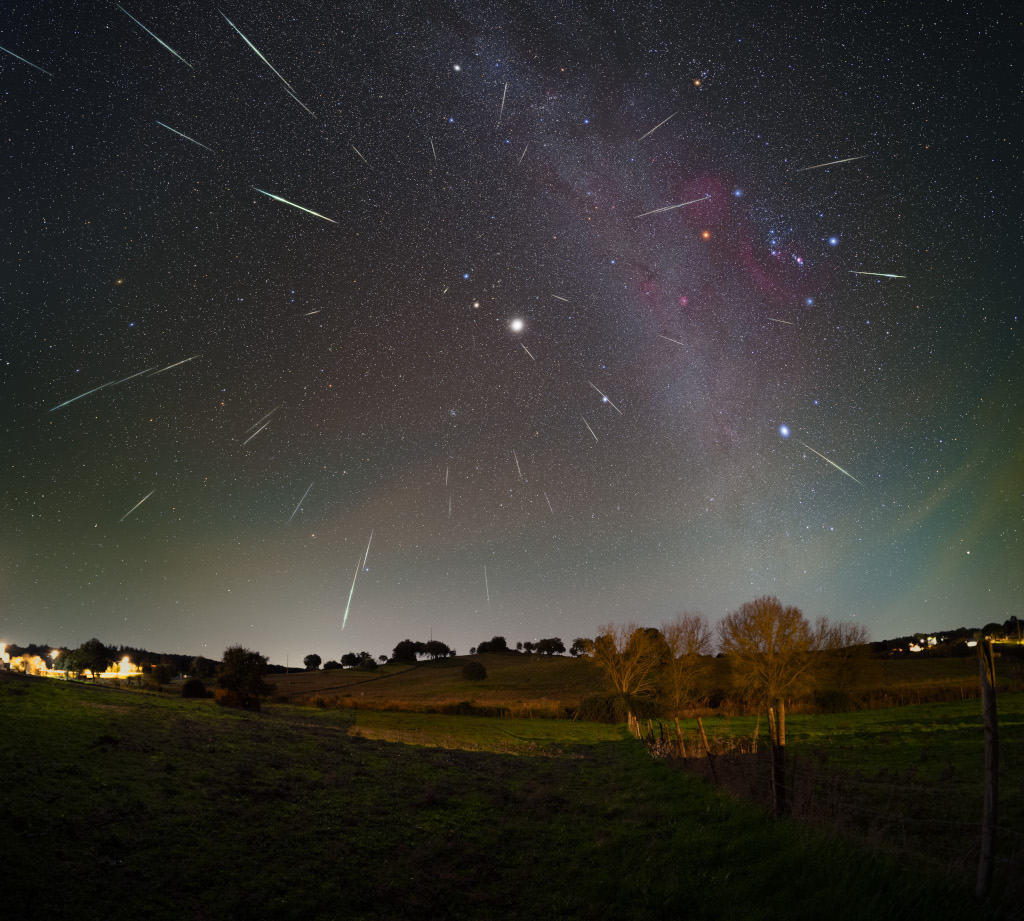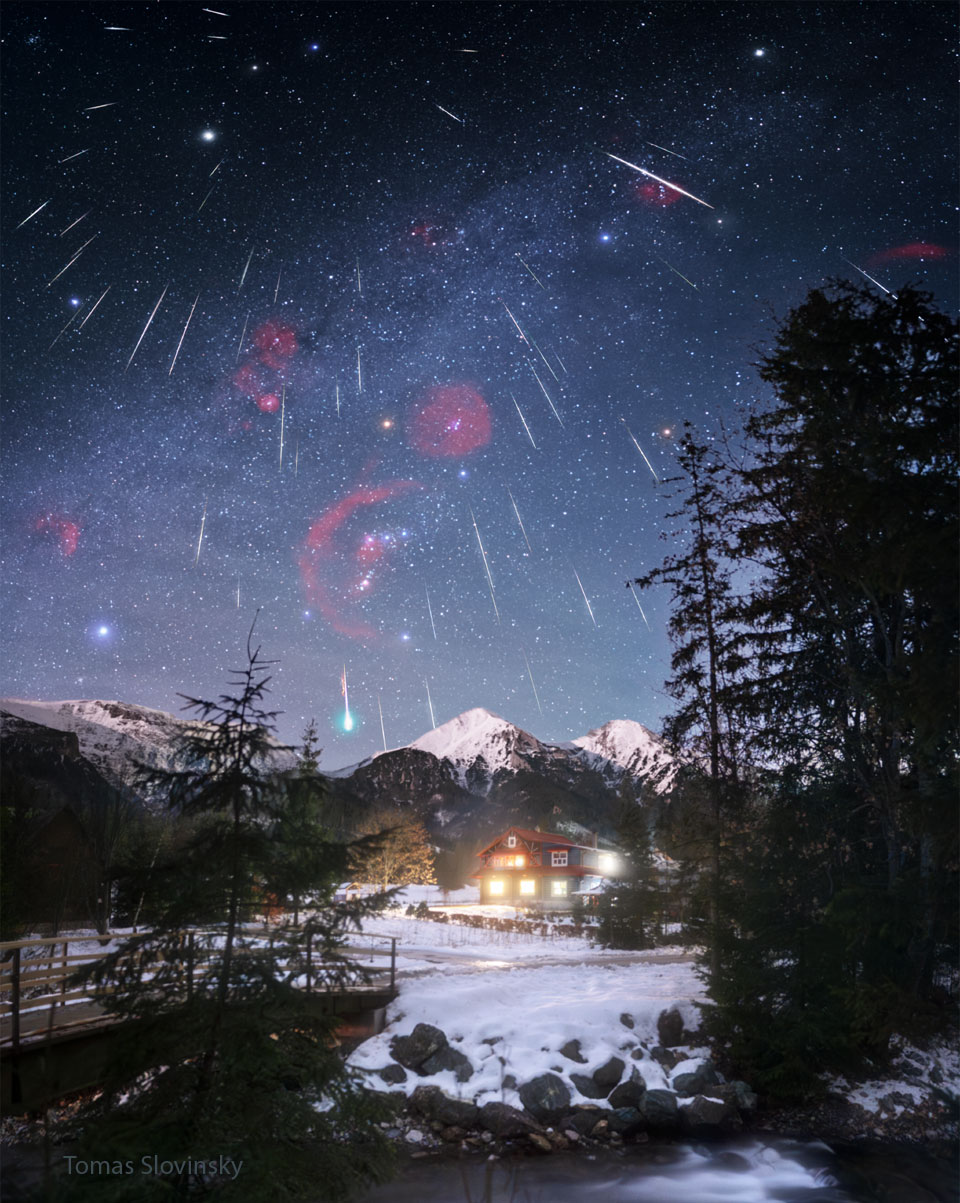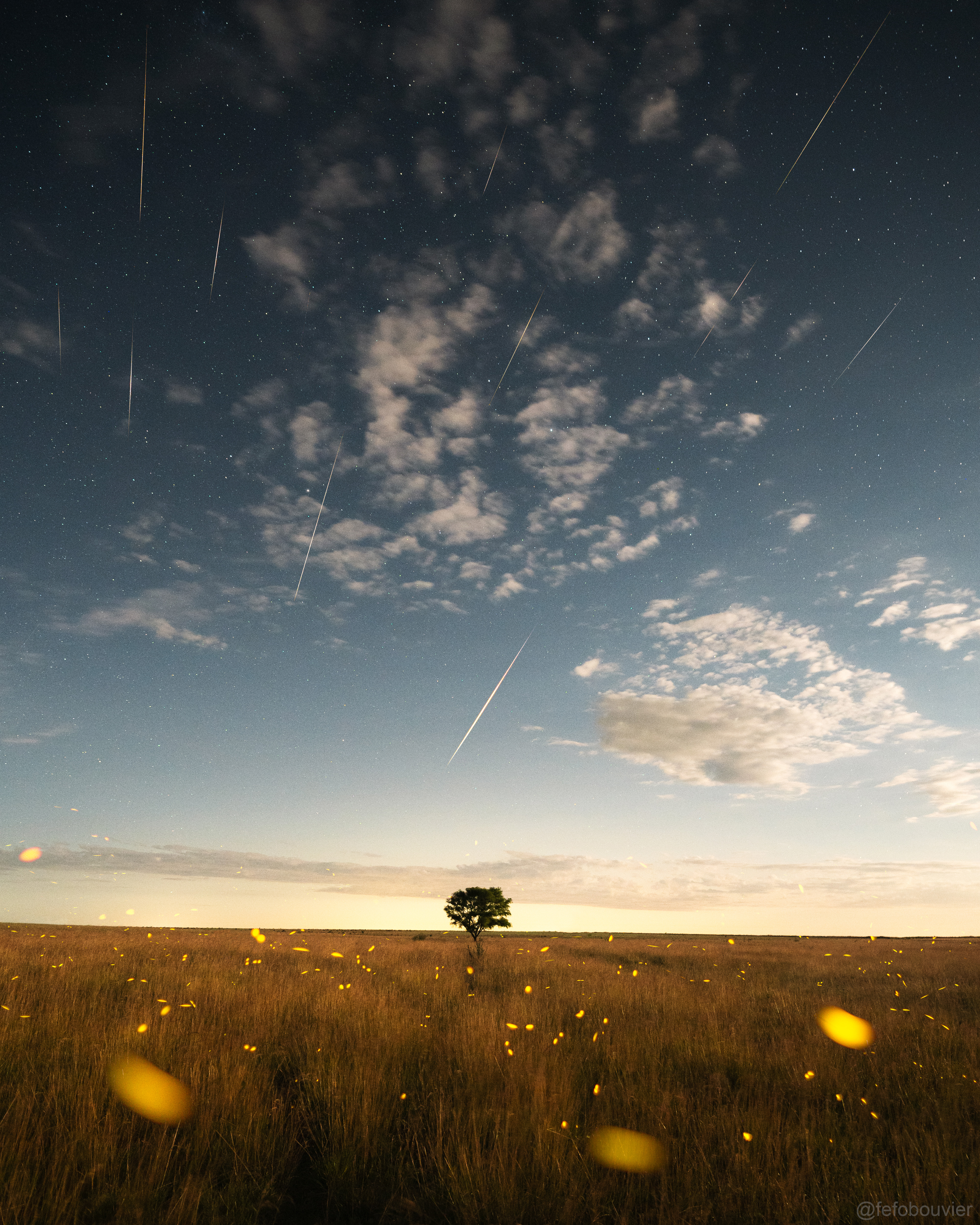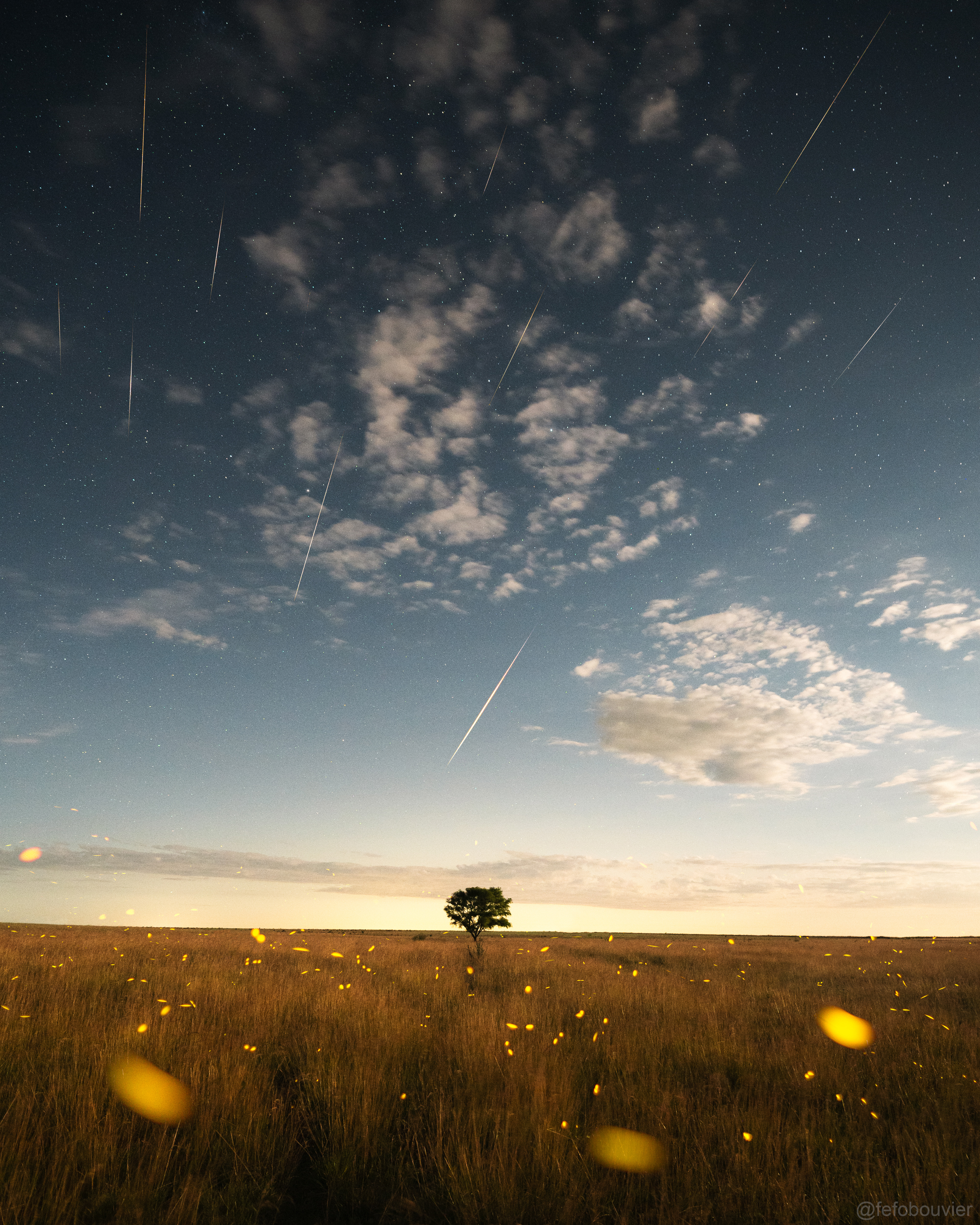
Fireflies flash along a moonlit countryside in this scene taken on the night of December 13/14 from southern Uruguay, planet Earth. On that night meteors fell in the partly cloudy skies above during the annual Geminid meteor shower. Frames recorded over a period of 1.5 hours are aligned in the composite image made with the camera facing south. That direction was opposite the shower's radiant toward the north and so the Geminid meteor streaks appear to converge at an antiradiant below the southern horizon. The shower's apparent radiant (and antiradiant) is just due to perspective though. As Earth sweeps through the dust trail of mysterious asteroid 3200 Phaethon, the dust grains that create the Geminid shower meteors are really moving along parallel tracks. They enter Earth's atmosphere traveling at about 22 kilometers per second.
Luciérnagas centellean a lo largo de un paisaje iluminado por la luna en esta escena tomada la noche del 13/14 de diciembre en el sur de Uruguay, en la Tierra. Esa noche, meteoros cayeron en los cielos parcialmente nublados durante la lluvia anual de meteoros Geminidas. Fotogramas grabados durante un período de 1.5 horas están alineados en la imagen compuesta hecha con la cámara orientada al sur. Esa dirección era opuesta al radiante de la lluvia hacia el norte, por lo que las estelas de los meteoros Geminidas parecen converger en un antiradiante debajo del horizonte sur. El radiante (y antiradiante) aparente de la lluvia es solo debido a la perspectiva. Mientras la Tierra atraviesa el rastro de polvo del misterioso asteroide 3200 Phaethon, las partículas de polvo que crean los meteoros de la lluvia Geminidas en realidad se mueven a lo largo de trayectorias paralelas. Entran a la atmósfera terrestre viajando a unos 22 kilómetros por segundo.