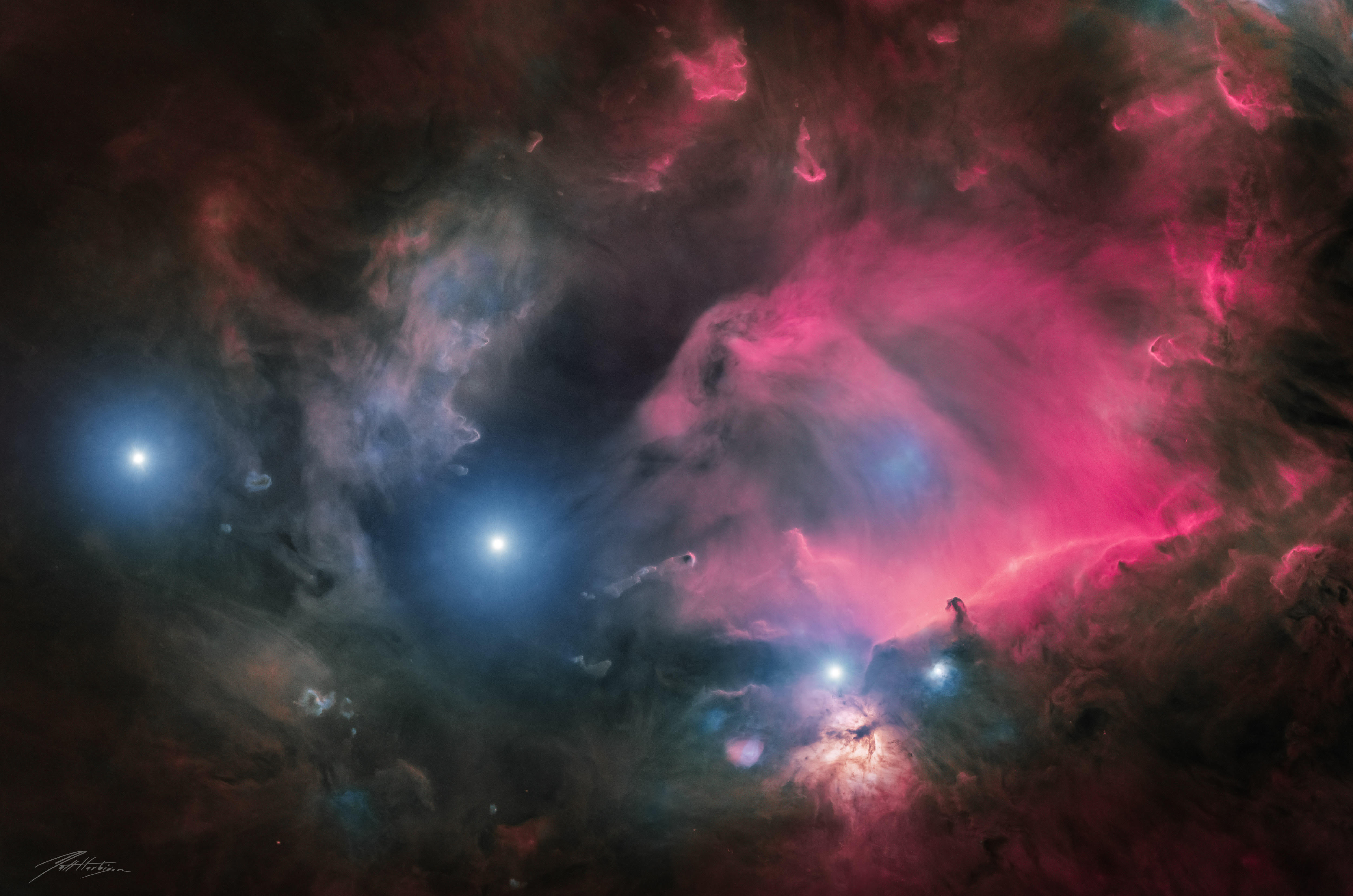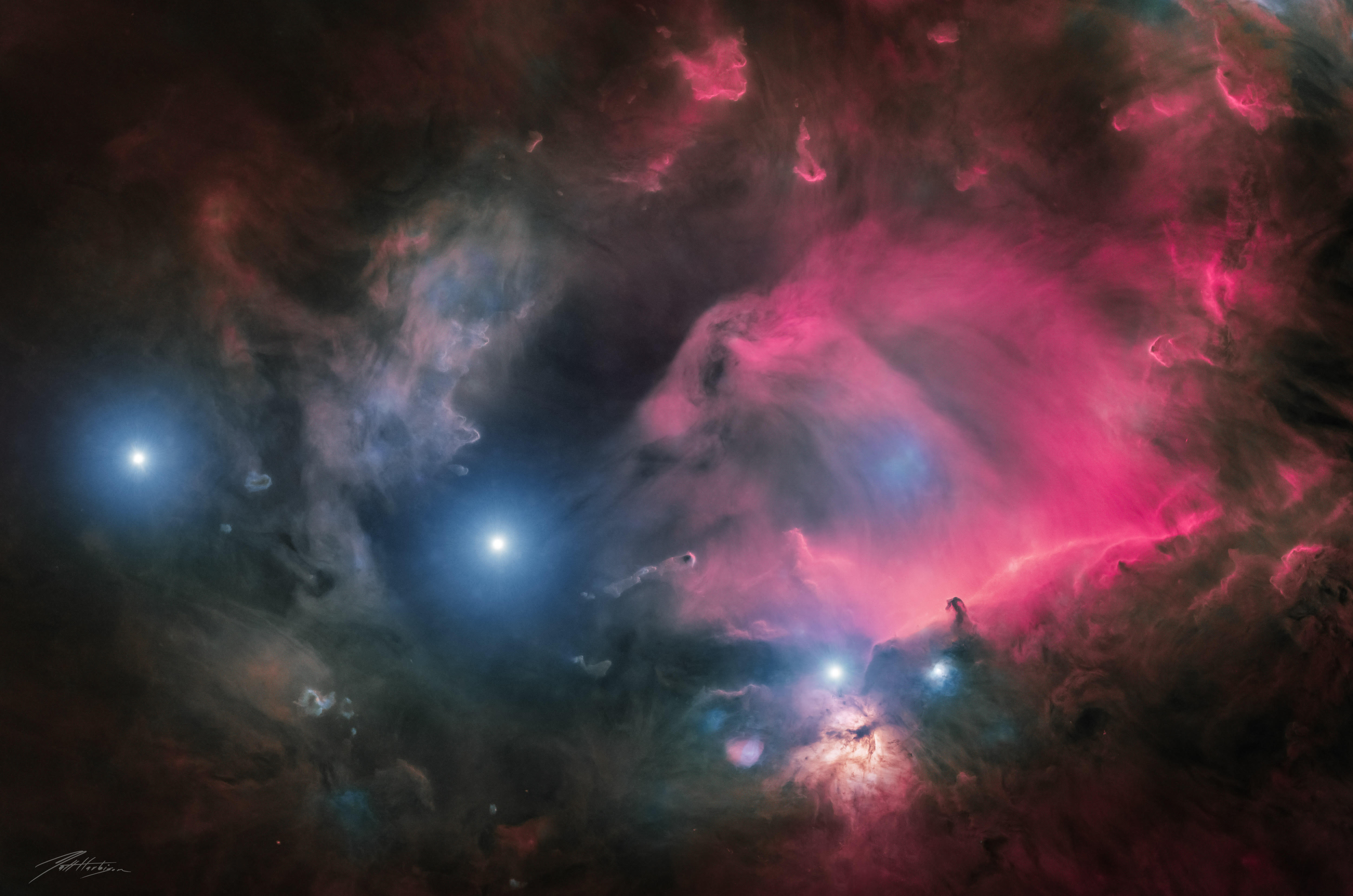
You may have seen Orion's belt before -- but not like this. The three bright stars across this image are, from left to right, Mintaka, Alnilam, and Alnitak: the iconic belt stars of Orion. The rest of the stars in the frame have been digitally removed to highlight the surrounding clouds of glowing gas and dark dust. Some of these clouds have intriguing shapes, including the Horsehead and Flame Nebulas, both near Alnitak on the lower right. This deep image, taken last month from the Marathon Skypark and Observatory in Marathon, Texas, USA, spans about 5 degrees, required about 20 hours of exposure, and was processed to reveal the gas and dust that we would really see if we were much closer. The famous Orion Nebula is off to the upper right of this colorful field. The entire region lies only about 1,500 light-years distant and so is one of the closest and best studied star formation nurseries known. Tonight: APOD Editor to Present the Best Space Images of 2021
Crédito: Marathon Skypark and Observatory, Marathon, Texas, EE. UU. Es posible que hayas visto antes la cintura de Orión — pero no de esta manera. Las tres estrellas brillantes que aparecen en esta imagen, de izquierda a derecha, son Mintaka, Alnilam y Alnitak: las estrellas icónicas de la cintura de Orión. El resto de las estrellas en el marco han sido eliminadas digitalmente para resaltar las nubes circundantes de gas luminoso y polvo oscuro. Algunas de estas nubes tienen formas intrigantes, incluyendo la Nebulosa del Caballo de Fuego y la Nebulosa de la Llama, ambas cerca de Alnitak en la parte inferior derecha. Esta imagen profunda, tomada el mes pasado desde el Marathon Skypark and Observatory en Marathon, Texas, EE. UU., abarca aproximadamente 5 grados, requirió alrededor de 20 horas de exposición y fue procesada para revelar el gas y el polvo que realmente veríamos si estuviéramos mucho más cerca. La famosa Nebulosa de Orión se encuentra en la parte superior derecha de este campo colorido. Toda la región se encuentra a solo unos 1500 años luz de distancia y, por lo tanto, es una de las regiones más cercanas y mejor estudiadas de formación estelar conocidas.