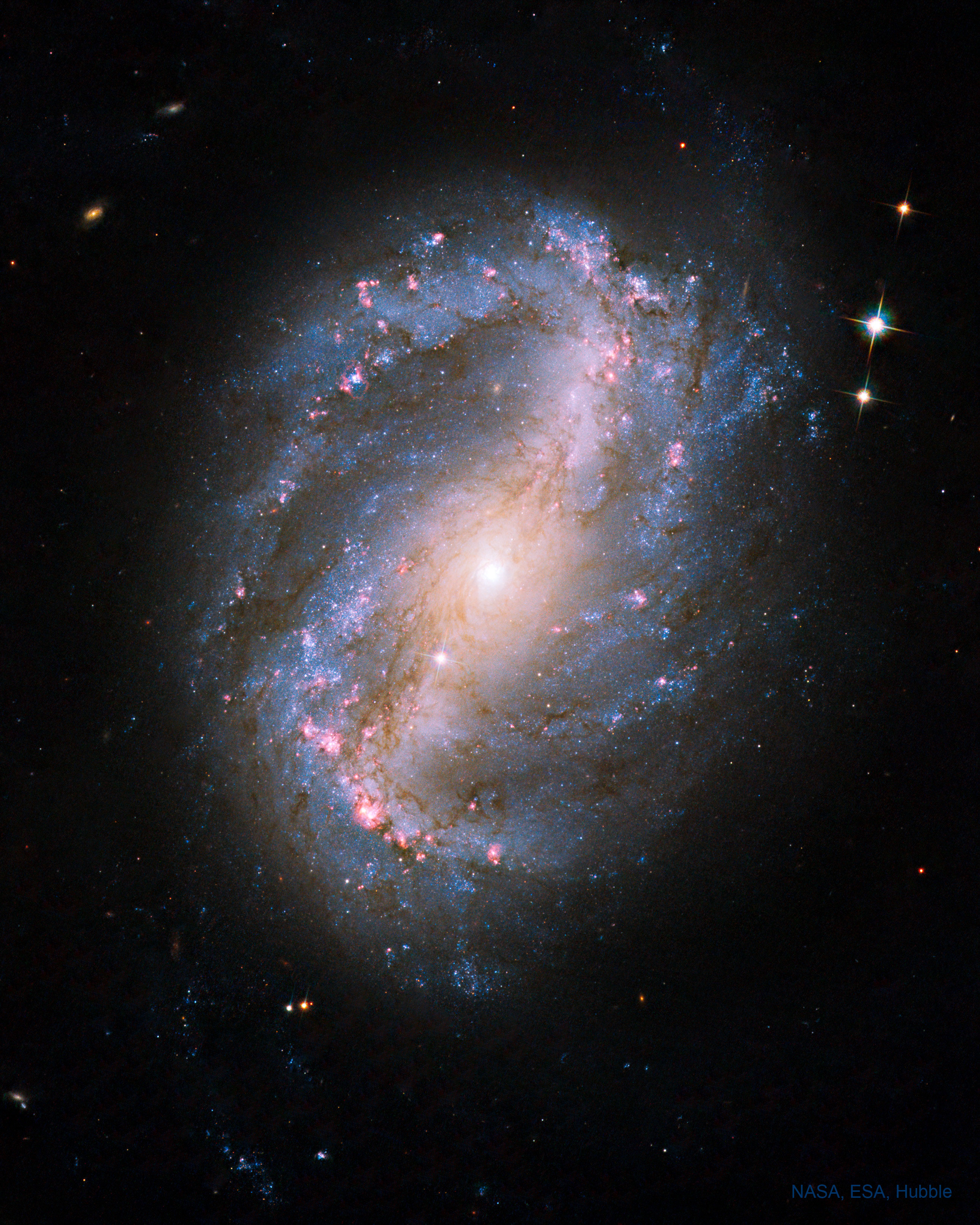
Many spiral galaxies have bars across their centers. Even our own Milky Way Galaxy is thought to have a modest central bar. Prominently barred spiral galaxy NGC 6217, featured here, was captured in spectacular detail in this image taken by the Advanced Camera for Surveys on the orbiting Hubble Space Telescope in 2009. Visible are dark filamentary dust lanes, young clusters of bright blue stars, red emission nebulas of glowing hydrogen gas, a long bar of stars across the center, and a bright active nucleus that likely houses a supermassive black hole. Light takes about 60 million years to reach us from NGC 6217, which spans about 30,000 light years across and can be found toward the constellation of the Little Bear (Ursa Minor). APOD in world languages: Arabic, Bulgarian, Catalan, Chinese (Beijing), Chinese (Taiwan), Croatian, Czech, Dutch, French, French (Canada), German, Hebrew, Indonesian, Japanese, Korean, Montenegrin, Polish, Russian, Serbian, Slovenian, Spanish, Taiwanese, Turkish, Turkish, and Ukrainian
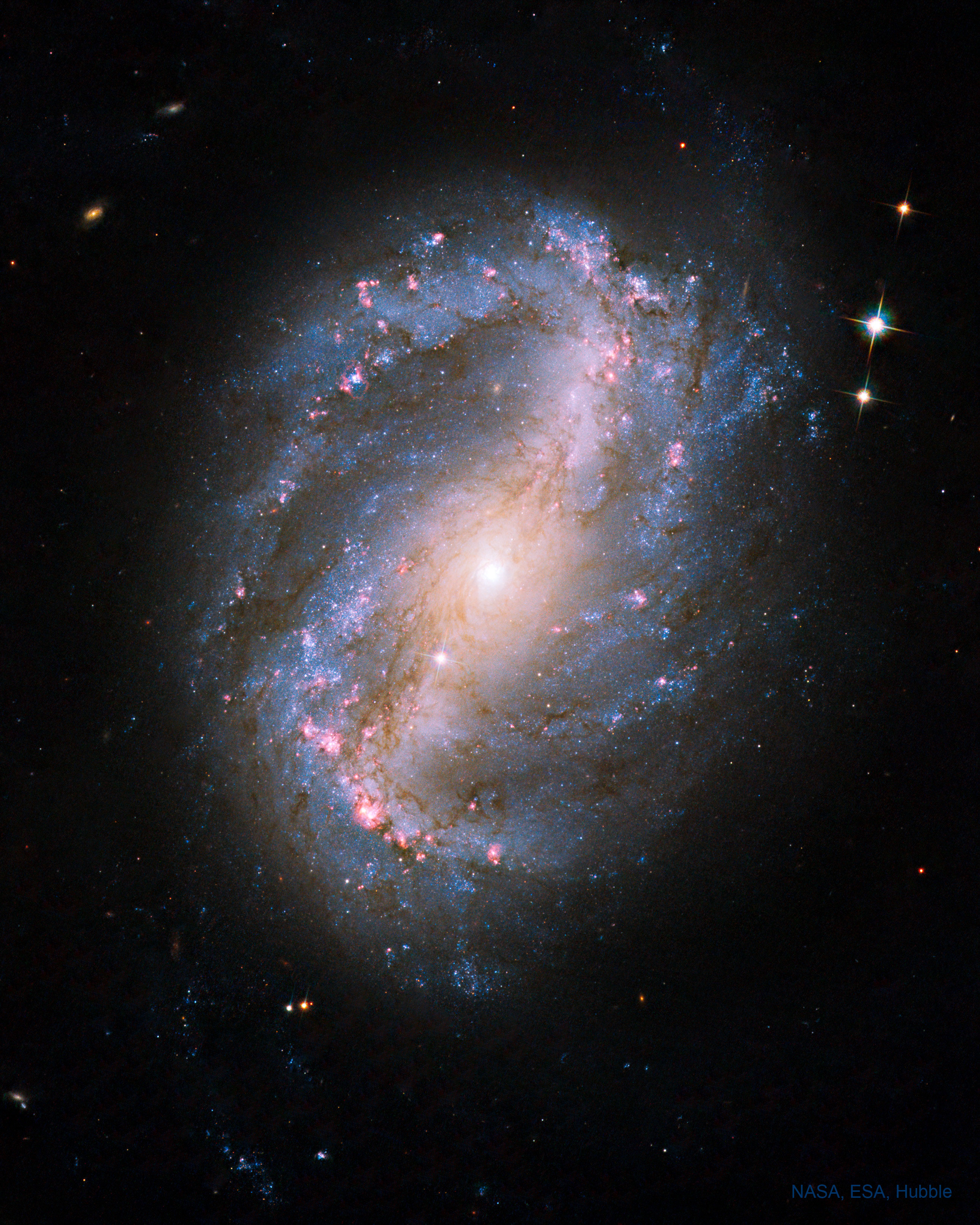
Crédito: NASA, Hubble Space Telescope Muchas galaxias espirales tienen barras atravesando sus centros. Incluso nuestra propia Galaxia Vía Láctea se cree que tiene una barra central moderada. La galaxia espiral prominentemente barrada NGC 6217, destacada aquí, fue capturada en detalles espectaculares en esta imagen tomada por la Cámara Avanzada para Sondeos en el telescopio espacial Hubble en órbita en 2009. Se ven vías oscuras filamentosas de polvo, jóvenes cúmulos de estrellas azules brillantes, nebulosas de emisión rojizas de gas hidrógeno brillante, una larga barra de estrellas atravesando el centro, y un núcleo activo brillante que probablemente albergue un agujero negro supermasivo. La luz tarda aproximadamente 60 millones de años en llegar a nosotros desde NGC 6217, que abarca unos 30 000 años luz de diámetro y se encuentra en dirección a la constelación del Oso Menor (Ursa Minor).