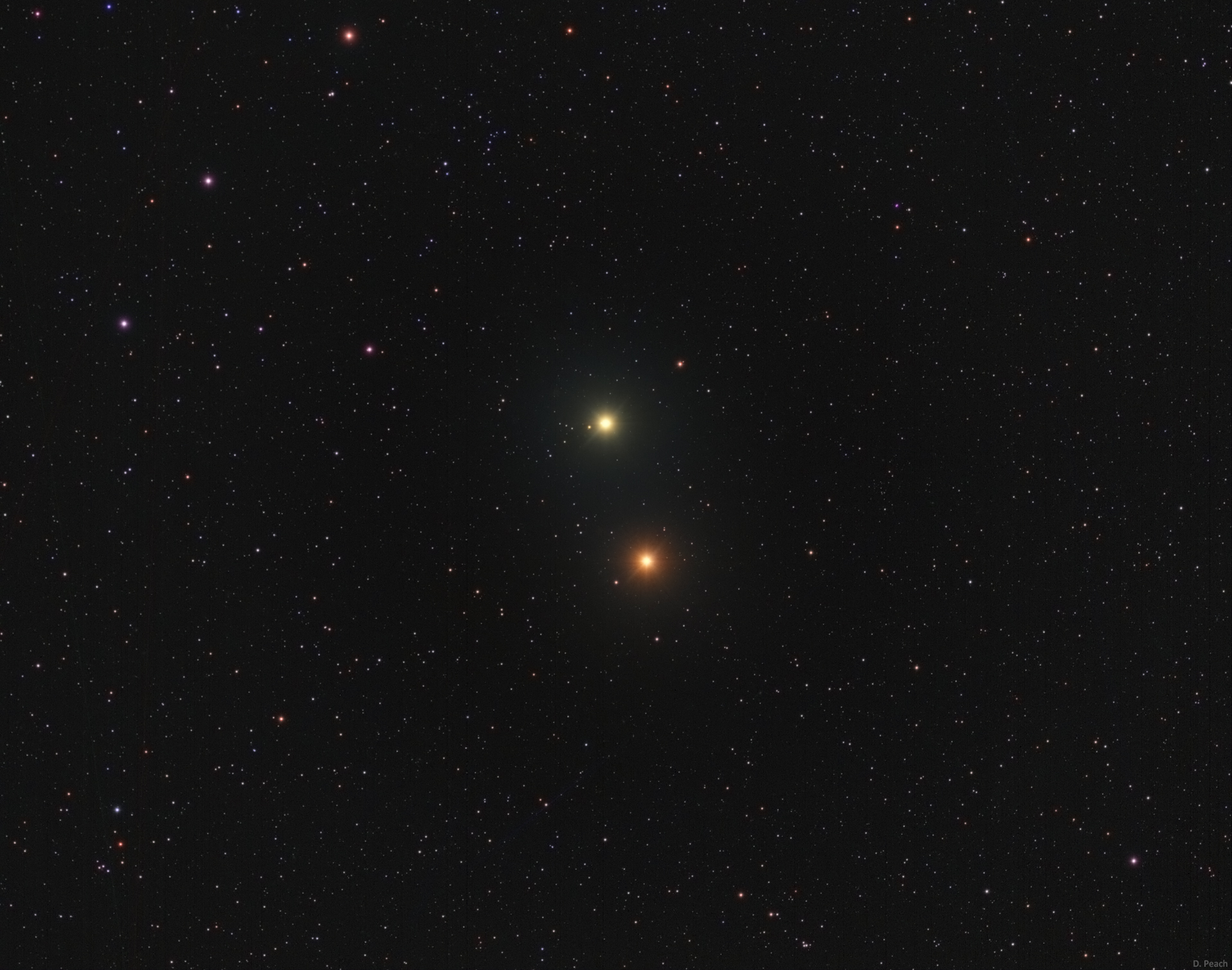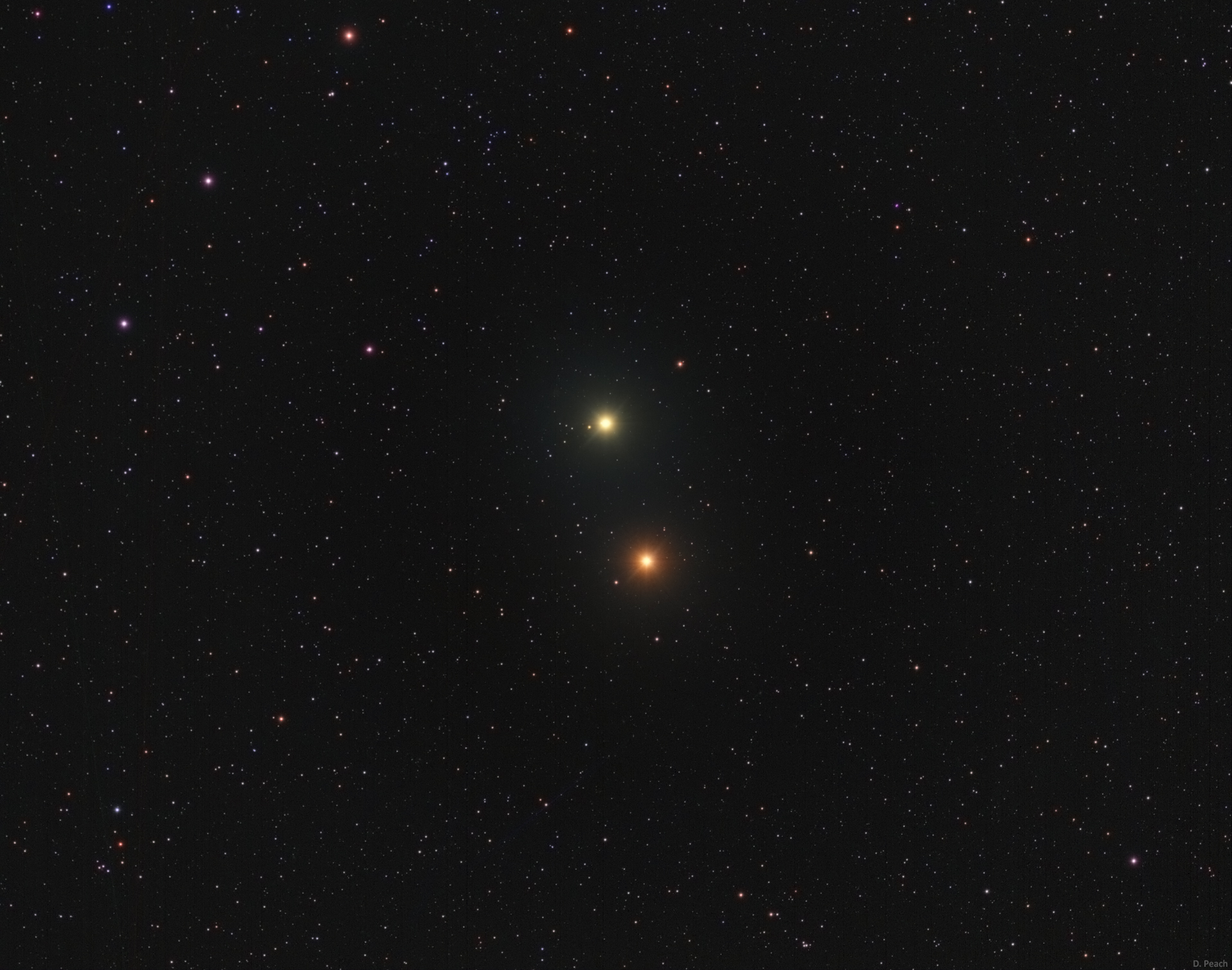
Fainter stars in the zodiacal constellation Capricornus are scattered near the plane of the ecliptic in this field of view. The two brightest ones at center aren't stars at all though, but the planets Mars and Saturn. Taken on the morning of April 4, the telescopic snapshot captured their tantalizing close conjunction in a predawn sky, the pair of planets separated by only about 1/3 of a degree. That's easily less than the apparent width of a Full Moon. Can you tell which planet is which? If you guessed Mars is the redder one , you'd be right. Above Mars, slightly fainter Saturn still shines with a paler yellowish tinge in reflected sunlight. Even at the low magnification, Saturn's largest and brightest moon Titan can be spotted hugging the planet very closely on the left.
Estrellas más tenues de la constelación zodiacal de Capricornio se dispersan cerca del plano de la eclíptica en este campo de visión. Las dos más brillantes en el centro, sin embargo, no son estrellas, sino los planetas Marte y Saturno. Esta imagen telescópica, tomada por la mañana del 4 de abril, capturó su tentadora conjunción cercana en un cielo previo al amanecer, con los dos planetas separados por solo aproximadamente un tercio de grado. Eso es fácilmente menor que el ancho aparente de una Luna Llena. ¿Puedes decir cuál planeta es cuál? Si adivinaste que Marte es el de color rojizo, estarías en lo cierto. Arriba de Marte, Saturno, ligeramente más tenue, aún brilla con un tono amarillento más pálido en la luz solar reflejada. Incluso a una baja magnificación, su luna más grande y brillante, Titán, puede ser observada muy cerca del planeta, a la izquierda.