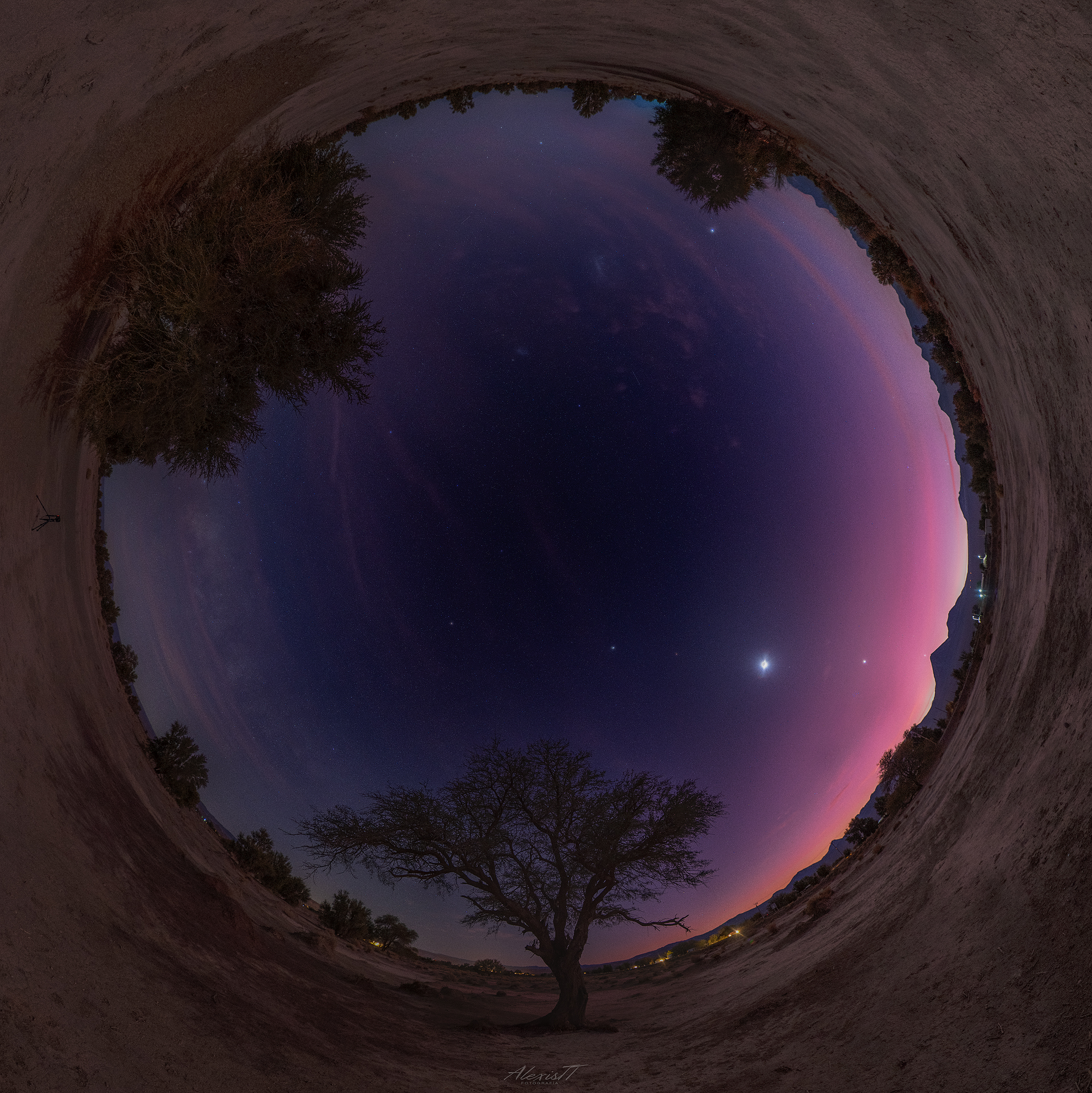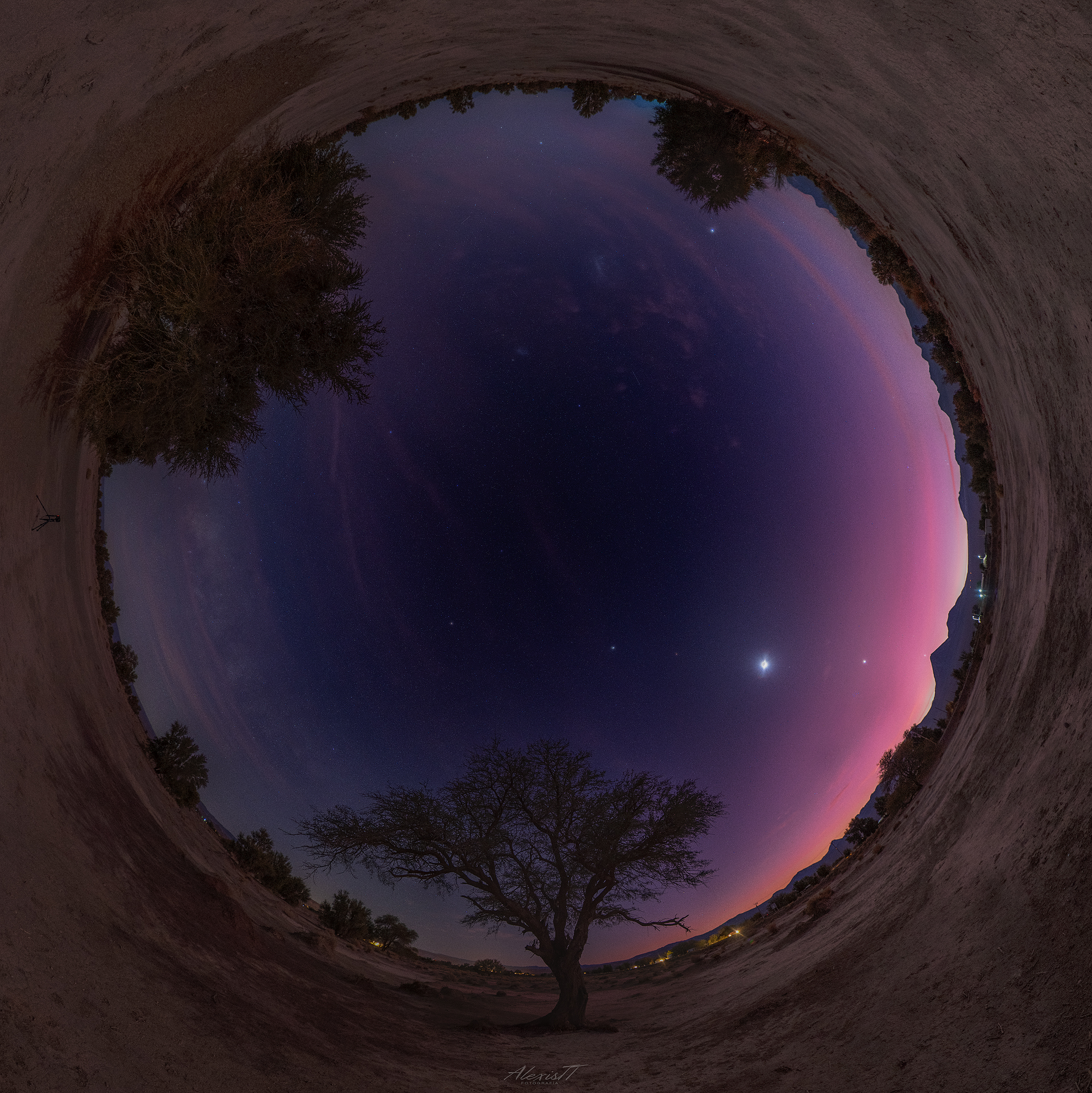
Yes, but have you ever seen all of the planets at once? A rare roll-call of planets has been occurring in the morning sky for much of June. The featured fisheye all-sky image, taken a few mornings ago near the town of San Pedro de Atacama in Chile, caught not only the entire planet parade, but the Moon between Mars and Venus. In order, left to right along the ecliptic plane, members of this Solar System family portrait are Earth, Saturn, Neptune, Jupiter, Mars, Uranus, Venus, Mercury, and Earth. To emphasize their locations, Neptune and Uranus have been artificially enhanced. The volcano just below Mercury is Licancabur. In July, Mercury will move into the Sun's glare but reappear a few days later on the evening side. Then, in August, Saturn will drift past the direction opposite the Sun and so become visible at dusk instead of dawn. The next time that all eight planets will be simultaneously visible in the evening sky will be in 2122. Notable Submissions to APOD: Morning Planet Parade 2022 June
Sí, pero ¿alguna vez has visto todos los planetas juntos? Un raro desfile planetario ha estado ocurriendo en el cielo matutino durante gran parte de junio. La imagen de cielo completo con lente de pescado, tomada hace unos días por la mañana cerca de la ciudad de San Pedro de Atacama en Chile, capturó no solo todo el desfile planetario, sino también la Luna entre Marte y Venus. En orden, de izquierda a derecha a lo largo del plano de la eclíptica, los miembros de este retrato familiar del Sistema Solar son: Tierra, Saturno, Neptuno, Júpiter, Marte, Urano, Venus, Mercurio y Tierra. Para resaltar sus ubicaciones, Neptuno y Urano han sido artificialmente realzados. El volcán justo debajo de Mercurio es el Licancabur. En julio, Mercurio se moverá hacia el brillo del Sol, pero reaparecerá unos días después en el lado vespertino. Luego, en agosto, Saturno se desplazará hacia la dirección opuesta al Sol y por lo tanto será visible al atardecer en lugar de al amanecer. La próxima vez que los ocho planetas sean visibles simultáneamente en el cielo vespertino será en 2122.