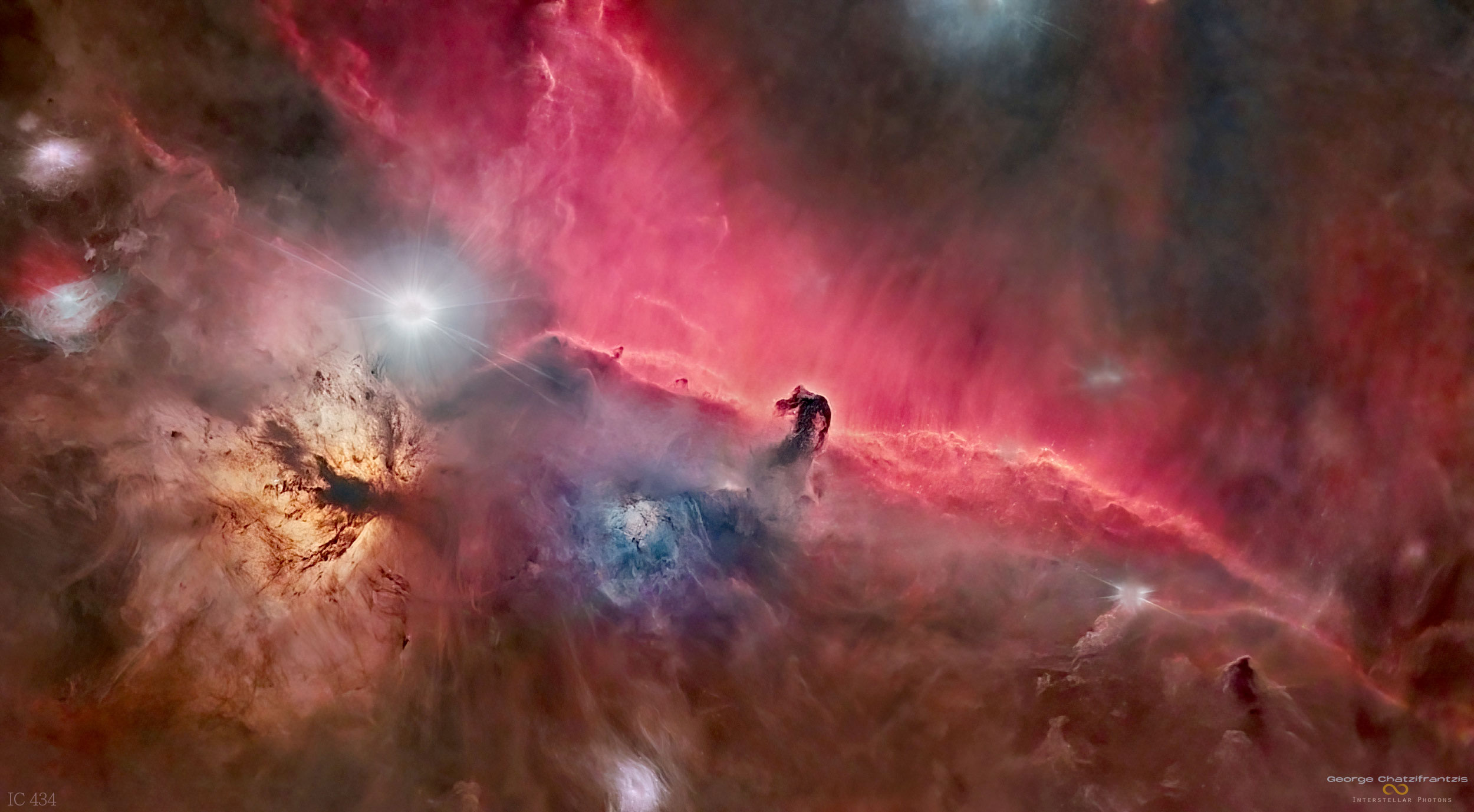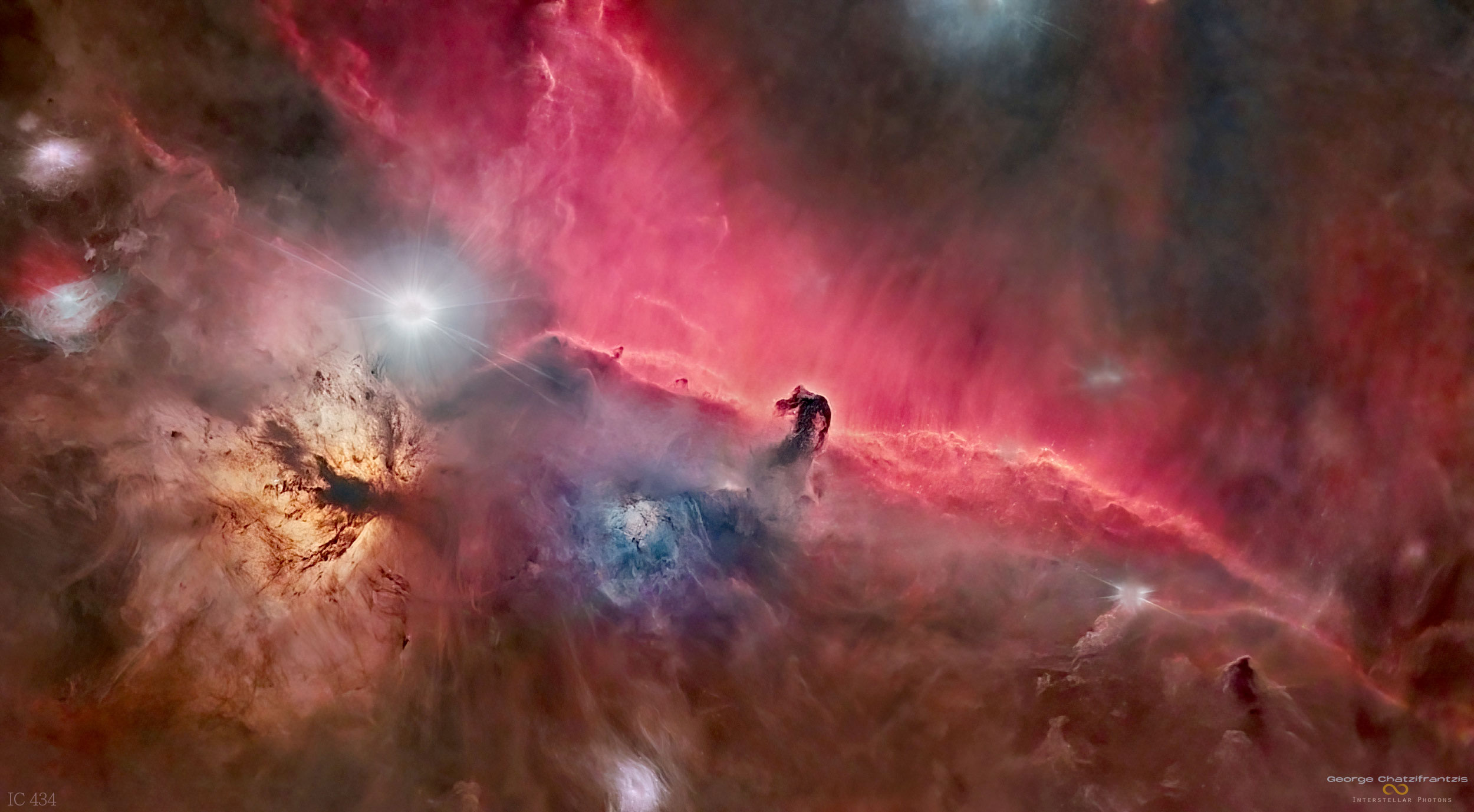
The famous Horsehead Nebula in Orion is not alone. A deep exposure shows that the dark familiar shaped indentation, visible just right of center, is part of a vast complex of absorbing dust and glowing gas. The featured spectacular picture details an intricate tapestry of gaseous wisps and dust-laden filaments that were created and sculpted over eons by stellar winds and ancient supernovas. The Flame Nebula is visible in orange just to the Horsehead's left. To highlight the dust and gas, most of the stars have been digitally removed, although a notable exception is Alnitak, just above the Flame Nebula, which is the rightmost star in Orion's famous belt of three aligned stars. The Horsehead Nebula lies 1,500 light years distant towards the constellation of Orion. NASA Coverage: Artemis I Mission to the Moon Teachers & Students: Ideas for utilizing APOD in the classroom
Crédito: NASA, CGRO SSC La famosa Nebulosa del Caballo de Troya en Orión no está sola. Una exposición profunda muestra que la indentación oscura y familiar, visible justo a la derecha del centro, forma parte de un complejo vasto de polvo absorbente y gas brillante. La imagen espectacular mostrada detalla una intrincada tela de hilos gaseosos y filamentos cargados de polvo que fueron creados y moldeados a lo largo de eones por vientos estelares y antiguas supernovas. La Nebulosa de la Llama es visible en naranja justo a la izquierda del Caballo de Troya. Para resaltar el polvo y el gas, la mayoría de las estrellas han sido eliminadas digitalmente, aunque una excepción notable es Alnitak, justo encima de la Nebulosa de la Llama, que es la estrella más a la derecha en la famosa cintura de tres estrellas alineadas de Orión. La Nebulosa del Caballo de Troya se encuentra a 1500 años luz de distancia hacia la constelación de Orión.