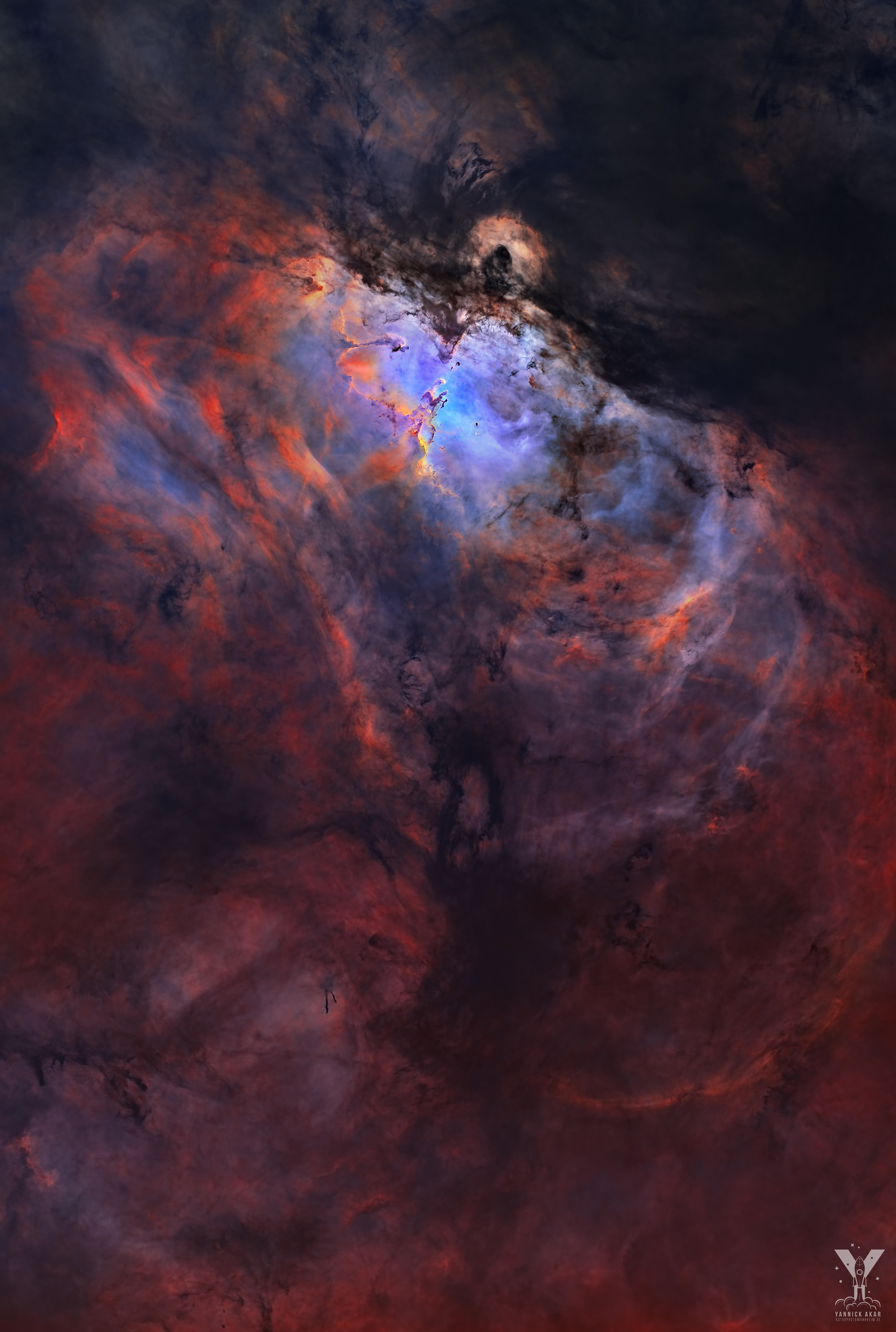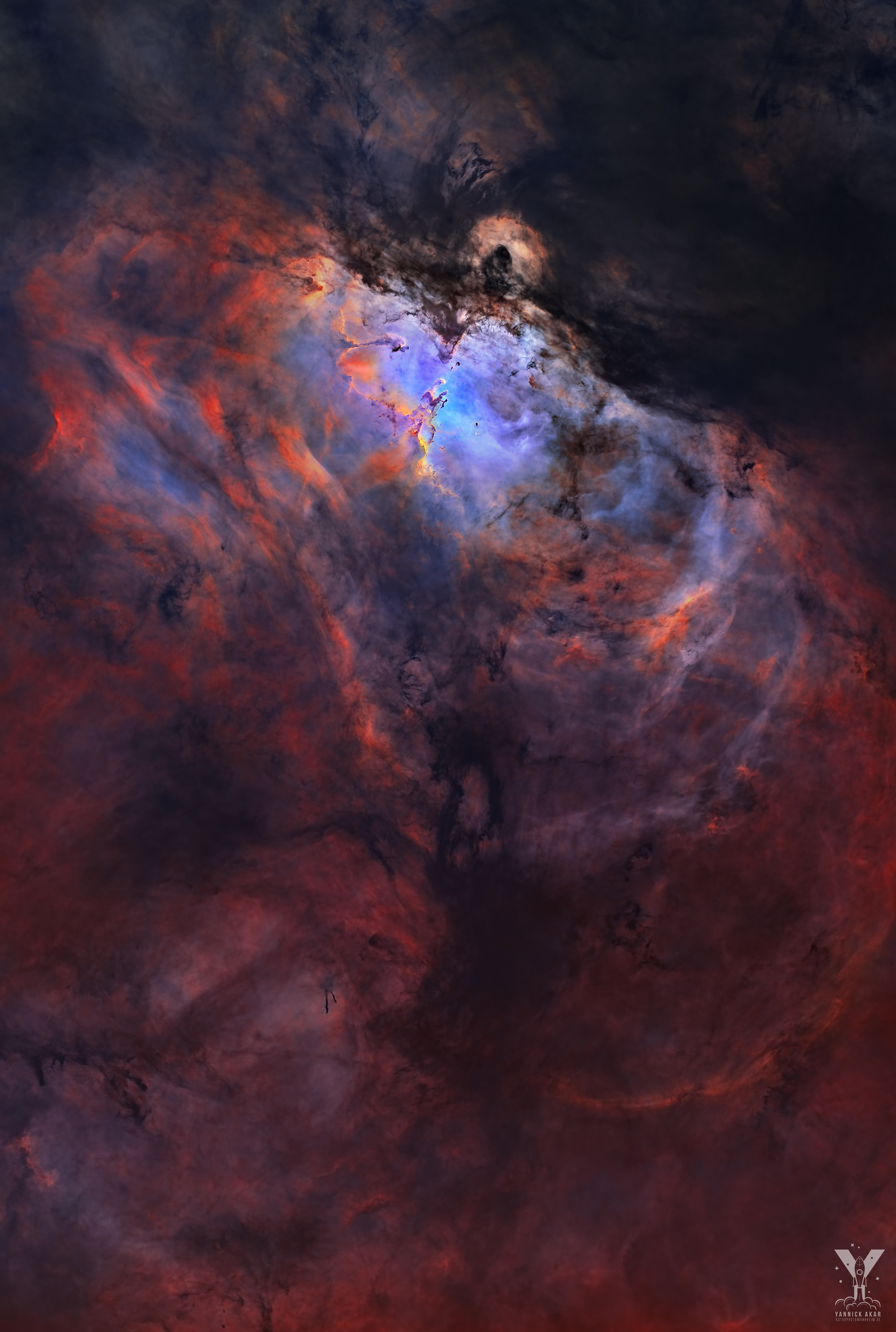
The whole thing looks like an eagle. A closer look at the Eagle Nebula's center, however, shows the bright region is actually a window into the center of a larger dark shell of dust. Through this window, a brightly-lit workshop appears where a whole open cluster of stars is being formed. In this cavity tall pillars and round globules of dark dust and cold molecular gas remain where stars are still forming. Paradoxically, it is perhaps easier to appreciate this impressive factory of star formation by seeing it without its stars -- which have been digitally removed in the featured image. The Eagle emission nebula, tagged M16, lies about 6500 light years away, spans about 20 light-years, and is visible with binoculars toward the constellation of the Serpent (Serpens). Creating this picture involved over 22 hours of imaging and combining colors emitted specifically by hydrogen (red), and oxygen (blue).
Todo parece un águila. Una mirada más cercana al centro de la Nebulosa del Águila, sin embargo, muestra que la región brillante es en realidad una ventana hacia el centro de una concha más grande de polvo oscuro. A través de esta ventana aparece un taller brillantemente iluminado donde se está formando un todo cúmulo abierto de estrellas. En esta cavidad permanecen pilares altos y globulos redondos de polvo oscuro y gas molecular frío donde aún se están formando estrellas. Paradójicamente, quizás sea más fácil apreciar esta impresionante fábrica de formación estelar al verla sin sus estrellas -- las cuales han sido eliminadas digitalmente en la imagen destacada. La nebulosa de emisión del Águila, etiquetada como M16, se encuentra a unos 6500 años luz de distancia, abarca unos 20 años luz, y es visible con binoculares hacia la constelación de la Serpiente (Serpens). Crear esta imagen involucró más de 22 horas de imágenes y combinación de colores emitidos específicamente por el hidrógeno (rojo), y el oxígeno (azul).