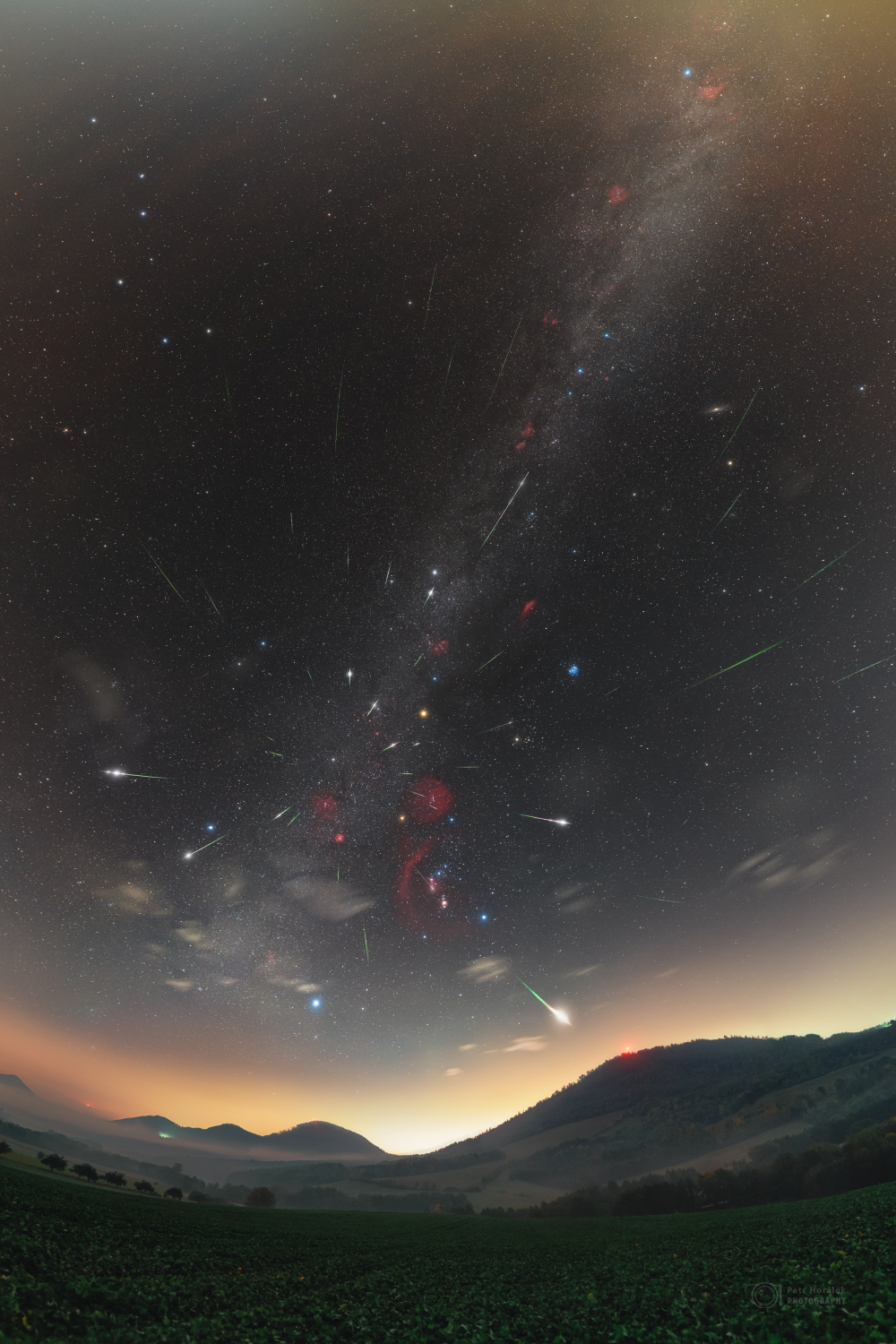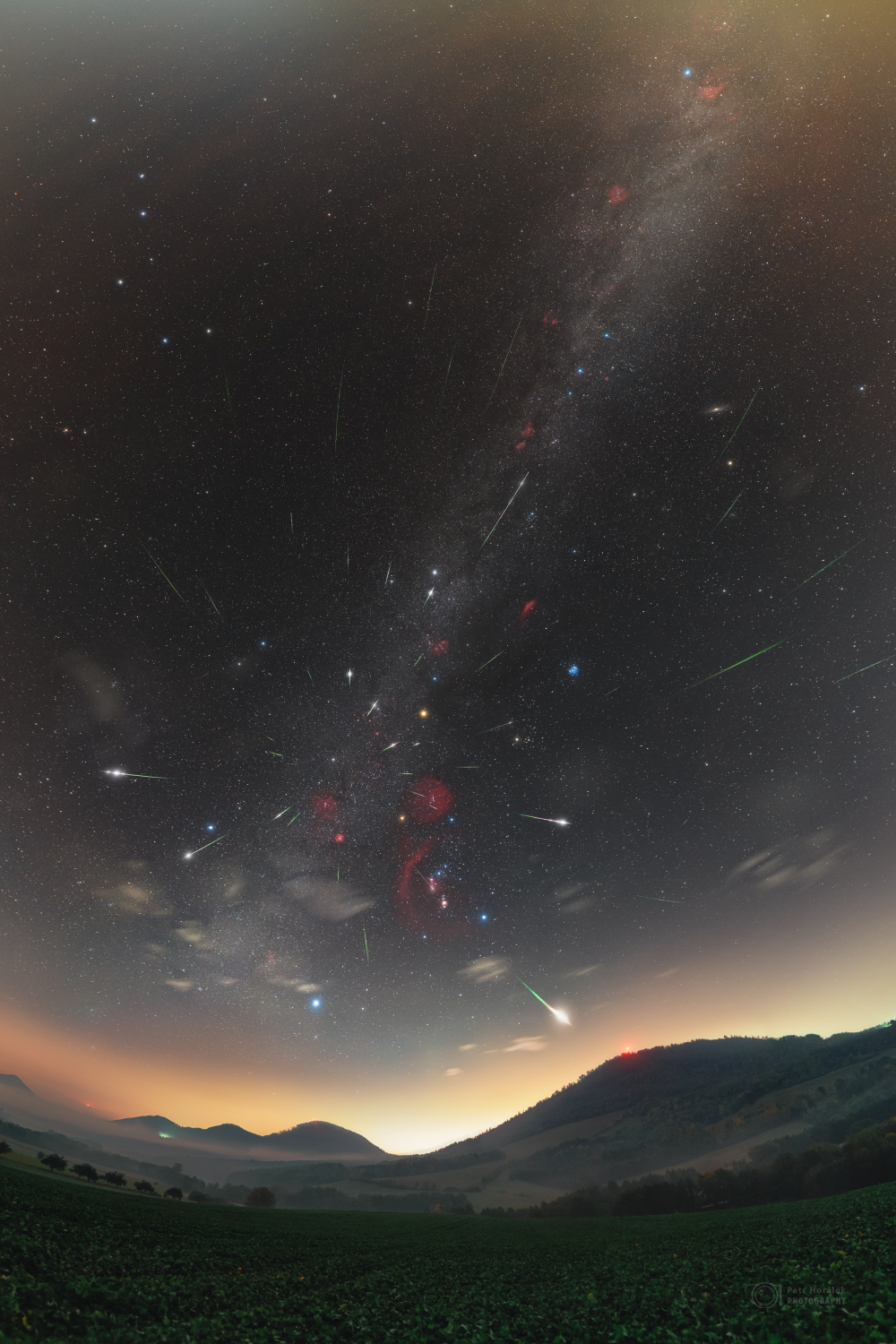
History's first known periodic comet Halley (1P/Halley) returns to the inner Solar System every 75 years or so. The famous comet made its last appearance to the naked-eye in 1986. But dusty debris from Comet Halley can be seen raining through planet Earth's skies twice a year during two annual meteor showers, the Eta Aquarids in May and the Orionids in October. Including meteors near the shower maximum on October 21, this composite view compiles Orionid meteors captured from years 2015 through 2022. About 47 bright meteors are registered in the panoramic night skyscape. Against a starry background extending along the Milky Way, the Orionid meteors all seem to radiate from a point just north of Betelgeuse in the familiar constellation of the Hunter. In the foreground are mountains in eastern Slovakia near the city of Presov.
El cometa Halley (1P/Halley), el primer cometa periódico conocido en la historia, regresa al sistema solar interior cada 75 años aproximadamente. Este famoso cometa hizo su última aparición visible a simple vista en 1986. Pero los restos polvorientos del cometa Halley pueden verse cayendo a través de los cielos de la Tierra dos veces al año durante dos lluvias anuales de meteoros, las Eta Acuáridas en mayo y las Orionídeas en octubre. Incluyendo meteoros cerca del máximo de la lluvia el 21 de octubre, esta vista compuesta compila meteoros Orionídeos capturados desde los años 2015 hasta 2022. Aproximadamente 47 meteoros brillantes están registrados en esta panorámica del cielo nocturno. Contra un fondo estrellado que se extiende a lo largo de la Vía Láctea, los meteoros Orionídeos parecen radiar desde un punto justo al norte de Betelgeuse en la constelación familiar del Cazador. En primer plano se encuentran montañas en el este de Eslovaquia cerca de la ciudad de Prešov.