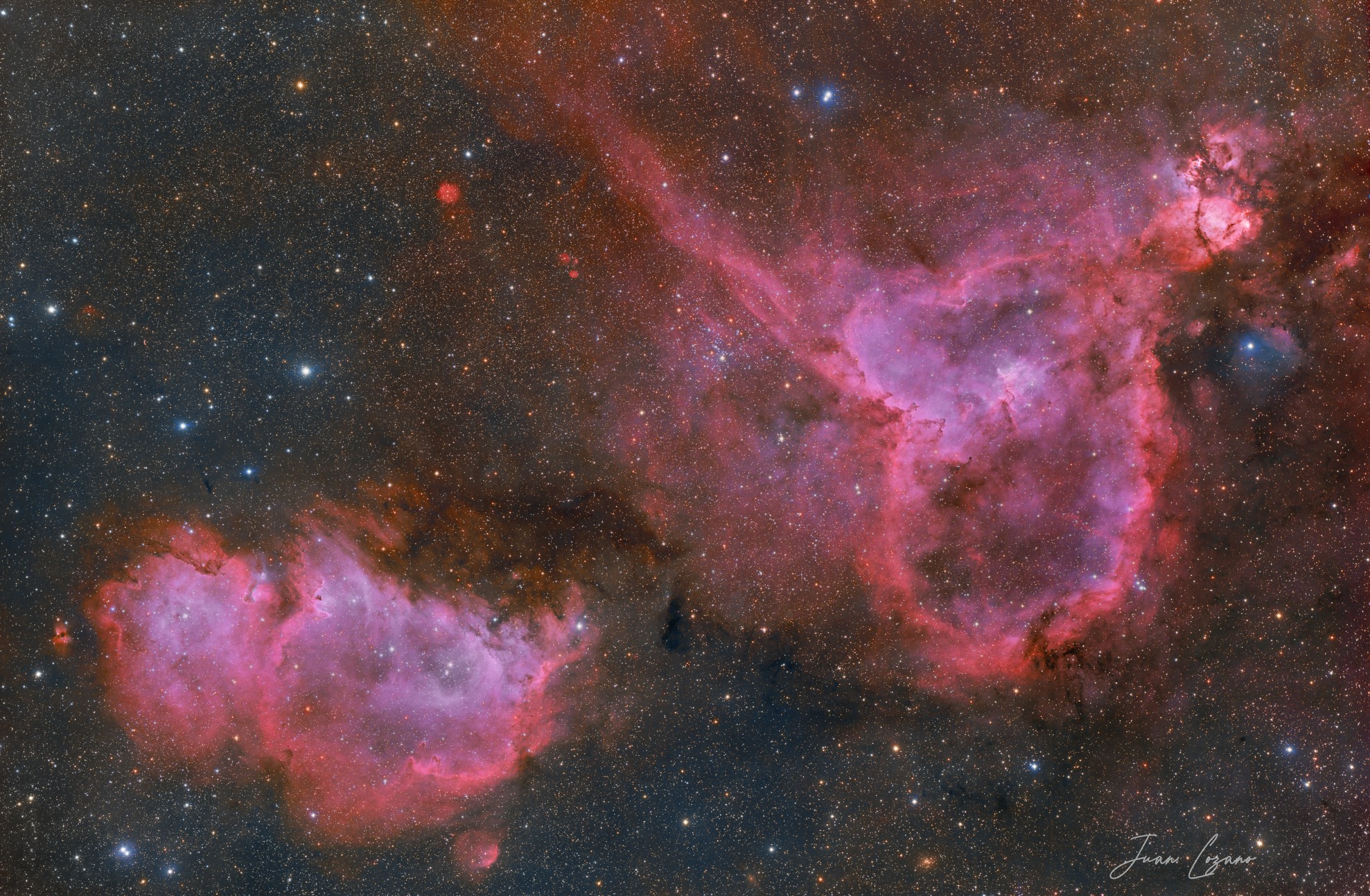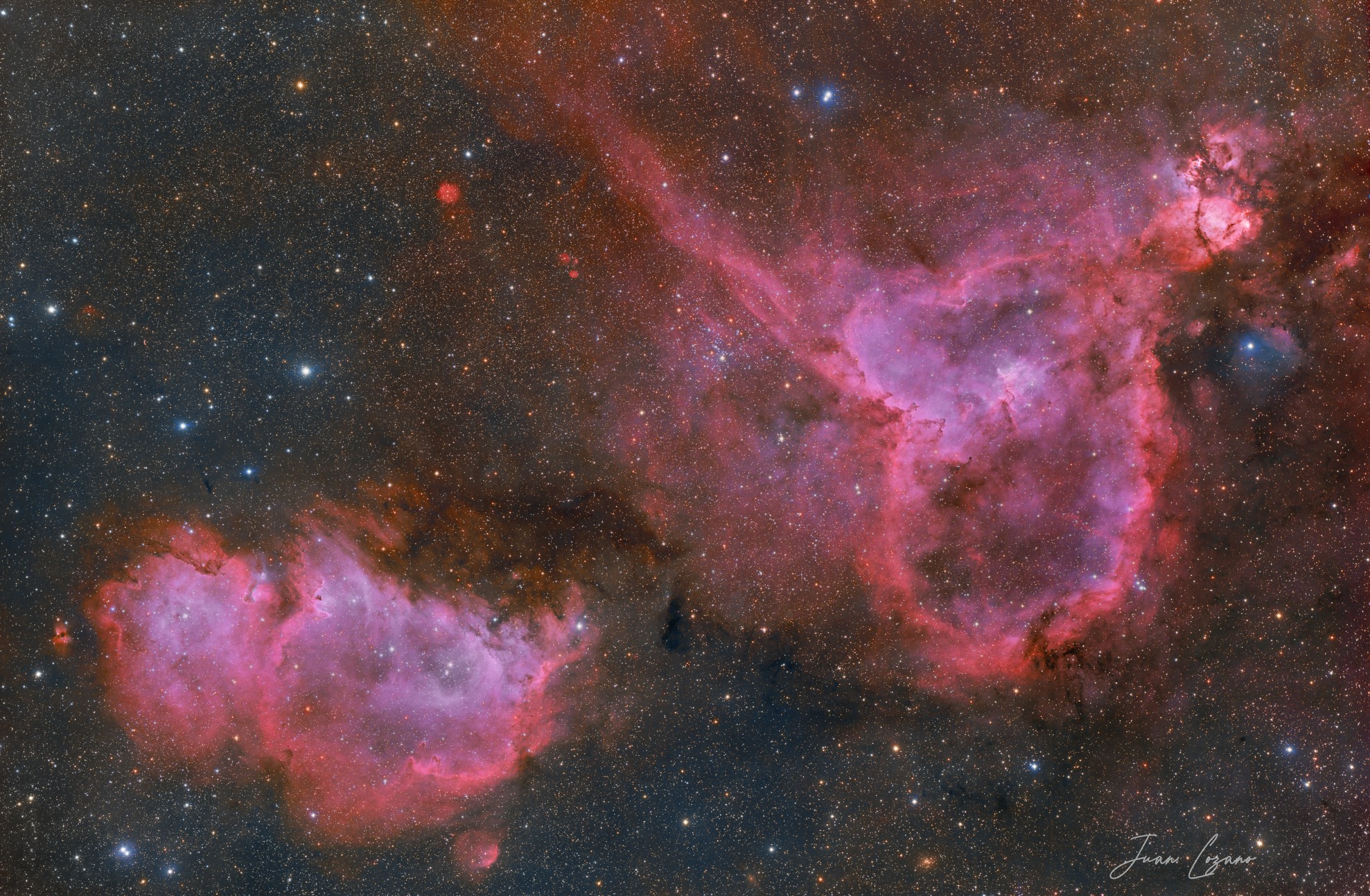
Is the heart and soul of our Galaxy located in Cassiopeia? Possibly not, but that is where two bright emission nebulas nicknamed Heart and Soul can be found. The Heart Nebula, officially dubbed IC 1805 and visible in the featured image on the upper right, has a shape reminiscent of a classical heart symbol. The shape is perhaps fitting for Valentine's Day. The Soul Nebula is officially designated IC 1871 and is visible on the lower left. Both nebulas shine brightly in the red light of energized hydrogen, one of three colors shown in this three-color montage. Light takes about 6,000 years to reach us from these nebulas, which together span roughly 300 light years. Studies of stars and clusters like those found in the Heart and Soul nebulas have focused on how massive stars form and how they affect their environment.
¿Se encuentra el corazón y la alma de nuestra Galaxia en Casiopea? Probablemente no, pero es allí donde se encuentran dos brillantes nebulosas de emisión apodadas Corazón y Alma. La nebulosa Corazón, oficialmente denominada IC 1805 y visible en la imagen destacada en la parte superior derecha, tiene una forma que recuerda al símbolo clásico de un corazón. Esta forma podría ser adecuada para el Día de San Valentín. La nebulosa Alma está oficialmente designada como IC 1871 y es visible en la parte inferior izquierda. Ambas nebulosas brillan intensamente en la luz roja del hidrógeno energizado, uno de los tres colores mostrados en esta composición de tres colores. La luz tarda aproximadamente 6000 años en llegar hasta nosotros desde estas nebulosas, que juntas abarcan unos 300 años luz. Los estudios de estrellas y agrupaciones como las encontradas en las nebulosas Corazón y Alma se han centrado en cómo se forman las estrellas masivas y cómo afectan a su entorno.