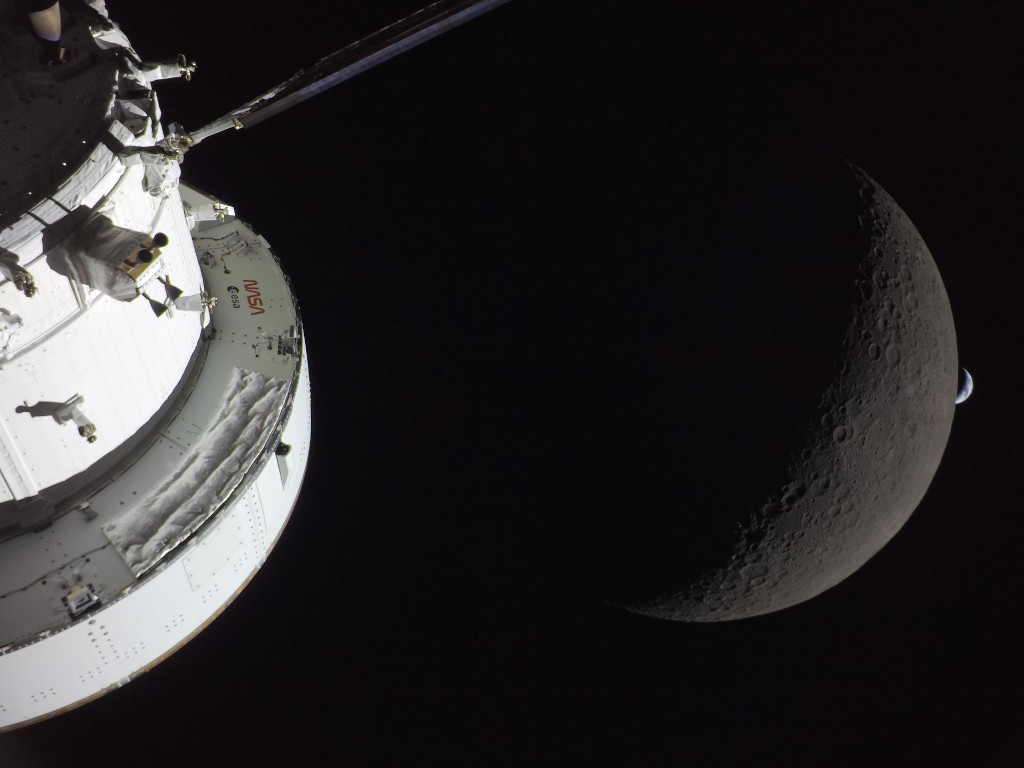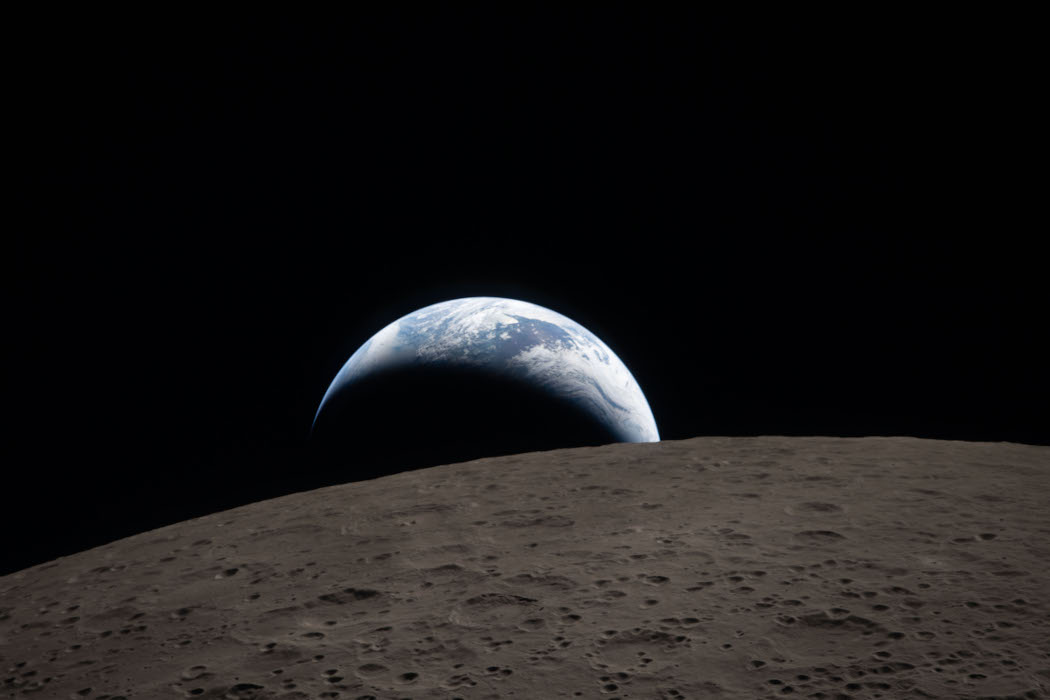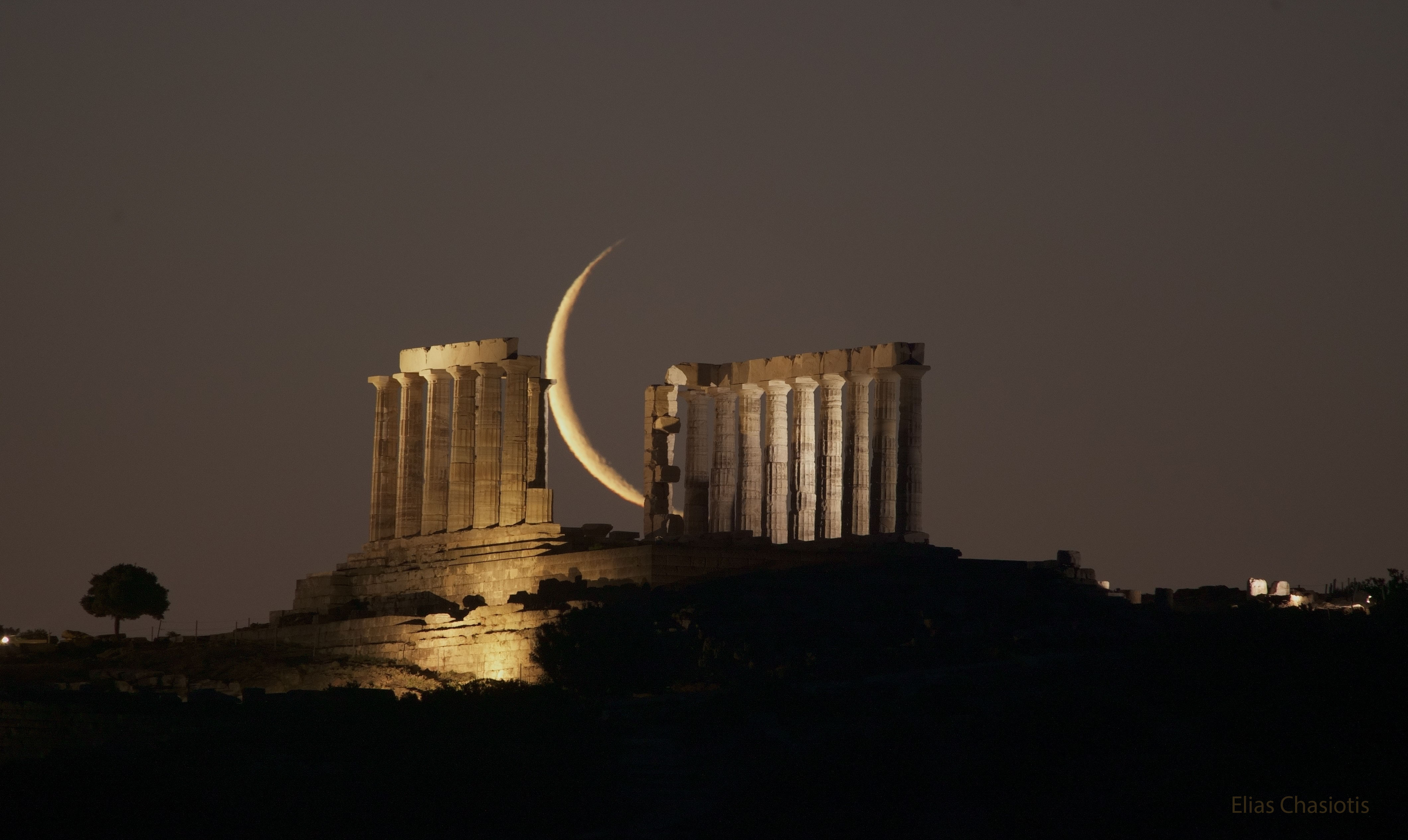
Why is a thin crescent moon never seen far from a horizon? Because the only geometry that gives a thin crescent lunar phase occurs when the Moon appears close to the Sun in the sky. The crescent is not caused by the shadow of the Earth, but by seeing only a small part of the Moon directly illuminated by the Sun. Moreover, the thickest part of the crescent always occurs in the direction of the Sun. In the evening, a thin crescent Moon will set shortly after the Sun and not be seen for the rest of the night. Alternatively, in the morning, a crescent Moon will rise shortly before the Sun after not being seen for most of the night. Pictured two weeks ago, a crescent moon was captured near the horizon, just before sunrise, far behind remnants of the ancient Temple of Poseidon in Greece.
¿Por qué nunca se ve una delgada luna creciente lejos del horizonte? Porque la única geometría que produce una fase lunar de creciente delgado ocurre cuando la Luna aparece cerca del Sol en el cielo. La creciente no es causada por la sombra de la Tierra, sino por ver solo una pequeña parte de la Luna directamente iluminada por el Sol. Además, la parte más gruesa de la creciente siempre ocurre en la dirección del Sol. En la tarde, una luna creciente delgada se pondrá poco después del Sol y no se verá por el resto de la noche. Alternativamente, en la mañana, una luna creciente saldrá poco antes del Sol después de no haberse visto por la mayor parte de la noche. Hace dos semanas, una luna creciente fue capturada cerca del horizonte, justo antes del amanecer, muy atrás de los restos del antiguo Templo de Poseidón en Grecia.