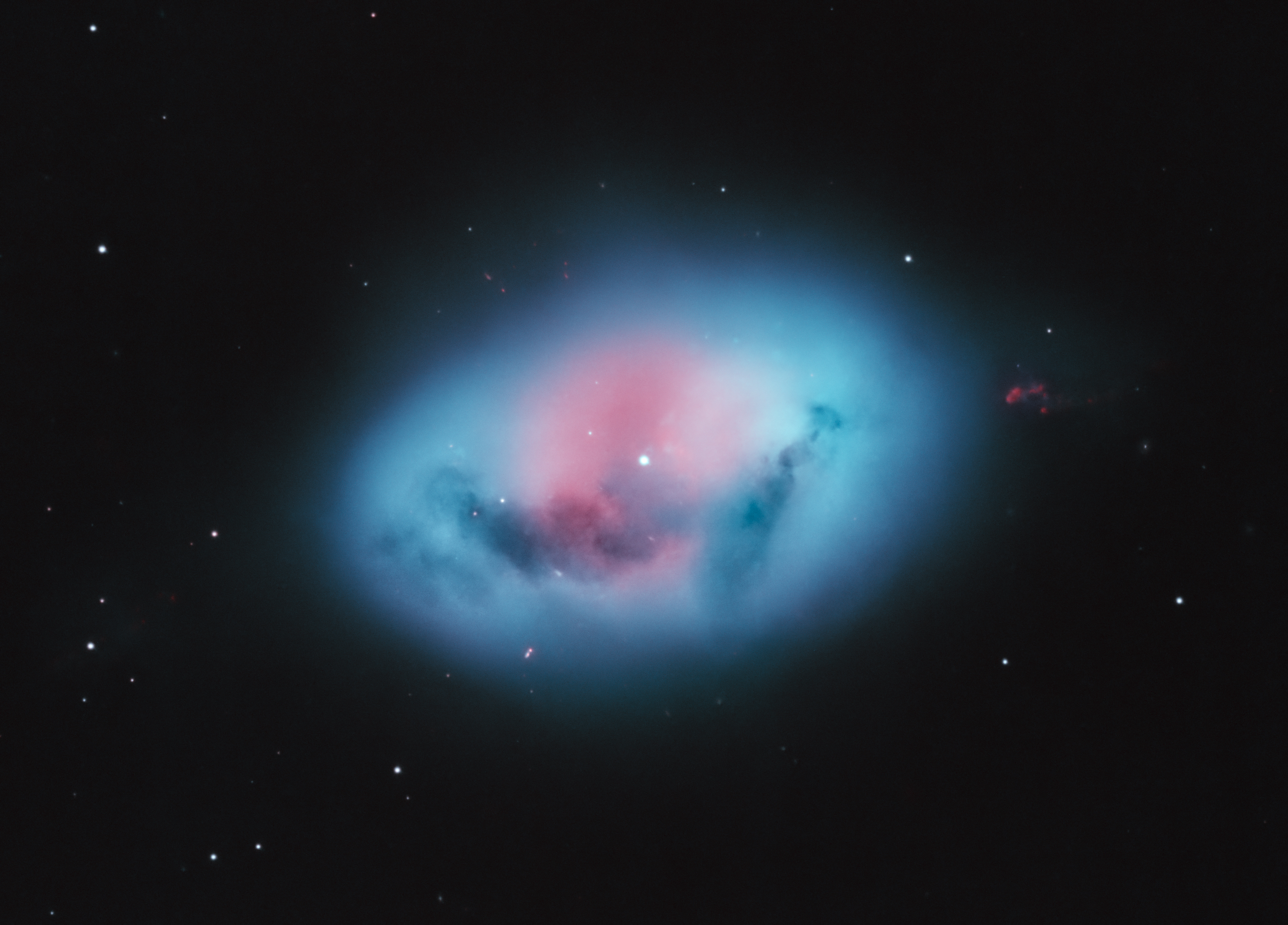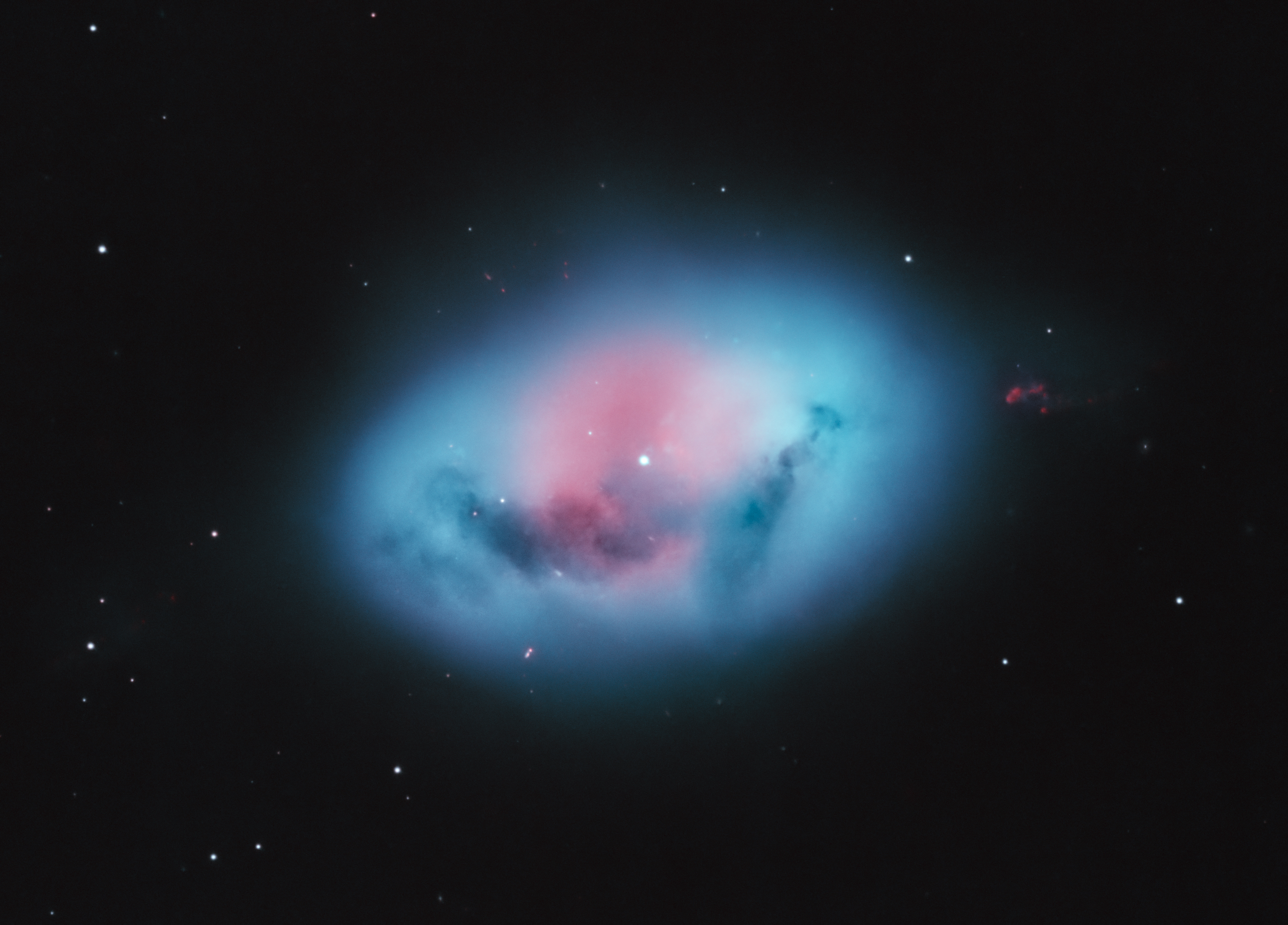
This pretty nebula lies some 1,500 light-years away, its shape and color in this telescopic view reminiscent of a robin's egg. The cosmic cloud spans about 3 light-years, nestled securely within the boundaries of the southern constellation Fornax. Recognized as a planetary nebula, egg-shaped NGC 1360 doesn't represent a beginning though. Instead it corresponds to a brief and final phase in the evolution of an aging star. In fact, visible at the center of the nebula, the central star of NGC 1360 is known to be a binary star system likely consisting of two evolved white dwarf stars, less massive but much hotter than the Sun. Their intense and otherwise invisible ultraviolet radiation has stripped away electrons from the atoms in their mutually surrounding gaseous shroud. The predominant blue-green hue of NGC 1360 seen here is the strong emission produced as electrons recombine with doubly ionized oxygen atoms.
Crédito: NASA, ESA, Hubble Heritage Team (STScI/AURA) Esta hermosa nebulosa se encuentra a unos 1500 años luz de distancia, su forma y color en esta imagen obtenida con telescopio evocan el de un huevo de ruiseñor. La nube cósmica tiene un tamaño de aproximadamente 3 años luz, y se encuentra firmemente dentro de los límites de la constelación austral Fornax. Reconocida como una nebulosa planetaria, la nebulosa en forma de huevo NGC 1360 no representa un comienzo, sino que corresponde a una fase breve y final en la evolución de una estrella envejecida. De hecho, visible en el centro de la nebulosa, la estrella central de NGC 1360 es conocida como un sistema binario de estrellas, probablemente compuesto por dos enanas blancas evolucionadas, menos masivas pero mucho más calientes que el Sol. Su intensa radiación ultravioleta, invisible a simple vista, ha arrancado electrones de los átomos en su capa gaseosa compartida. El tono azul-verdoso predominante de NGC 1360 que se ve aquí es la fuerte emisión producida cuando los electrones se recombinan con átomos de oxígeno doblemente ionizados.