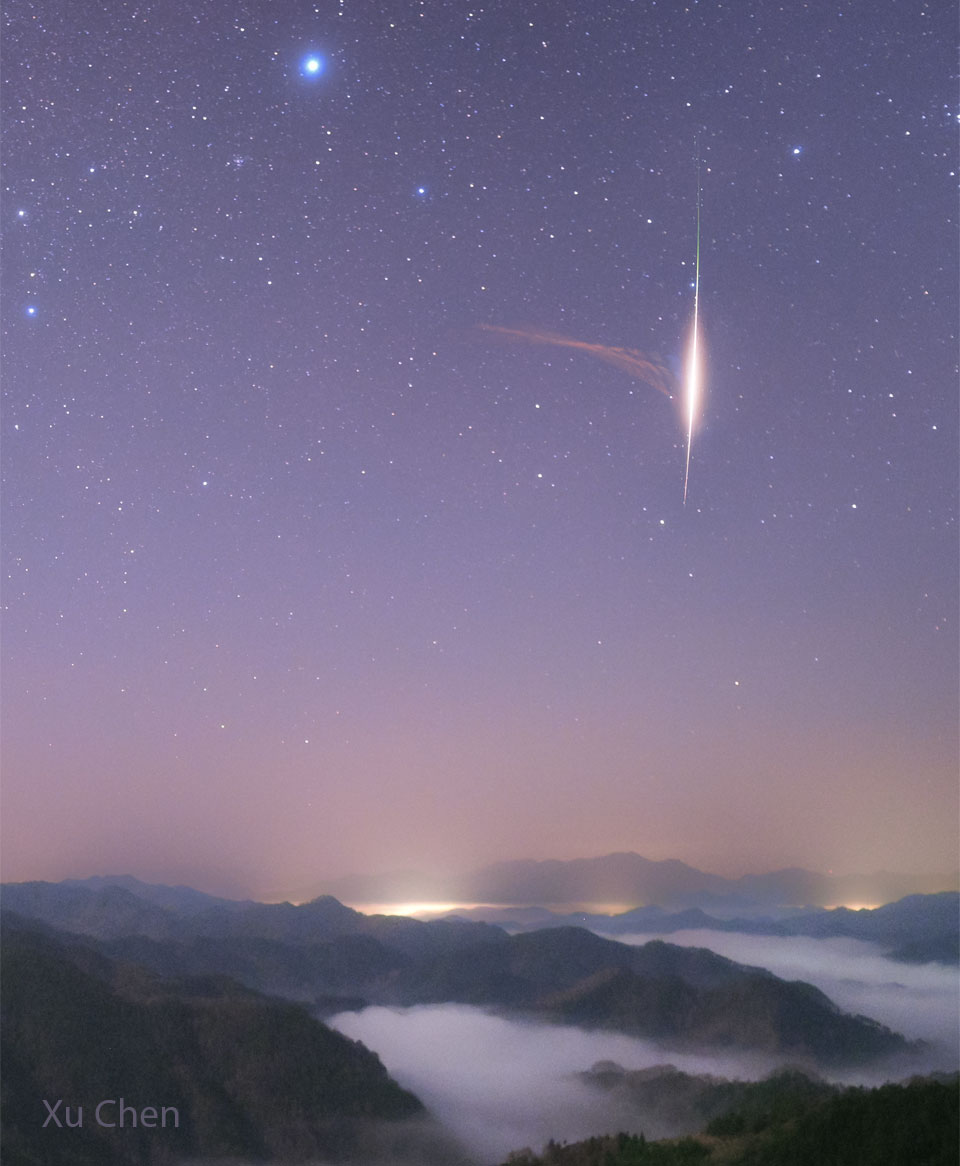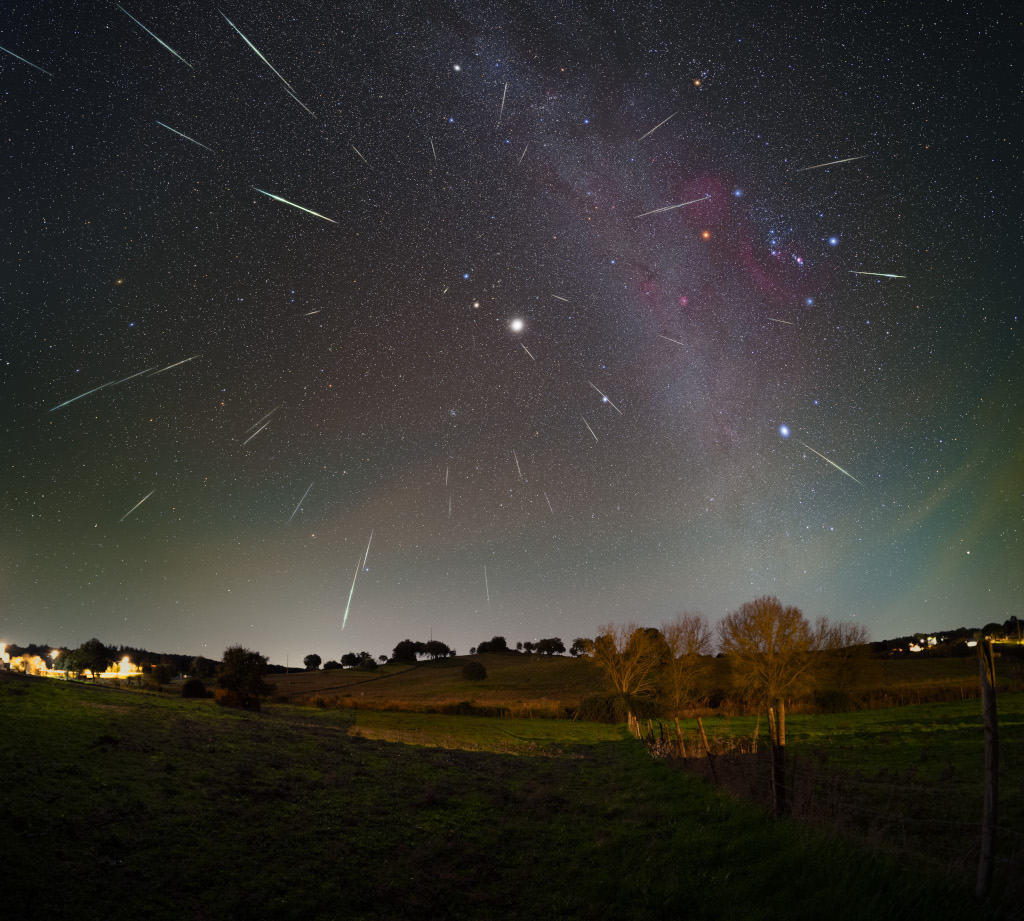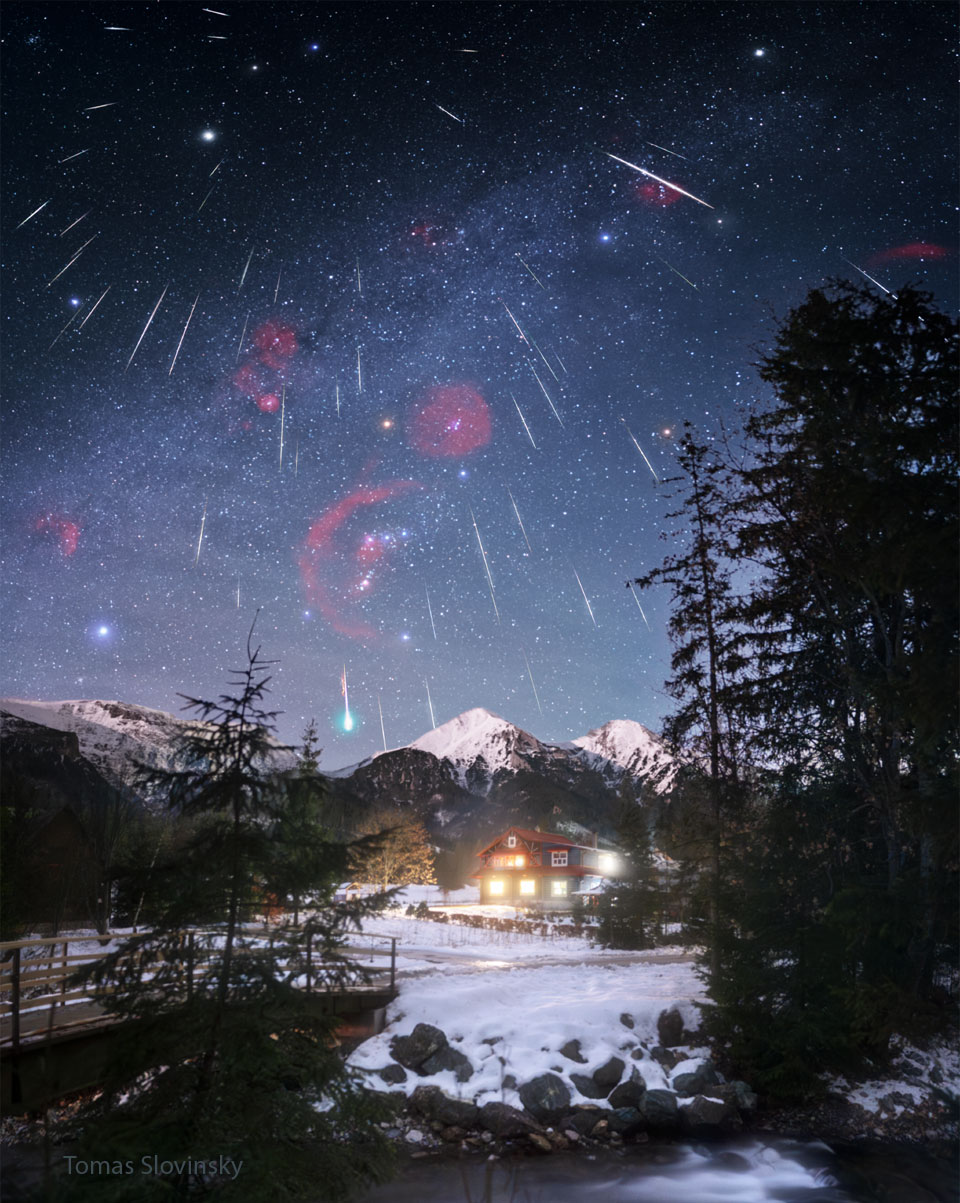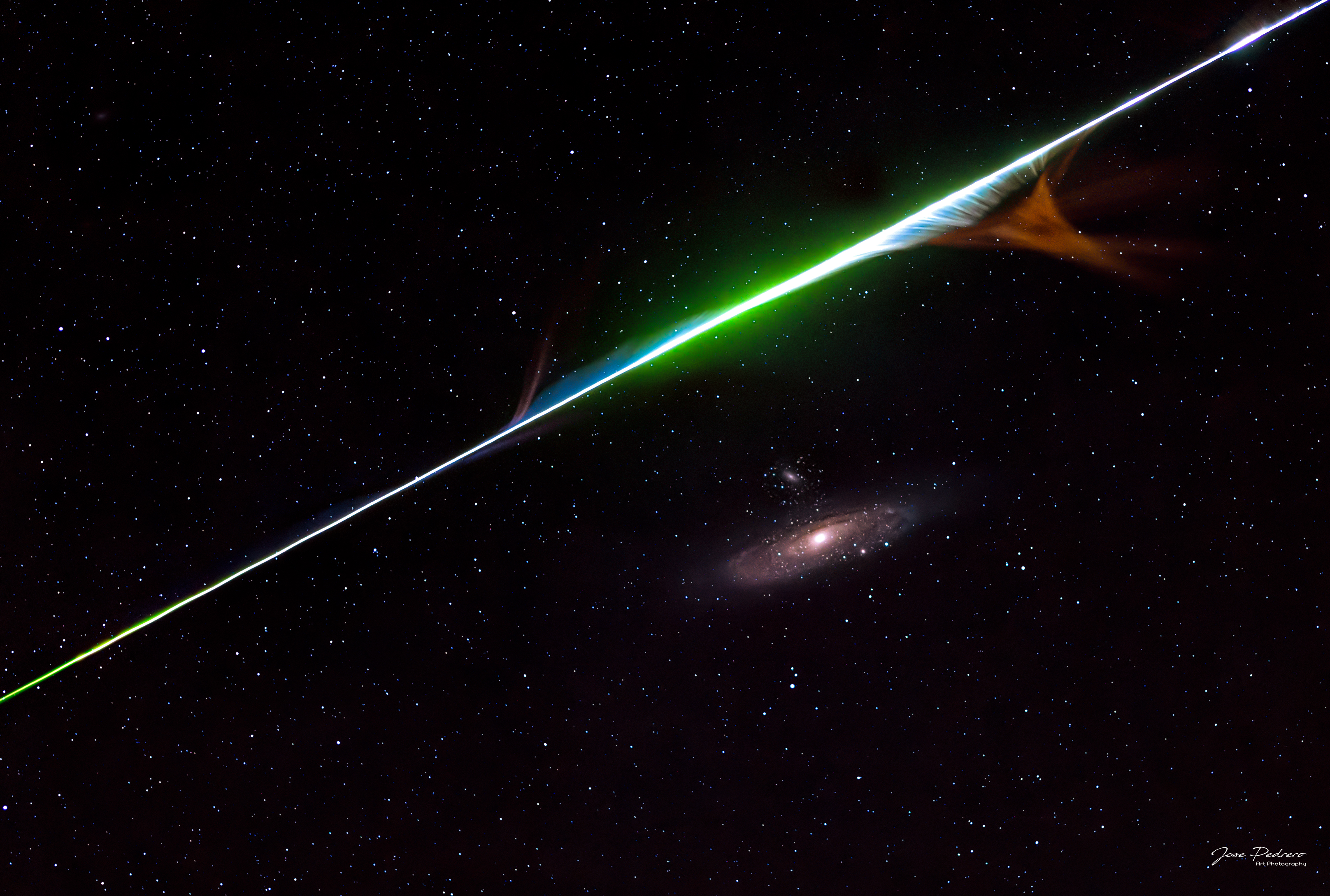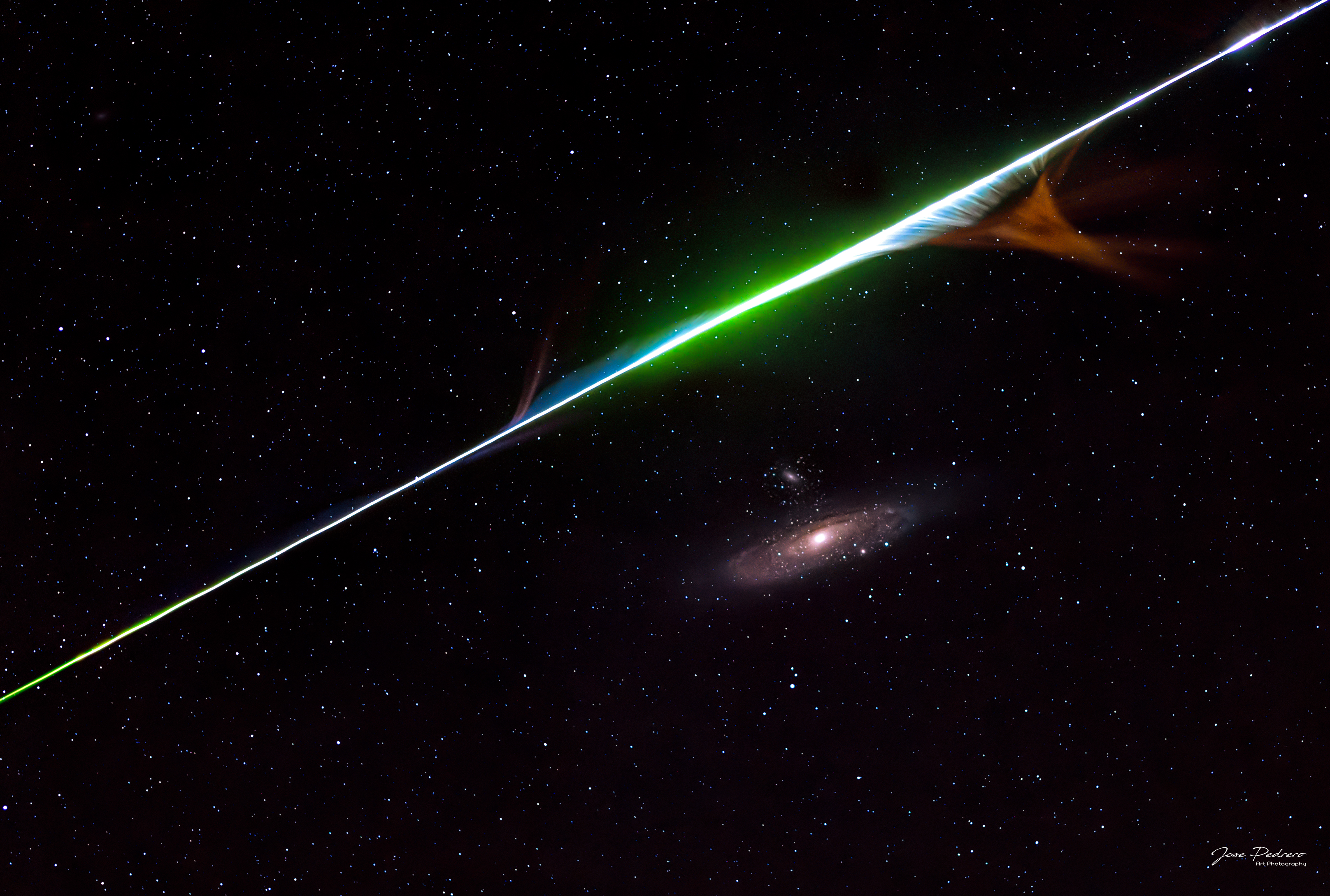
It came from outer space. It -- in this case a sand-sized bit of a comet nucleus -- was likely ejected many years ago from Sun-orbiting Comet Swift-Tuttle, but then continued to orbit the Sun alone. When the Earth crossed through this orbit, the piece of comet debris impacted the atmosphere of our fair planet and was seen as a meteor. This meteor deteriorated, causing gases to be emitted that glowed in colors emitted by its component elements. The featured image was taken last week from Castilla La Mancha, Spain, during the peak night of the Perseids meteor shower. The picturesque meteor streak happened to appear in the only one of 50 frames that also included the Andromeda galaxy. Stars dot the frame, each much further away than the meteor. Compared to the stars, the Andromeda galaxy (M31) is, again, much further away.
Vino del espacio exterior. Este fragmento, del tamaño de una partícula de arena y originario del núcleo de un cometa, probablemente fue eyectado hace muchos años del cometa Swift-Tuttle, que orbita al Sol, pero continuó orbitando al Sol por su cuenta. Cuando la Tierra cruzó por esta órbita, la partícula de escombros del cometa impactó la atmósfera de nuestro planeta y se observó como un meteorito. Este meteorito se desintegró, liberando gases que brillaron en colores característicos de sus elementos constituyentes. La imagen destacada fue tomada la semana pasada en Castilla-La Mancha, España, durante la noche de mayor actividad de la lluvia de meteoros Perseidas. El impactante rastro del meteorito apareció casualmente en solo una de 50 tomas, que también incluyó la galaxia de Andrómeda. Estrellas puntuales decoran el marco, cada una mucho más lejana que el meteorito. Comparado con las estrellas, la galaxia de Andrómeda (M31) está, una vez más, mucho más lejos.