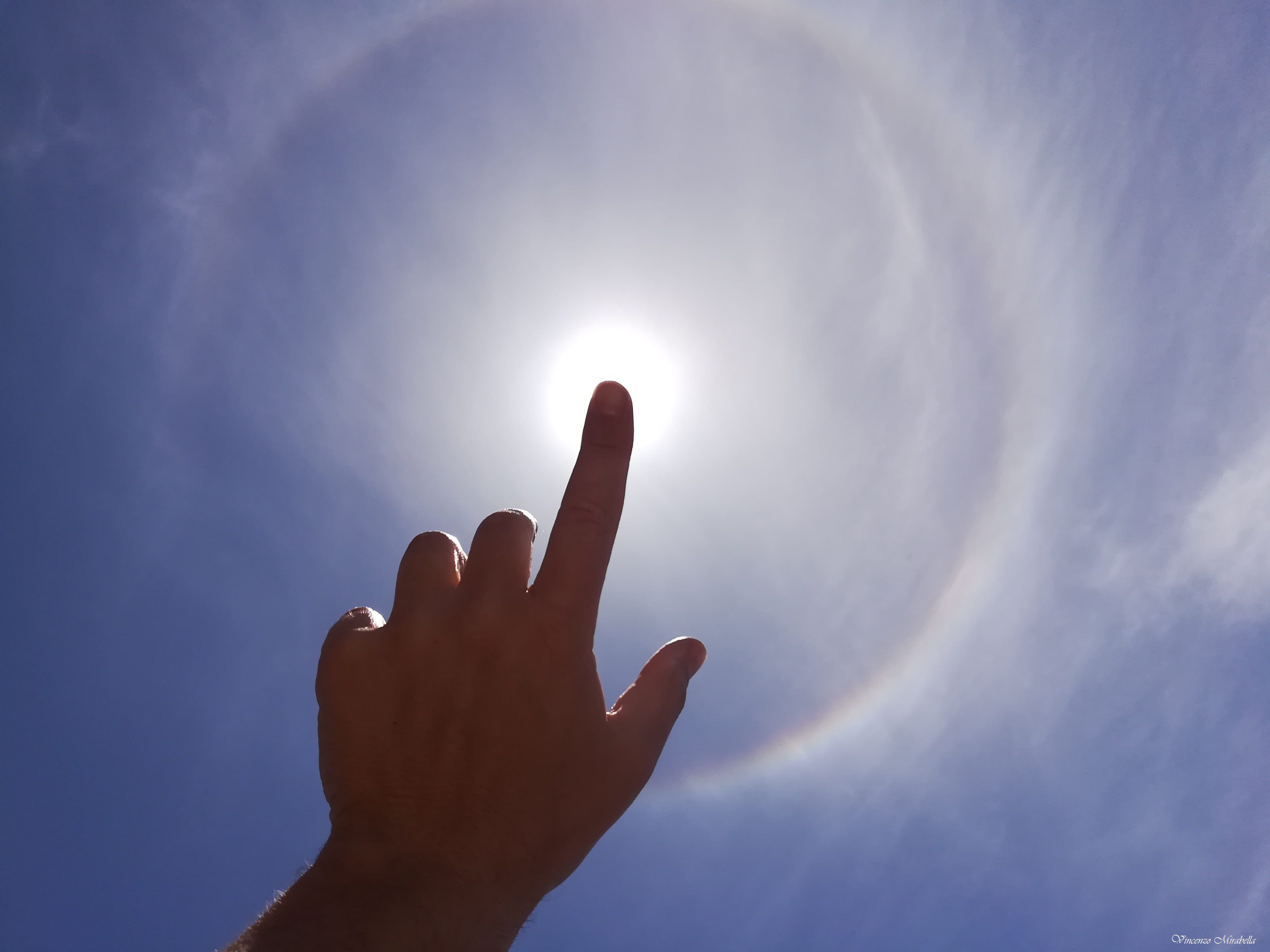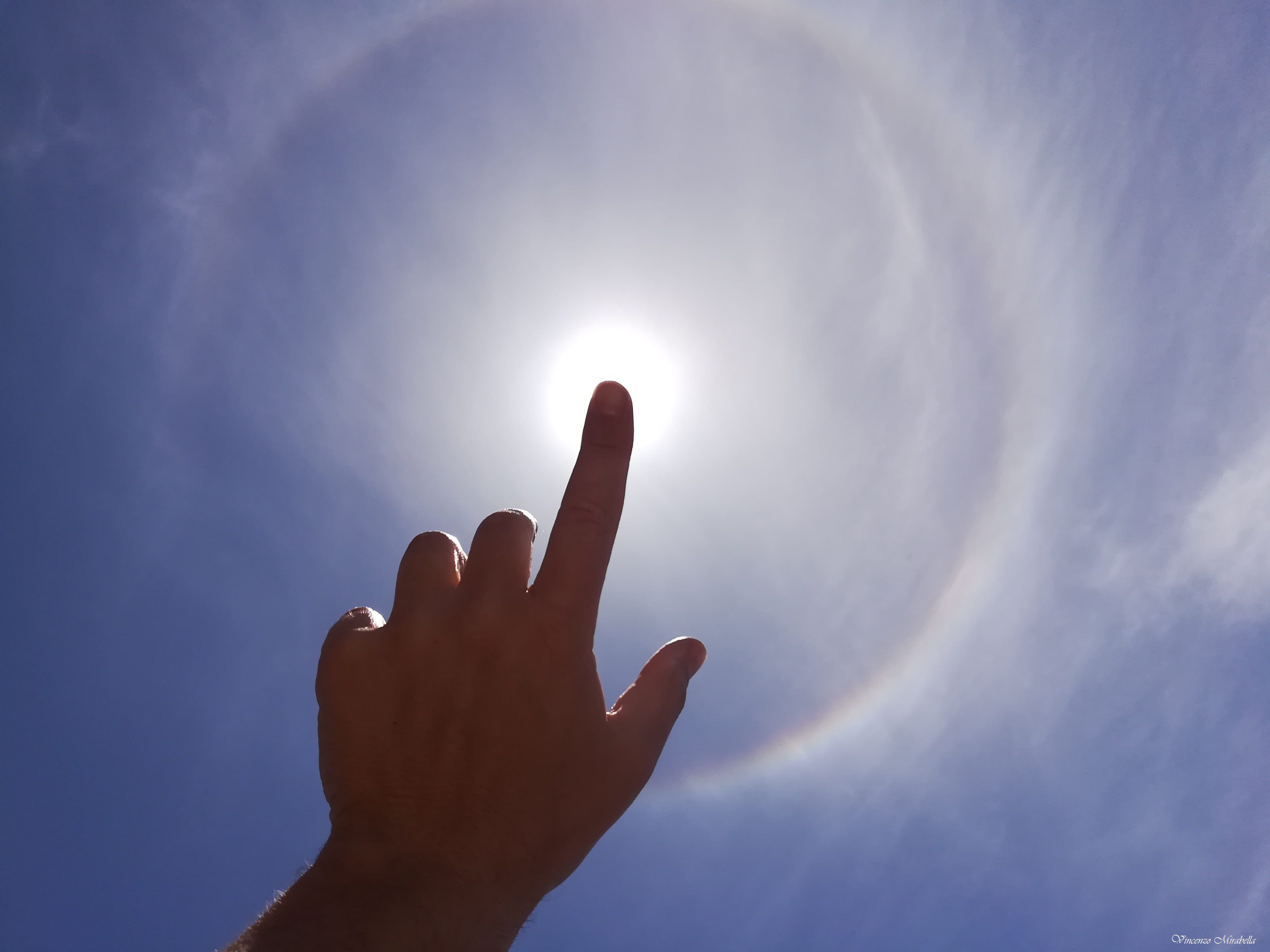
Want to see a ring around the Sun? It's easy to do in daytime skies around the world. Created by randomly oriented ice crystals in thin high cirrus clouds, circular 22 degree halos are visible much more often than rainbows. This one was captured by smart phone photography on May 29, 2021 near Rome, Italy. Carefully blocking the Sun, for example with a finger tip, is usually all that it takes to reveal the common bright halo ring. The halo's characteristic angular radius is about equal to the span of your hand, thumb to little finger, at the end of your outstretched arm. Want to see a ring of fire eclipse? That's harder. The spectacular annular phase of today's (October 14) solar eclipse, known as a ring of fire, is briefly visible only when standing along the Moon's narrow shadow track that passes over limited parts of North, Central, and South America. The solar eclipse is partial though, when seen from broader regions throughout the Americas. Album growing: Selected eclipse images sent in to APOD
¿Quiere ver un anillo alrededor del Sol? Es fácil de hacer en los cielos diurnos de todo el mundo. Creados por cristales de hielo orientados al azar en nubes delgadas de cirros altos, los anillos circulares de 22 grados son visibles con mucha mayor frecuencia que los arcoíris. Este fue capturado mediante fotografía con un teléfono inteligente el 29 de mayo de 2021 cerca de Roma, Italia. Normalmente, bloquear cuidadosamente el Sol, por ejemplo con la punta del dedo, es suficiente para revelar el común anillo brillante. El radio angular característico del anillo es aproximadamente igual al ancho de tu mano, desde el pulgar hasta el meñique, al final de tu brazo extendido. ¿Quiere ver un eclipse de anillo de fuego? Eso es más difícil. La espectacular fase anular del eclipse solar de hoy (14 de octubre), conocido como anillo de fuego, es visible brevemente solo cuando se está a lo largo de la estrecha sombra lunar que pasa sobre partes limitadas de América del Norte, Central y del Sur. El eclipse solar será parcial, sin embargo, cuando se observe desde regiones más amplias de todo el continente americano.