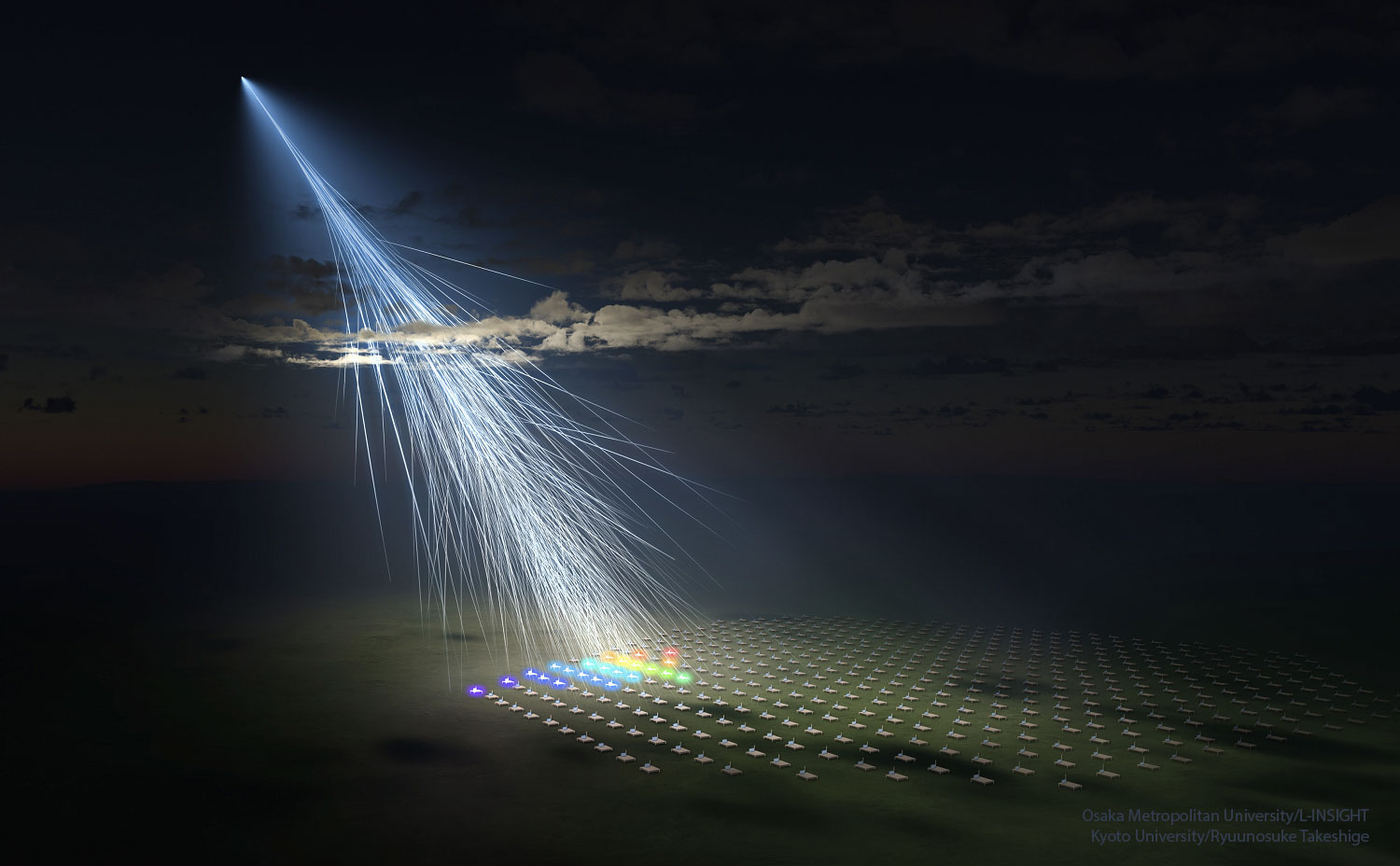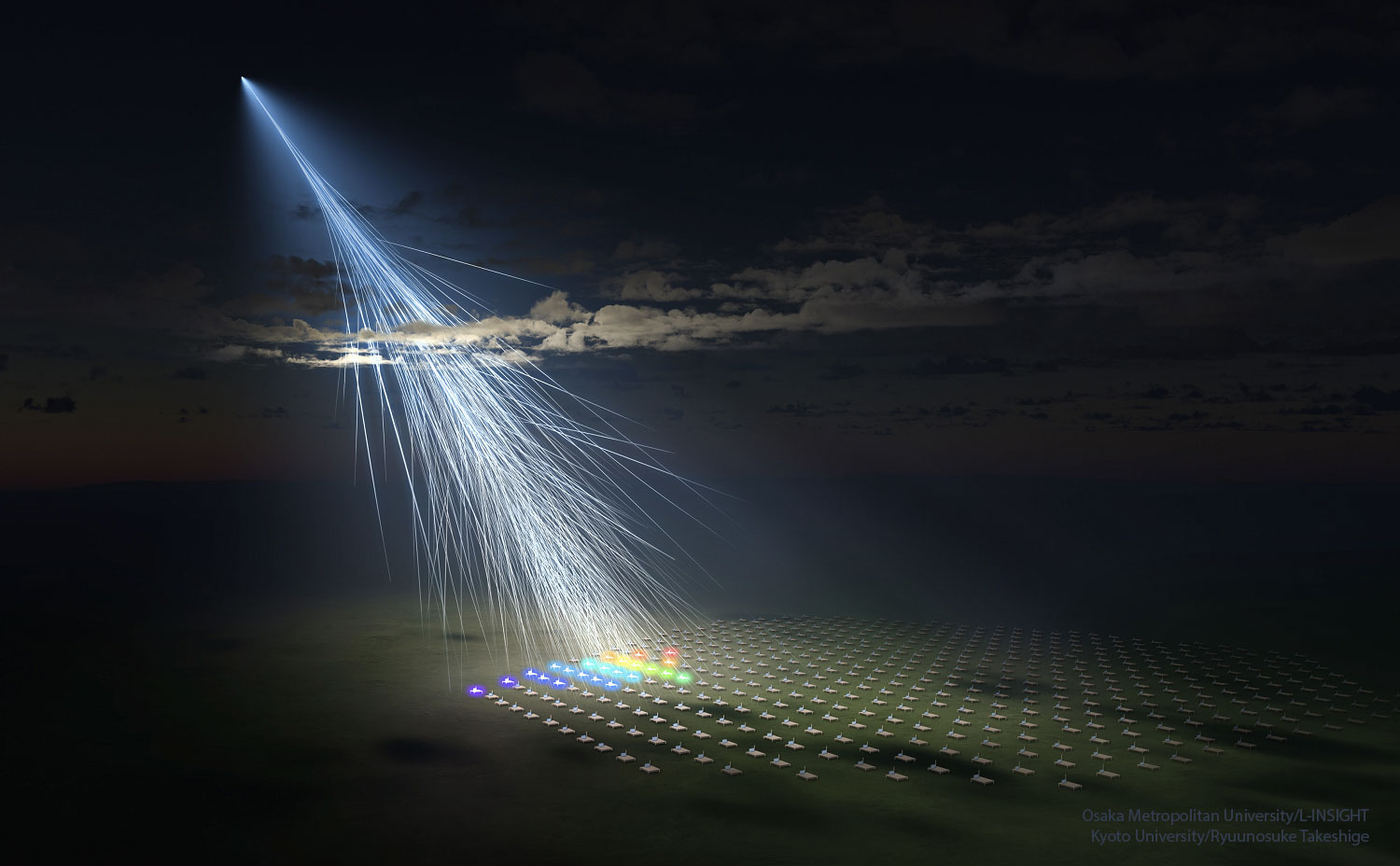
It was one of the most energetic particles ever known to strike the Earth -- but where did it come from? Dubbed Amaterasu after the Shinto sun goddess, this particle, as do all cosmic rays that strike the Earth's atmosphere, caused an air shower of electrons, protons, and other elementary particles to spray down onto the Earth below. In the featured illustration, a cosmic ray air shower is pictured striking the Telescope Array in Utah, USA, which recorded the Amaterasu event in 2021 May. Cosmic ray air showers are common enough that you likely have been in a particle spray yourself, although you likely wouldn't have noticed. The origin of this energetic particle, likely the nucleus of an atom, remains a mystery in two ways. First, it is not known how any single particle or atomic nucleus can practically acquire so much energy, and second, attempts to trace the particle back to where it originated did not indicate any likely potential source. Open Science: Browse 3,200+ codes in the Astrophysics Source Code Library
Fue una de las partículas más energéticas jamás conocidas que han chocado contra la Tierra, pero ¿de dónde vino? Bautizada como Amaterasu en honor a la diosa sol Shinto, esta partícula, al igual que todas las rayos cósmicos que golpean la atmósfera terrestre, causó una lluvia aérea de electrones, protones y otras partículas elementales que se derramaron sobre la Tierra. En la ilustración destacada, se muestra una lluvia aérea de rayos cósmicos golpeando el Telescopio Array en Utah, EE. UU., que registró el evento Amaterasu en mayo de 2021. Las lluvias aéreas de rayos cósmicos son lo suficientemente comunes como para que probablemente hayas estado expuesto a una lluvia de partículas tú mismo, aunque probablemente no lo habrías notado. El origen de esta partícula energética, probablemente el núcleo de un átomo, sigue siendo un misterio de dos maneras. Primero, no se conoce cómo una partícula o núcleo atómico individual puede adquirir tanta energía prácticamente, y segundo, los intentos de rastrear la partícula hasta su lugar de origen no indicaron ninguna fuente potencial probable.