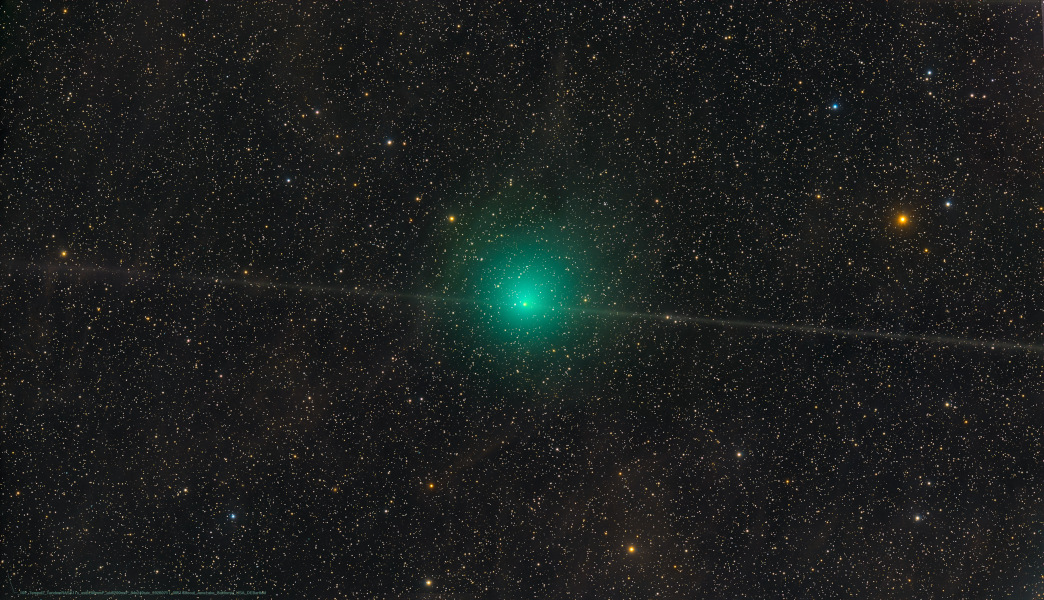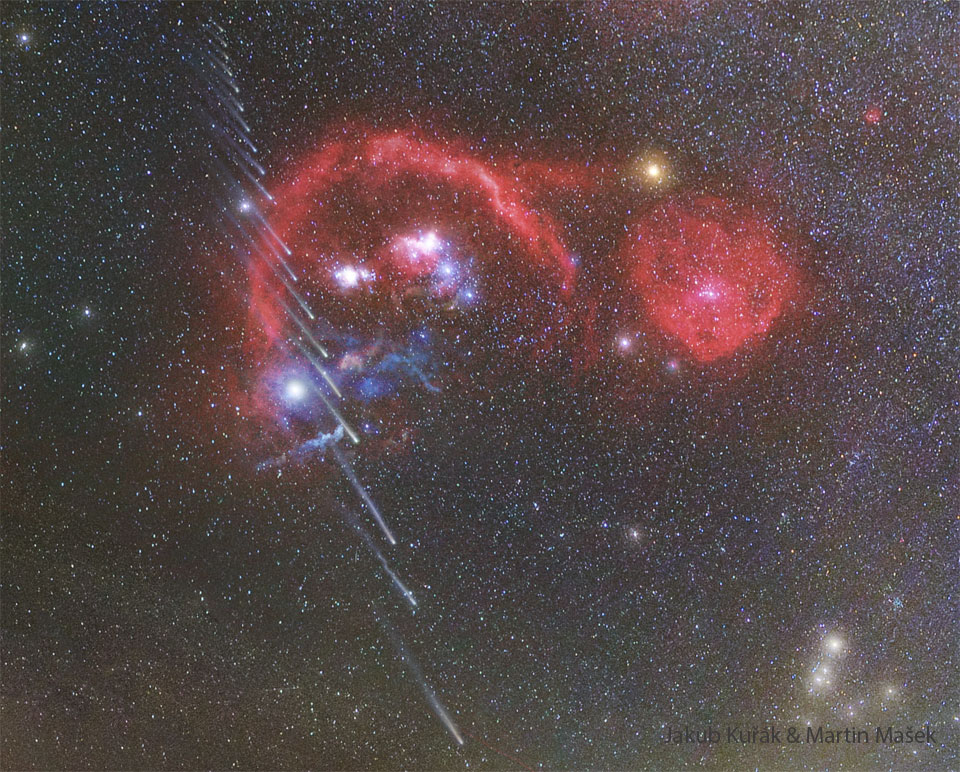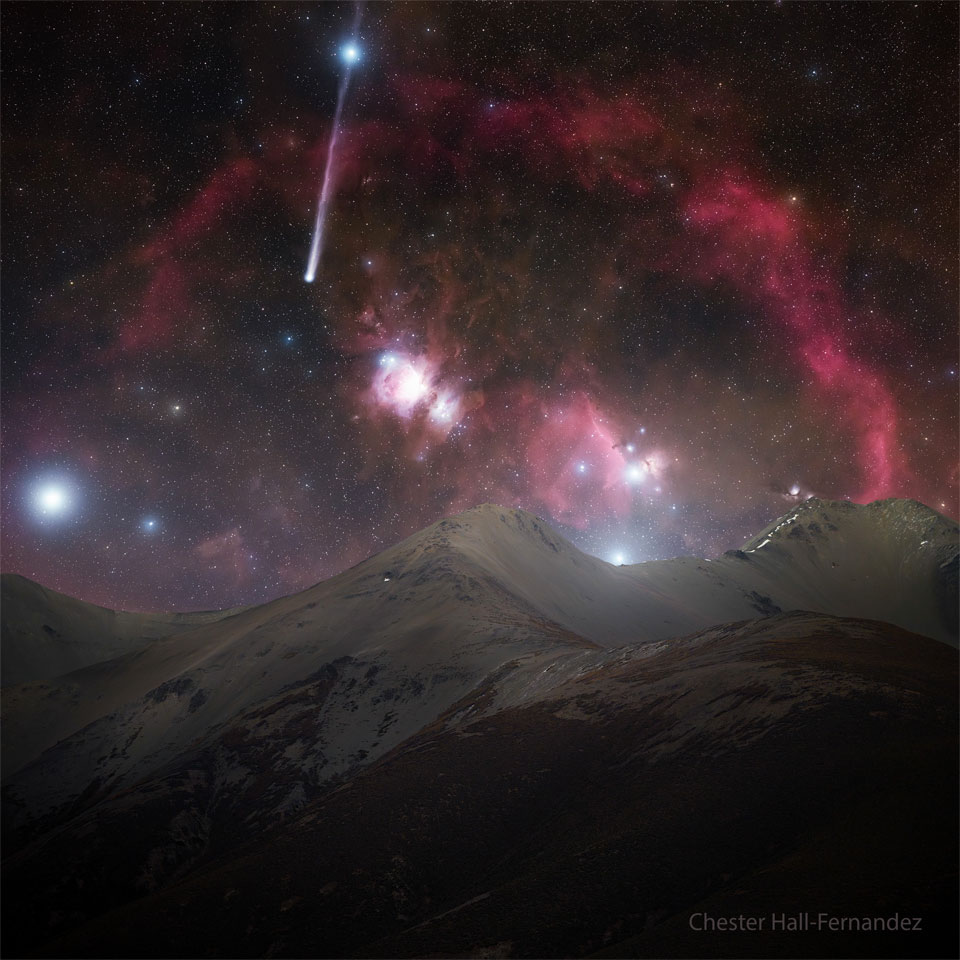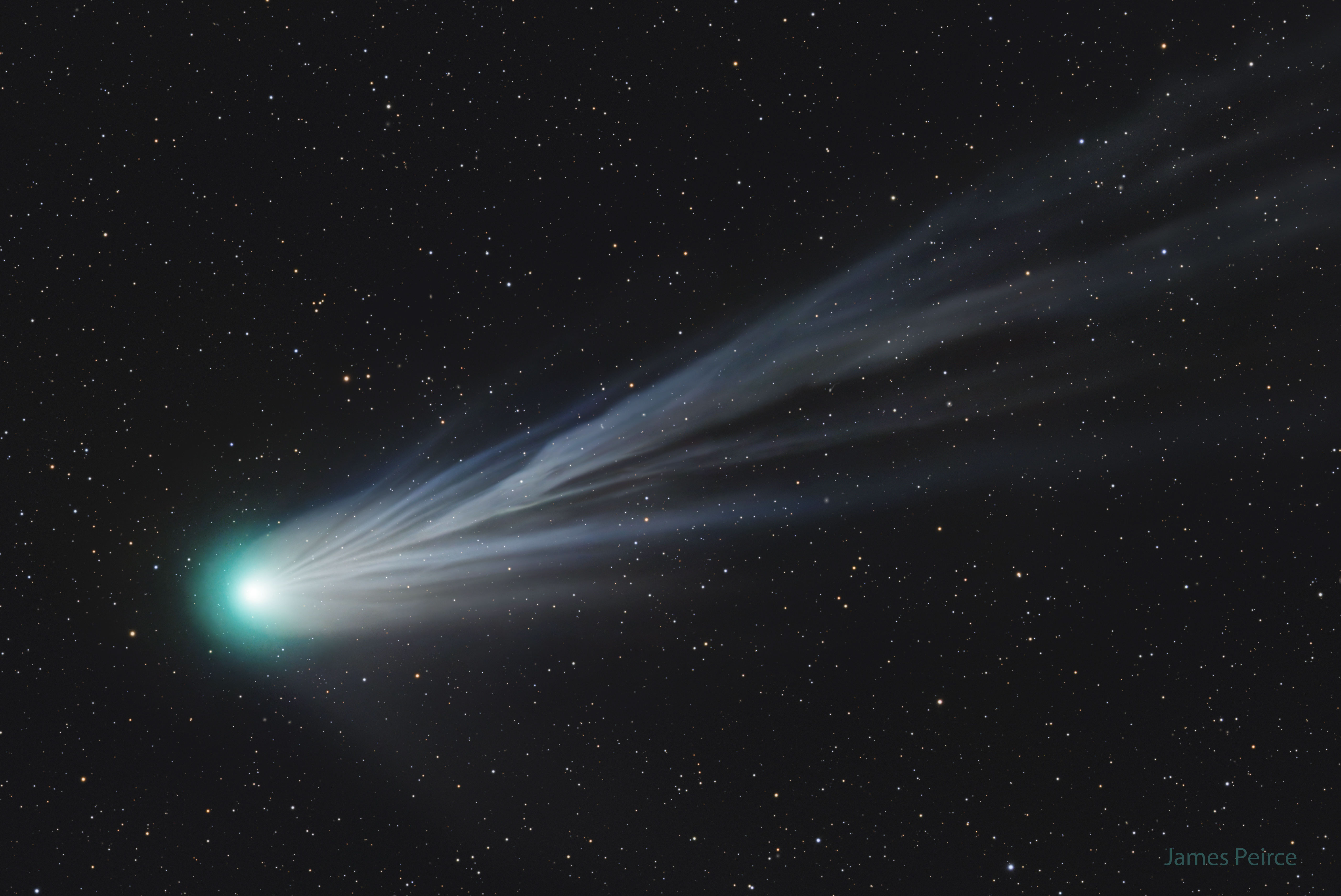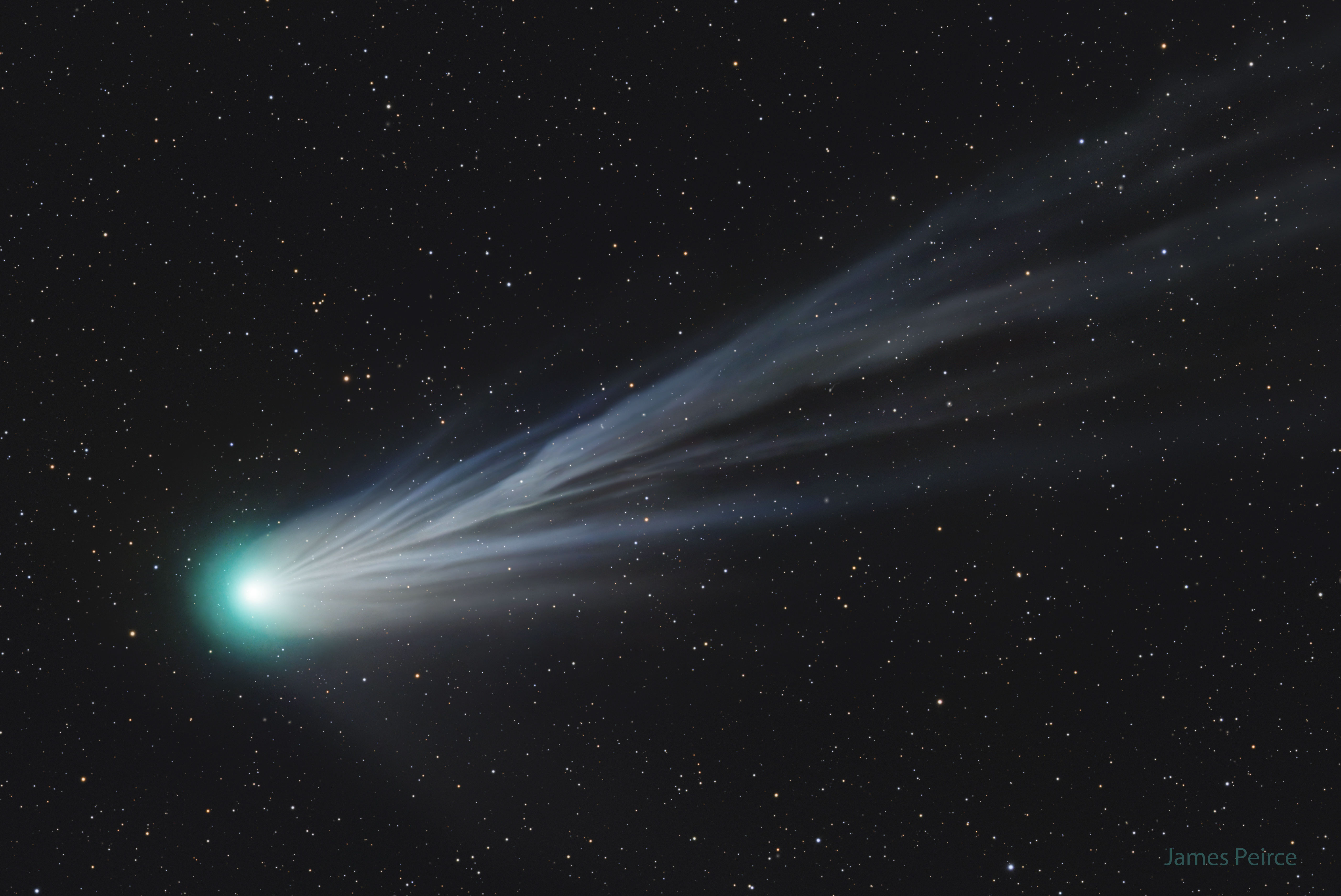
Comet Pons-Brooks has quite a tail to tell. First discovered in 1385, this erupting dirty snowball loops back into our inner Solar System every 71 years and, this time, is starting to put on a show for deep camera exposures. In the featured picture, the light blue stream is the ion tail which consists of charged molecules pushed away from the comet's nucleus by the solar wind. The ion tail, shaped by the Sun's wind and the comet's core's rotation, always points away from the Sun. Comet 12P/Pons–Brooks is now visible with binoculars in the early evening sky toward the northwest, moving perceptibly from night to night. The frequently flaring comet is expected to continue to brighten, on the average, and may even become visible with the unaided eye -- during the day -- to those in the path of totality of the coming solar eclipse on April 8.
El cometa Pons-Brooks tiene una cola que contar. Descubierto por primera vez en 1385, este cometa, una bola de barro y hielo eruptiva, regresa a nuestro sistema solar interior cada 71 años y, en esta ocasión, comienza a ofrecer un espectáculo para exposiciones fotográficas de larga duración. En la imagen destacada, el flujo de color azul claro es la cola iónica, compuesta por moléculas cargadas que son empujadas desde el núcleo del cometa por el viento solar. La cola iónica, moldeada por el viento solar y la rotación del núcleo del cometa, siempre apunta en dirección contraria al Sol. El cometa 12P/Pons–Brooks es ahora visible con binoculares en el cielo nocturno del noroeste, moviéndose perceptiblemente de noche en noche. El cometa, que frecuentemente se enflama, se espera que siga brillando, en promedio, y podría incluso hacerse visible a simple vista —durante el día— para quienes estén en la trayectoria de totalidad del próximo eclipse solar del 8 de abril.