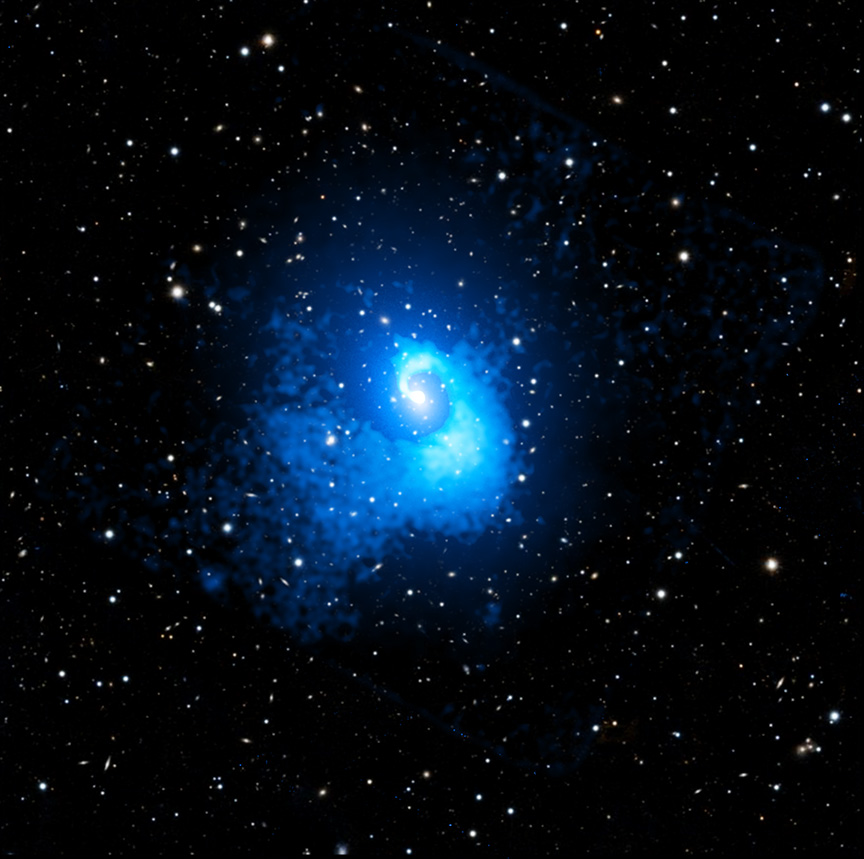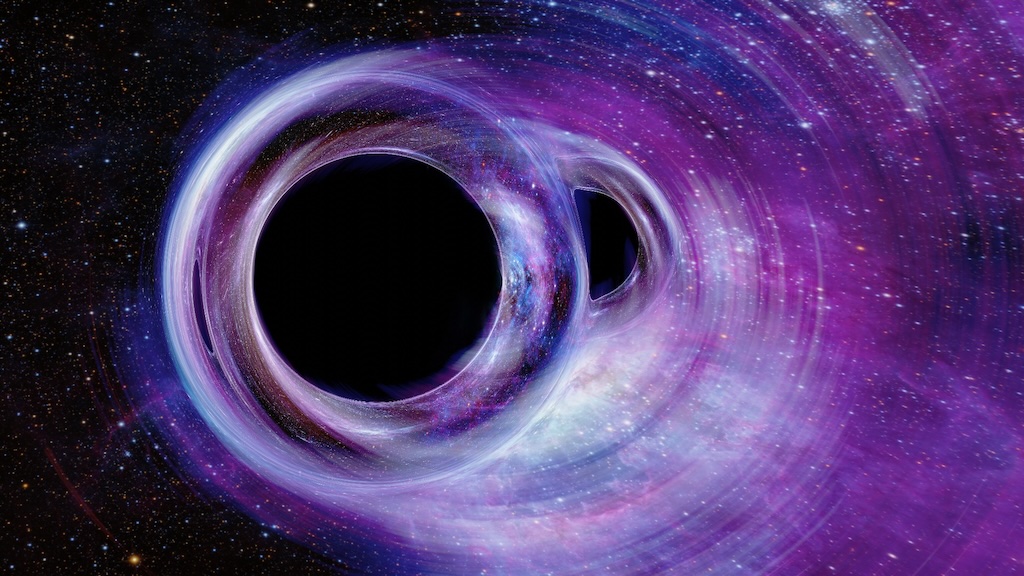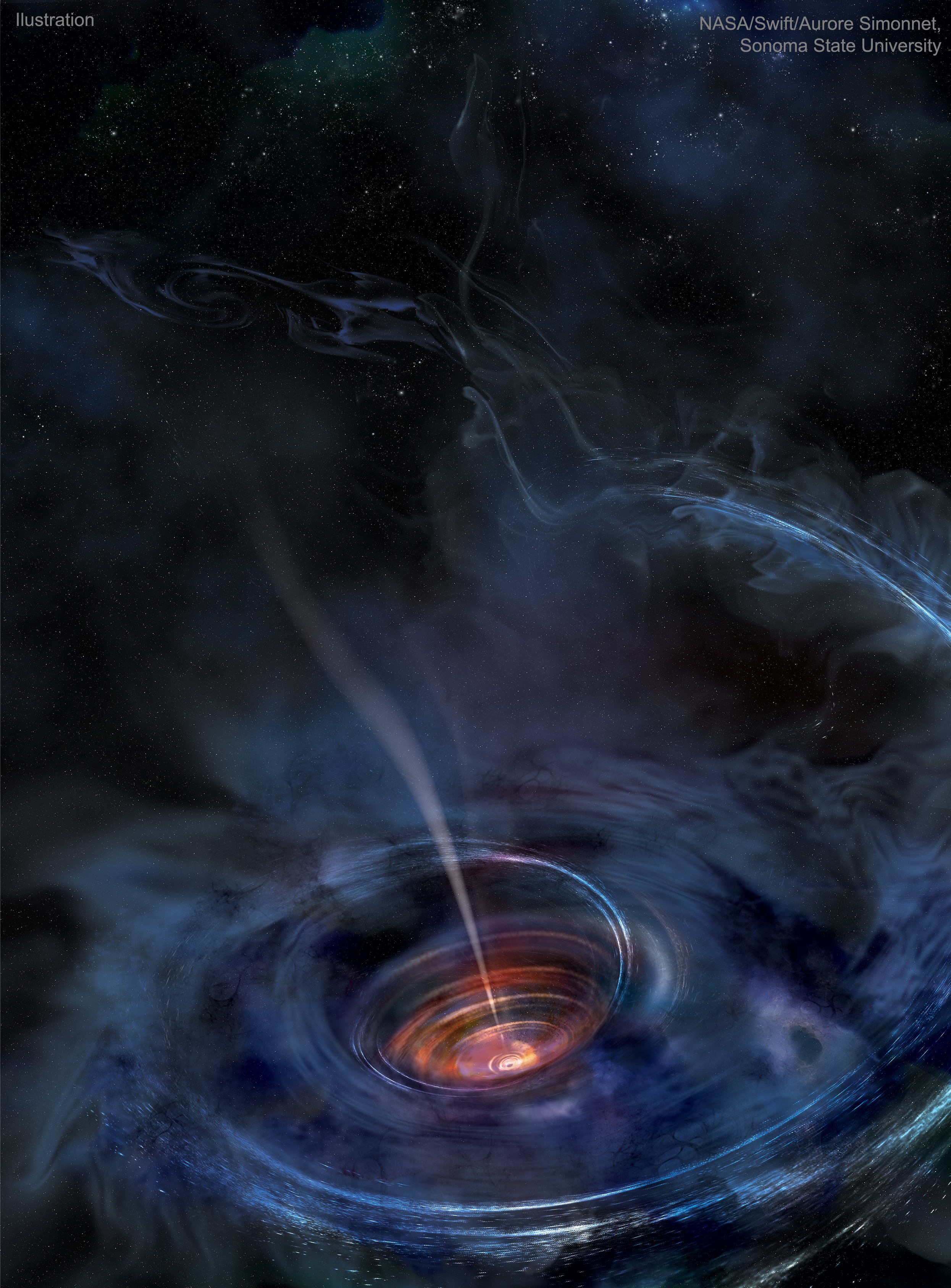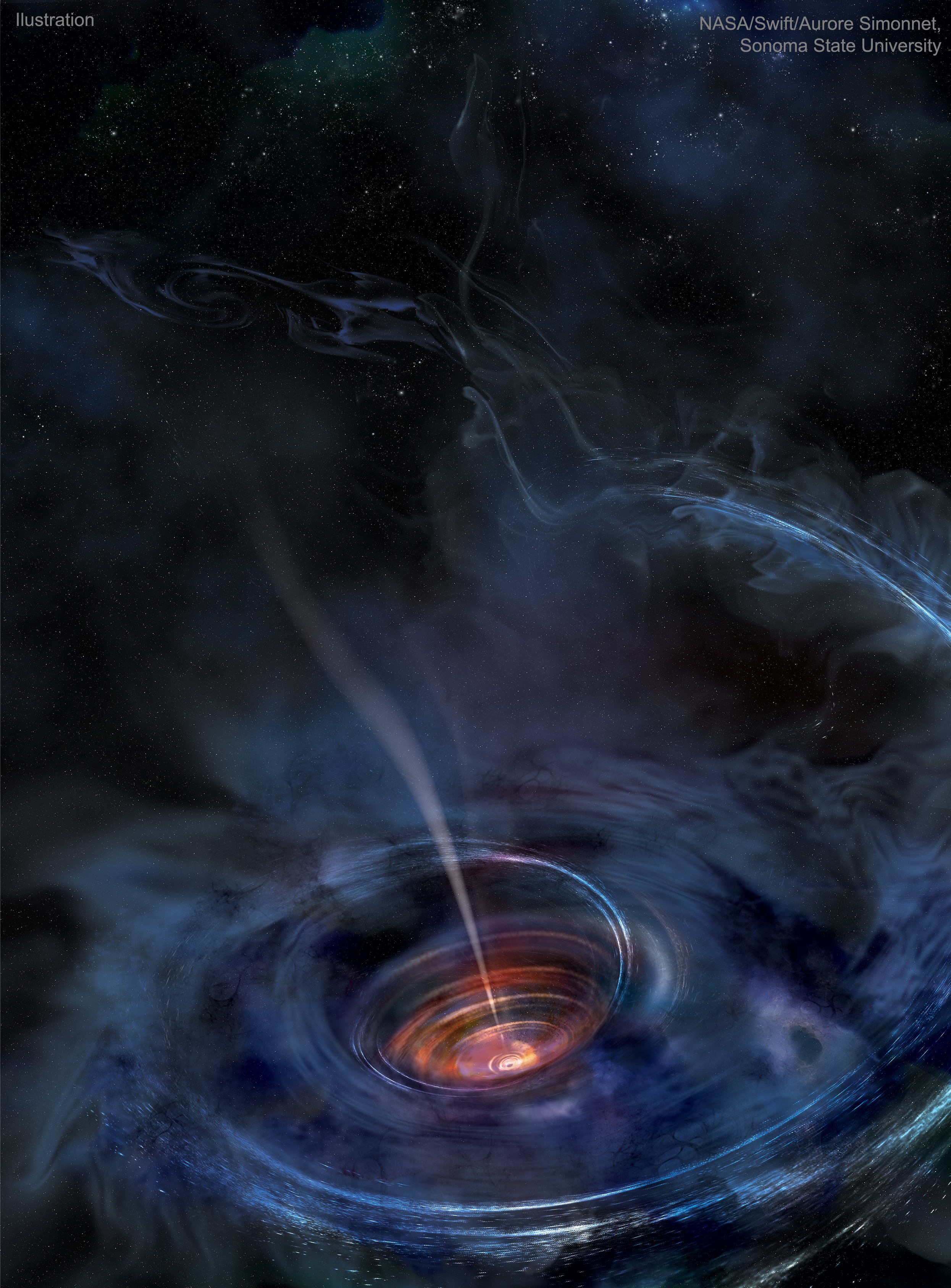
What happens when a black hole devours a star? Many details remain unknown, but observations are providing new clues. In 2014, a powerful explosion was recorded by the ground-based robotic telescopes of the All Sky Automated Survey for SuperNovae (Project ASAS-SN), with followed-up observations by instruments including NASA's Earth-orbiting Swift satellite. Computer modeling of these emissions fit a star being ripped apart by a distant supermassive black hole. The results of such a collision are portrayed in the featured artistic illustration. The black hole itself is a depicted as a tiny black dot in the center. As matter falls toward the hole, it collides with other matter and heats up. Surrounding the black hole is an accretion disk of hot matter that used to be the star, with a jet emanating from the black hole's spin axis. Fall towards eternity: It's Black Hole Week at NASA!
¿Qué sucede cuando un agujero negro devora una estrella? Muchos detalles siguen siendo desconocidos, pero las observaciones están proporcionando nuevas pistas. En 2014, una poderosa explosión fue registrada por los telescopios terrestres robotizados del All Sky Automated Survey for SuperNovae (Proyecto ASAS-SN), con observaciones posteriores realizadas por instrumentos que incluyen al satélite Swift de la NASA en órbita terrestre. El modelado computacional de estas emisiones se ajusta a una estrella siendo desgarrada por un agujero negro supermasivo distante. Los resultados de tal colisión se muestran en la ilustración artística destacada. El agujero negro en sí mismo se representa como un pequeño punto negro en el centro. A medida que la materia cae hacia el agujero, choca con otra materia y se calienta. Alrededor del agujero negro hay un disco de acreción de materia caliente que solía ser la estrella, con un chorro emanando del eje de rotación del agujero negro.