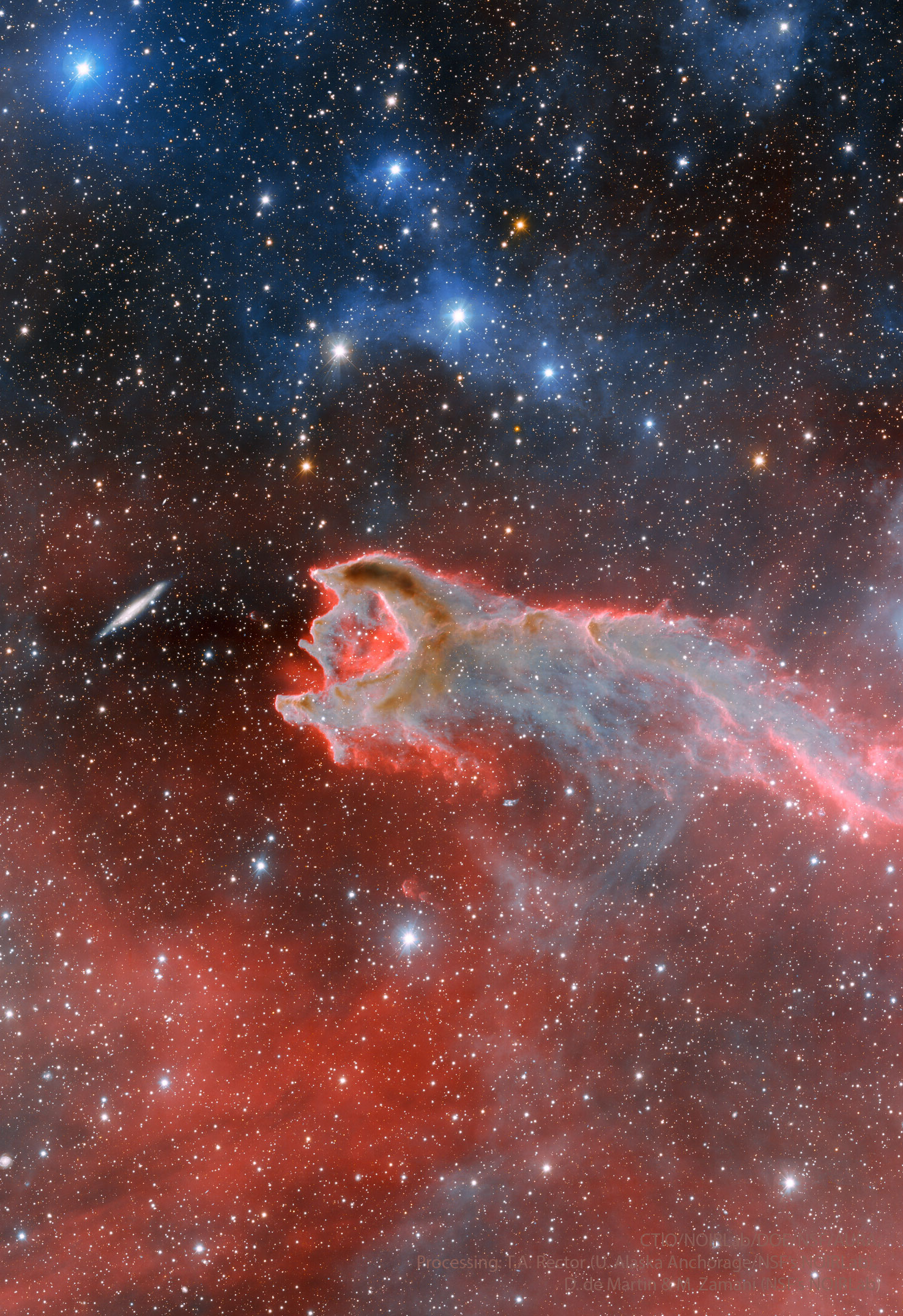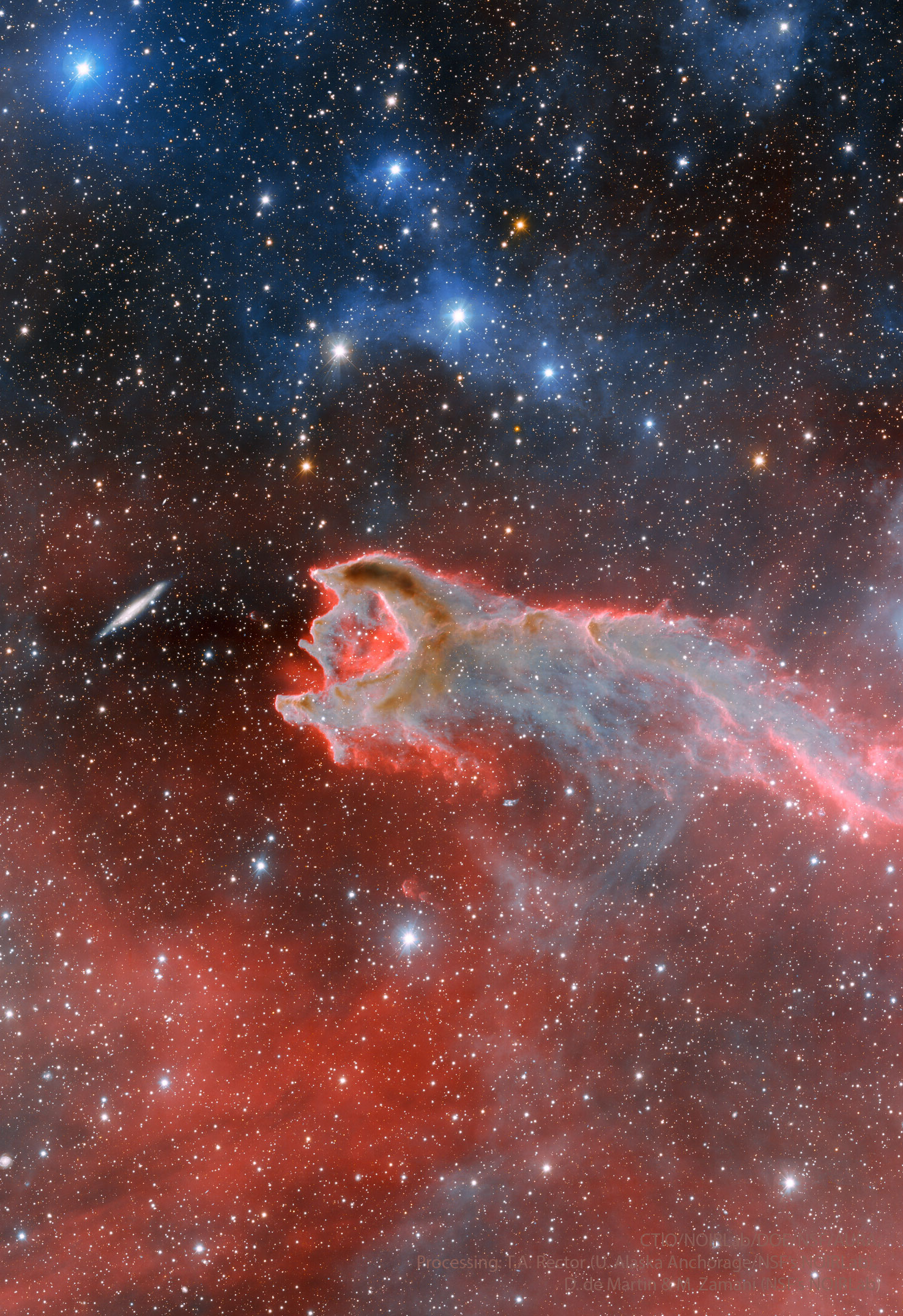
Can a gas cloud eat a galaxy? It's not even close. The "claw" of this odd looking "creature" in the featured photo is a gas cloud known as a cometary globule. This globule, however, has ruptured. Cometary globules are typically characterized by dusty heads and elongated tails. These features cause cometary globules to have visual similarities to comets, but in reality they are very much different. Globules are frequently the birthplaces of stars, and many show very young stars in their heads. The reason for the rupture in the head of this object is not yet known. The galaxy to the left of the globule is huge, very far in the distance, and only placed near CG4 by chance superposition.
¿Puede una nube de gas comer una galaxia? Ni siquiera está cerca. La 'garra' de esta extraña 'criatura' en la imagen es una nube de gas conocida como globulillo cometal. Sin embargo, este globulillo ha sufrido una ruptura. Los globulillos cometales suelen estar caracterizados por cabezas polvorientas y colas alargadas. Estas características les dan a los globulillos cometales similitudes visuales con los cometas, pero en realidad son muy diferentes. Los globulillos son con frecuencia lugares de nacimiento de estrellas, y muchos muestran estrellas muy jóvenes en sus cabezas. La razón de la ruptura en la cabeza de este objeto aún no se conoce. La galaxia a la izquierda del globulillo es enorme, muy lejana y solo parece estar cerca de CG4 debido a una superposición casual.