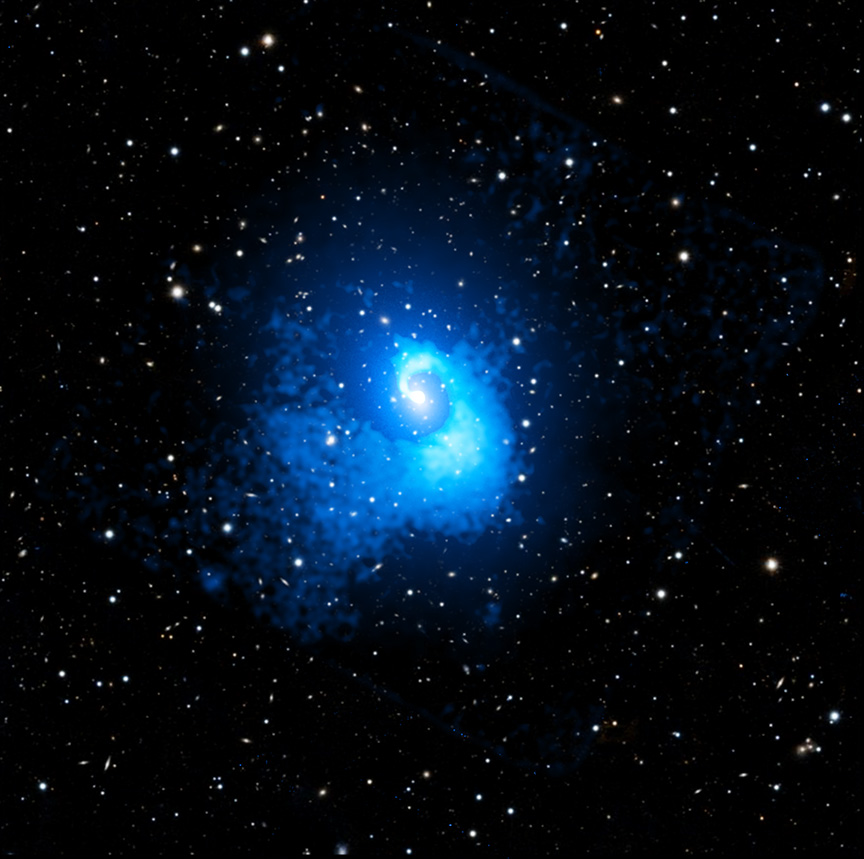
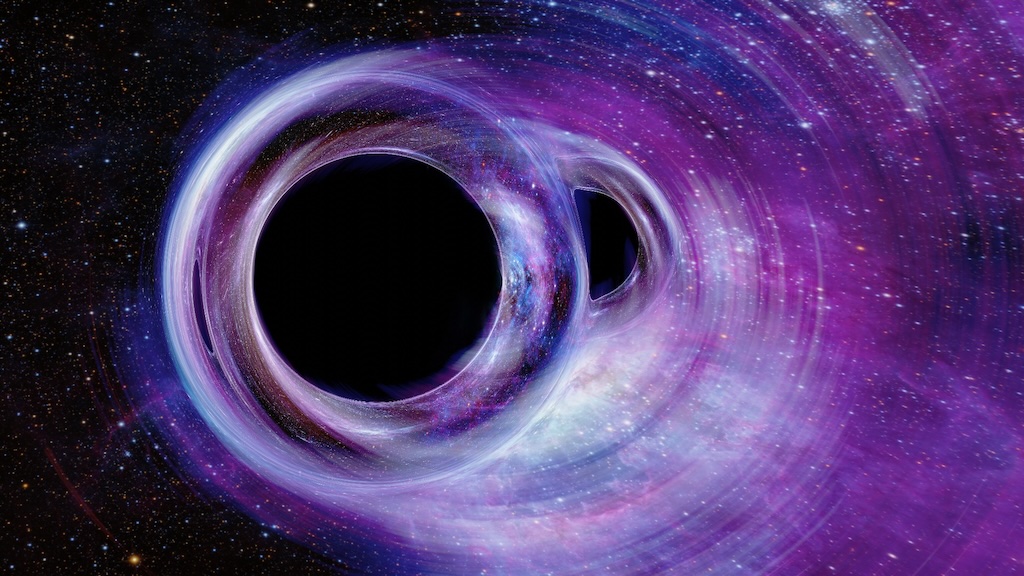
What happens if a star gets too close to a black hole? The black hole can rip it apart -- but how? It's not the high gravitational attraction itself that's the problem -- it's the difference in gravitational pull across the star that creates the destruction. In the featured animated video illustrating this disintegration, you first see a star approaching the black hole. Increasing in orbital speed, the star's outer atmosphere is ripped away during closest approach. Much of the star's atmosphere disperses into deep space, but some continues to orbit the black hole and forms an accretion disk. The animation then takes you into the accretion disk while looking toward the black hole. Including the strange visual effects of gravitational lensing, you can even see the far side of the disk. Finally, you look along one of the jets being expelled along the spin axis. Theoretical models indicate that these jets not only expel energetic gas, but also create energetic neutrinos -- one of which may have been seen recently on Earth. Almost Hyperspace: Random APOD Generator
¿Qué sucede si una estrella se acerca demasiado a un agujero negro? El agujero negro puede desgarrarla, pero ¿cómo? No es la alta atracción gravitacional en sí la que es el problema, sino la diferencia en la fuerza gravitacional a través de la estrella, la que crea la destrucción. En el video animado que ilustra esta desintegración, primero ves una estrella acercándose al agujero negro. Al aumentar su velocidad orbital, la atmósfera exterior de la estrella se desgaja durante el acercamiento más cercano. Gran parte de la atmósfera de la estrella se dispersa en el espacio profundo, pero una parte continúa orbitando el agujero negro y forma un disco de acreción. La animación luego te lleva al interior del disco de acreción mientras miras hacia el agujero negro. Incluyendo los efectos visuales extraños de la lente gravitacional, puedes incluso ver el lado lejano del disco. Finalmente, miras a lo largo de uno de los chorros que se expulsan a lo largo del eje de rotación. Modelos teóricos indican que estos chorros no solo expulsan gas energético, sino que también crean neutrinos energéticos — uno de los cuales podría haber sido observado recientemente en la Tierra.