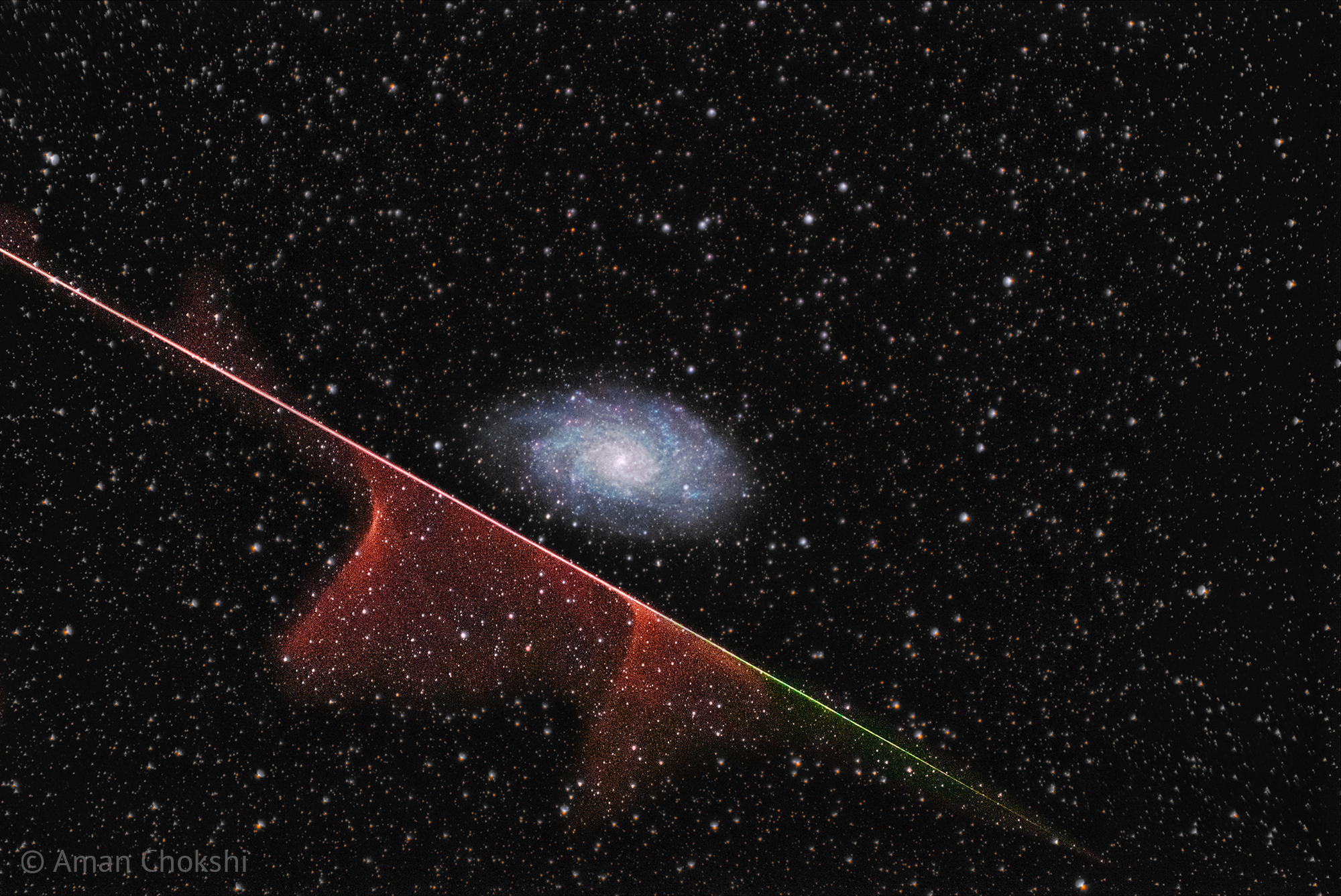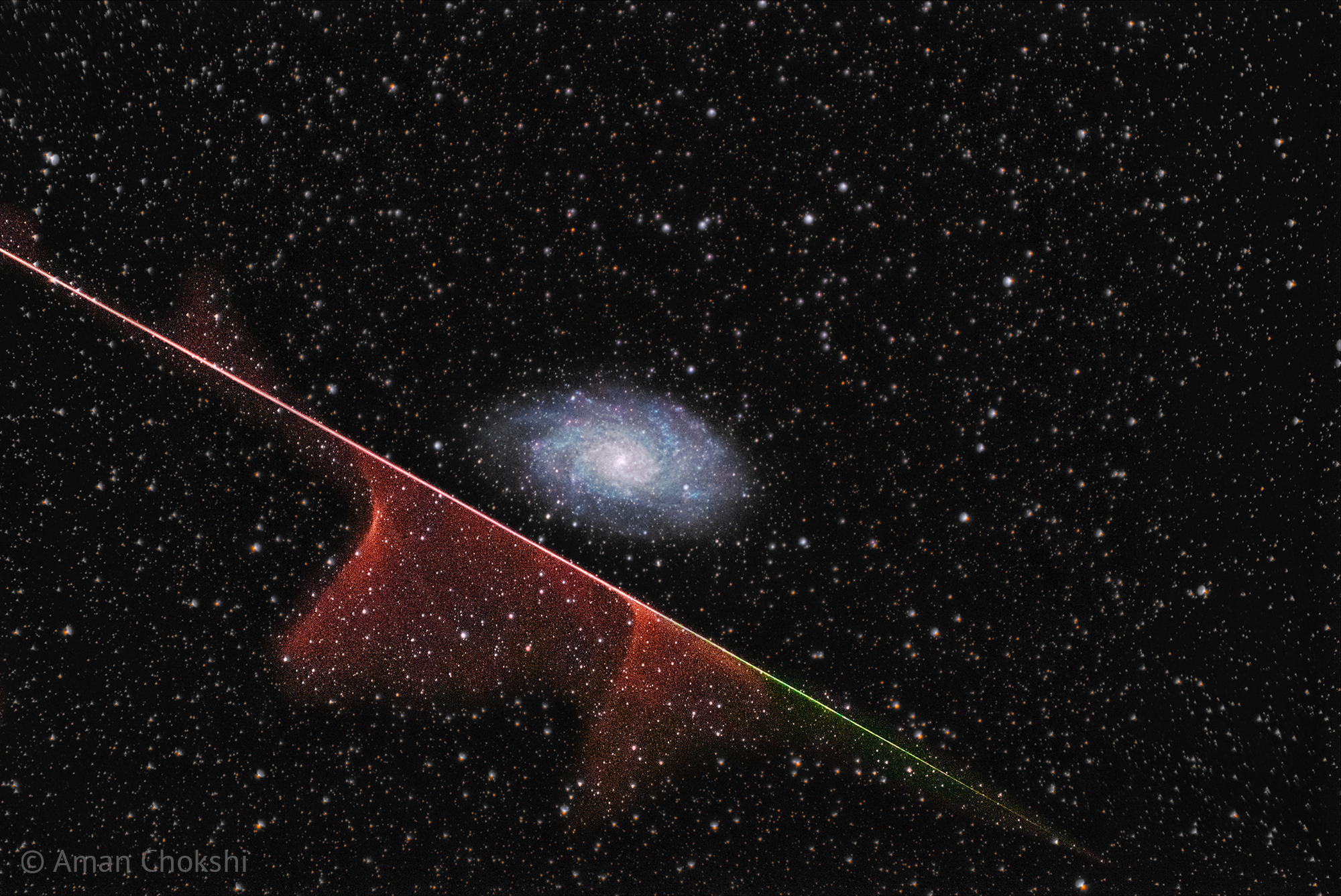
The galaxy was never in danger. For one thing, the Triangulum galaxy (M33), pictured, is much bigger than the tiny grain of rock at the head of the meteor. For another, the galaxy is much farther away -- in this instance 3 million light years as opposed to only about 0.0003 light seconds. Even so, the meteor's path took it angularly below the galaxy. Also the wind high in Earth's atmosphere blew the meteor's glowing evaporative molecule train away from the galaxy, in angular projection. Still, the astrophotographer was quite lucky to capture both a meteor and a galaxy in a single exposure -- which was subsequently added to two other images of M33 to bring up the spiral galaxy's colors. At the end, the meteor was gone in a second, but the galaxy will last billions of years. Your Sky Surprise: What picture did APOD feature on your birthday? (post 1995)
La galaxia nunca estuvo en peligro. En primer lugar, la galaxia Triangulum (M33), mostrada aquí, es mucho más grande que el diminuto grano de roca que forma la cabeza del meteorito. En segundo lugar, la galaxia está mucho más lejos — en este caso, a 3 millones de años luz, en lugar de solo unos 0.0003 segundos luz. Aun así, la trayectoria del meteorito lo llevó angularmente por debajo de la galaxia. Además, el viento alto en la atmósfera terrestre empujó la estela brillante de moléculas evaporadas del meteorito lejos de la galaxia, en proyección angular. Sin embargo, el astrógrafo fue bastante afortunado al capturar tanto un meteorito como una galaxia en una sola exposición — la cual fue posteriormente combinada con dos otras imágenes de M33 para resaltar los colores de la galaxia en espiral. Al final, el meteorito desapareció en un segundo, pero la galaxia durará miles de millones de años.