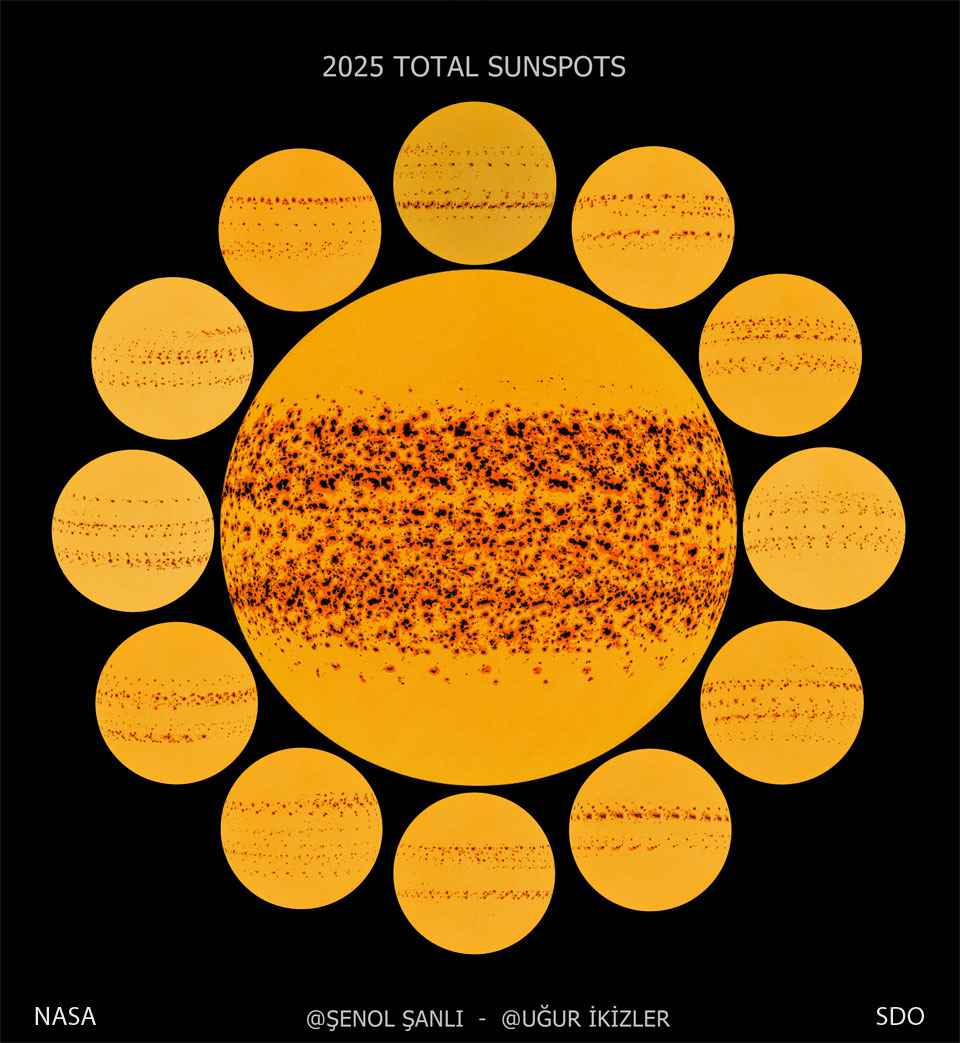
Sometimes, the surface of our Sun seems to dance. In the middle of 2012, for example, NASA's Sun-orbiting Solar Dynamic Observatory spacecraft imaged an impressive prominence that seemed to perform a running dive roll like an acrobatic dancer. The dramatic explosion was captured in ultraviolet light in the featured time-lapse video covering about three hours. A looping magnetic field directed the flow of hot plasma on the Sun. The scale of the dancing prominence is huge -- the entire Earth would easily fit under the flowing arch of hot gas. A quiescent prominence typically lasts about a month and may erupt in a Coronal Mass Ejection (CME), expelling hot gas into the Solar System. The energy mechanism that creates a solar prominence is still a topic of research. Like in 2012, this year the Sun's surface is again quite active and features many filaments and prominences.
A veces, la superficie de nuestro Sol parece bailar. Por ejemplo, a mediados de 2012, la nave espacial Solar Dynamic Observatory de la NASA, que orbita el Sol, capturó una impresionante prominencia que parecía realizar una pirueta acrobática como una bailarina. La explosión dramática fue capturada en luz ultravioleta en el video de aceleración temporal que abarca aproximadamente tres horas. Un campo magnético en espiral dirigió el flujo de plasma caliente en el Sol. La escala de la prominencia bailarina es enorme: la Tierra entera cabría fácilmente debajo del arco de gas caliente que fluye. Una prominencia tranquila típicamente dura unos 30 días y puede estallar en una Eyección de Masa Coronal (CME, por sus siglas en inglés), expulsando gas caliente al Sistema Solar. El mecanismo de energía que crea una prominencia solar sigue siendo un tema de investigación. Al igual que en 2012, este año la superficie del Sol es nuevamente muy activa y presenta muchas filamentos y prominencias.