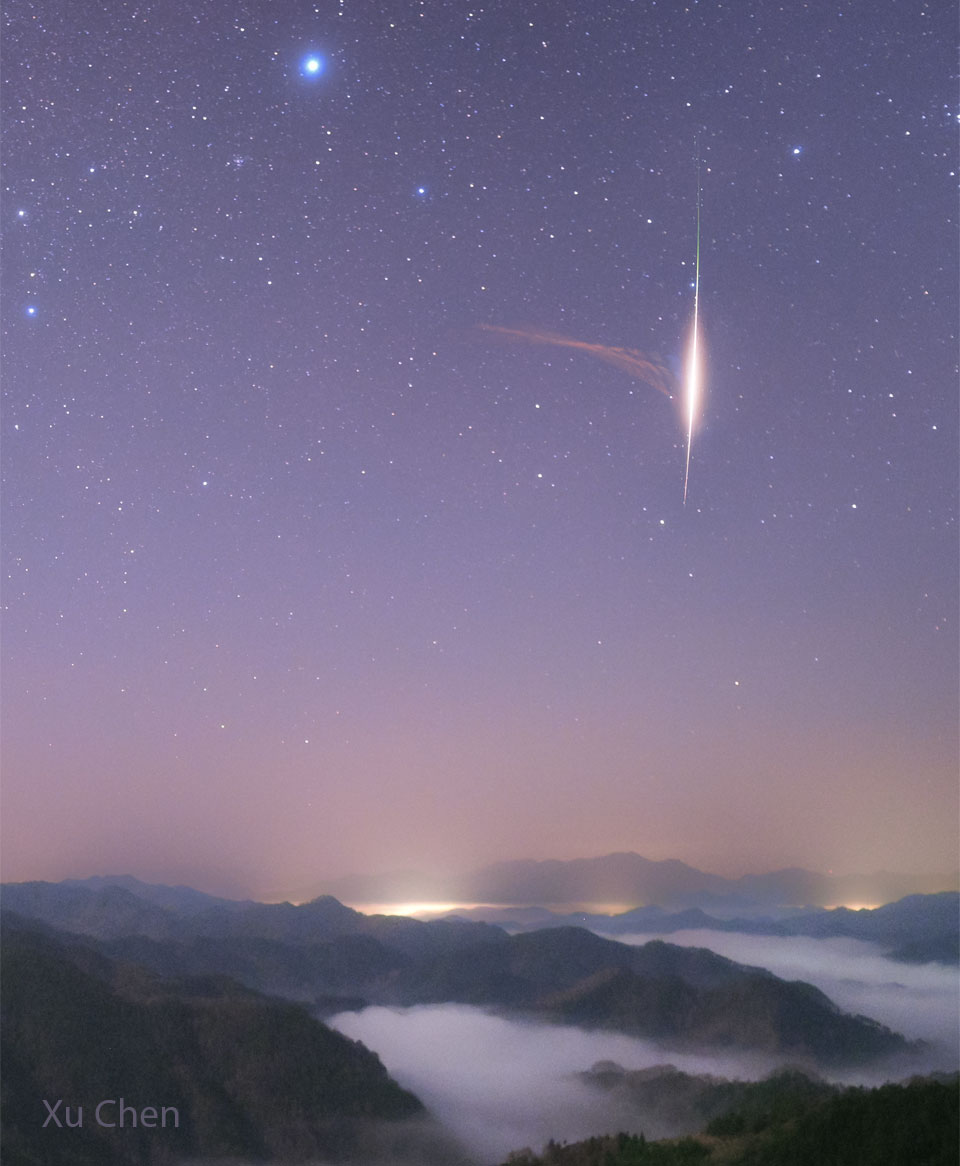
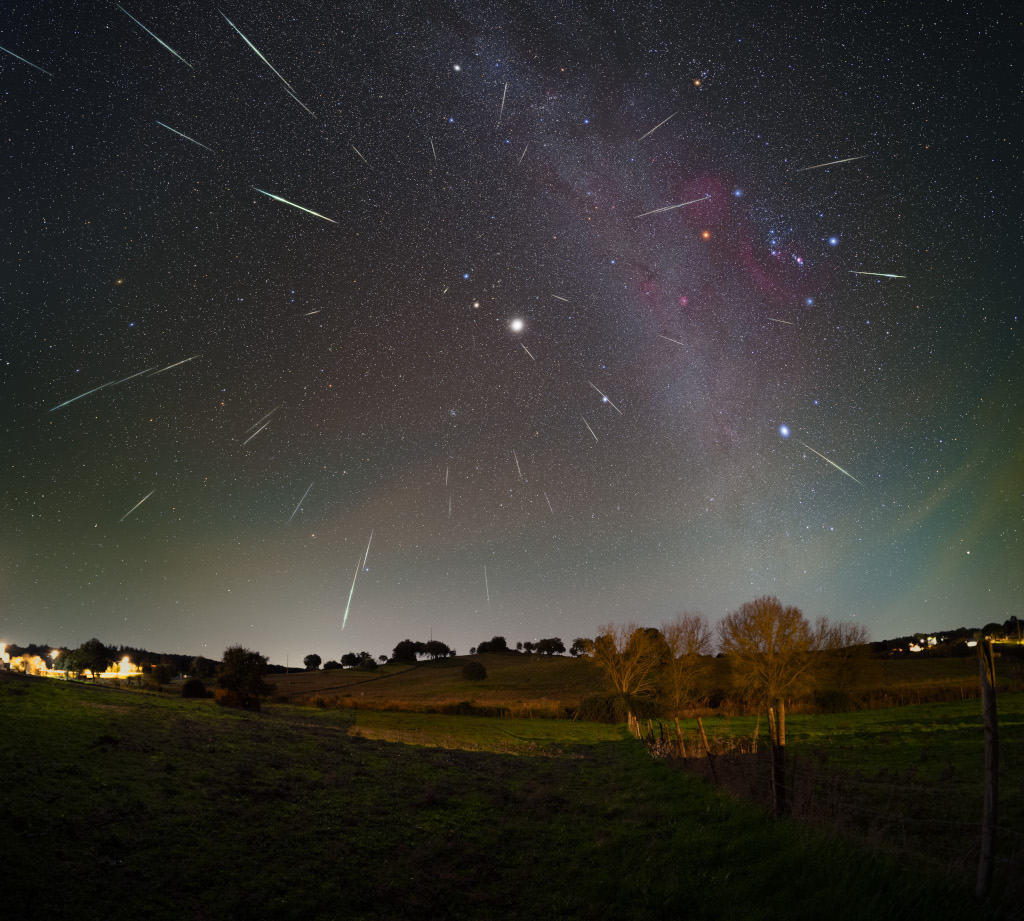
Where do Perseid meteors come from? Mostly small bits of stony grit, Perseid meteoroids were once expelled from Comet Swift-Tuttle and continue to follow this comet's orbit as they slowly disperse. The featured animation depicts the entire meteoroid stream as it orbits our Sun. When the Earth nears this stream, as it does every year, the Perseid Meteor Shower occurs. Highlighted as bright in the animation, comet debris this size is usually so dim it is practically undetectable. Only a small fraction of this debris will enter the Earth's atmosphere, heat up and disintegrate brightly. Tonight and the next few nights promise some of the better skies to view the Perseid shower as well as other active showers because the first quarter moon will be absent from the sky from midnight onward. Your Sky Surprise: What picture did APOD feature on your birthday? (post 1995)
¿De dónde provienen los meteoros de las Perseidas? En su mayoría, pequeños fragmentos de roca, los meteoroides de las Perseidas fueron expulsados en un momento dado por el cometa Swift-Tuttle y continúan siguiendo la órbita de este cometa mientras lentamente se dispersan. La animación mostrada representa todo el flujo de meteoroides en su órbita alrededor de nuestro Sol. Cuando la Tierra se acerca a este flujo, como ocurre cada año, tiene lugar la lluvia de meteoros de las Perseidas. Destacado como brillante en la animación, el material del cometa de este tamaño suele ser tan tenue que prácticamente es indetectable. Solo una pequeña fracción de este material entrará en la atmósfera terrestre, se calentará y se desintegrará brillantemente. Esta noche y las próximas noches prometen ofrecer algunos de los mejores cielos para observar la lluvia de Perseidas, así como otras lluvias activas, ya que la luna en cuarto creciente no estará presente en el cielo desde la medianoche en adelante.