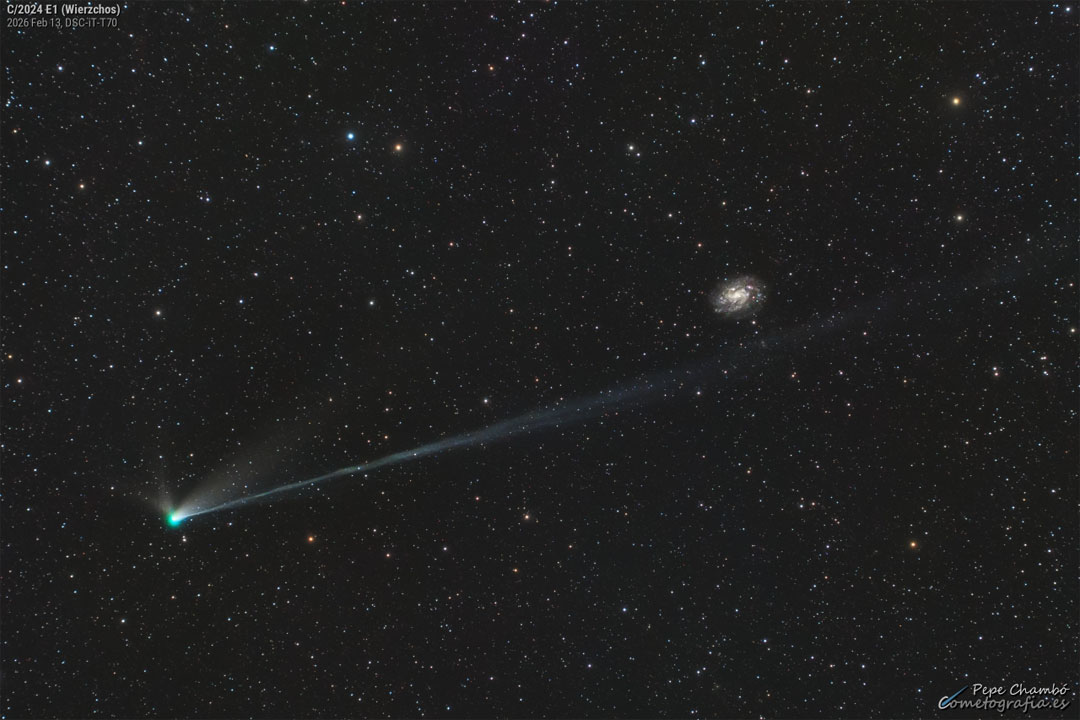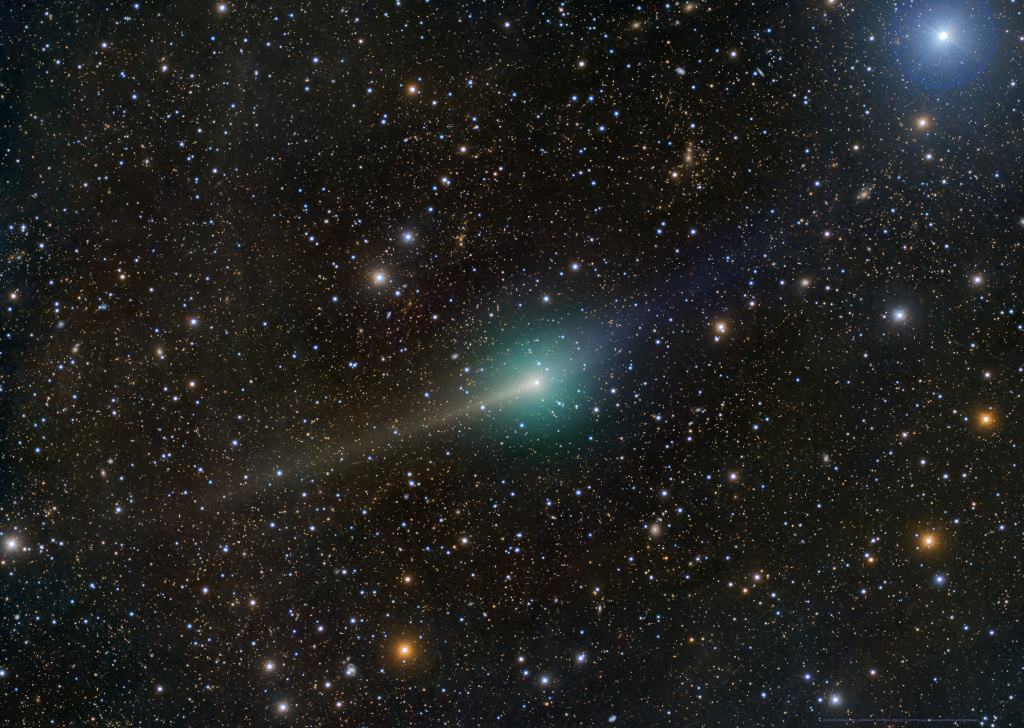
Comet ATLAS is really bright now, but also really close to the Sun. Outside the glow of the Sun, Comet C/2024 G3 (ATLAS) would be one of the more remarkable comet sights of recent years, reflecting about as much sunlight to Earth as Comet Tsuchinshan-ATLAS did in October, and now rivaling even planet Venus. But the giant snowball is now so close to the Sun that it can only be seen through the light of the early morning dawn or the early evening dusk. Today, Comet ATLAS is at perihelion -- its closest ever to the Sun. Although the future brightness of comets is notoriously hard to predict, there is hope that Comet ATLAS will survive its close pass near the Sun and remain bright enough to be seen with the unaided eye over the next few days -- and possibly a good camera comet for weeks. The featured image was taken early yesterday morning near Tornaľa, Slovakia. Tomorrow: Zoom APOD Lecture hosted by the Amateur Astronomers of Association of New York
El cometa ATLAS está realmente brillante ahora, pero también está muy cerca del Sol. Fuera del resplandor del Sol, el cometa C/2024 G3 (ATLAS) sería uno de los espectáculos más notables de cometas de los últimos años, reflejando tanta luz solar hacia la Tierra como lo hizo el cometa Tsuchinshan-ATLAS en octubre, y ahora rivalizando incluso con el planeta Venus. Pero el gran bolo de nieve está ahora tan cerca del Sol que solo puede verse a través de la luz del amanecer temprano o del crepúsculo vespertino. Hoy, el cometa ATLAS está en perihelio — su punto más cercano al Sol. Aunque es notoriamente difícil predecir el brillo futuro de los cometas, hay esperanza de que el cometa ATLAS sobreviva a su acercamiento cercano al Sol y permanezca lo suficientemente brillante como para ser visto a simple vista en los próximos días — y posiblemente un buen cometa para fotografía durante semanas. La imagen destacada fue tomada muy temprano ayer por la mañana cerca de Tornaľa, Eslovaquia.