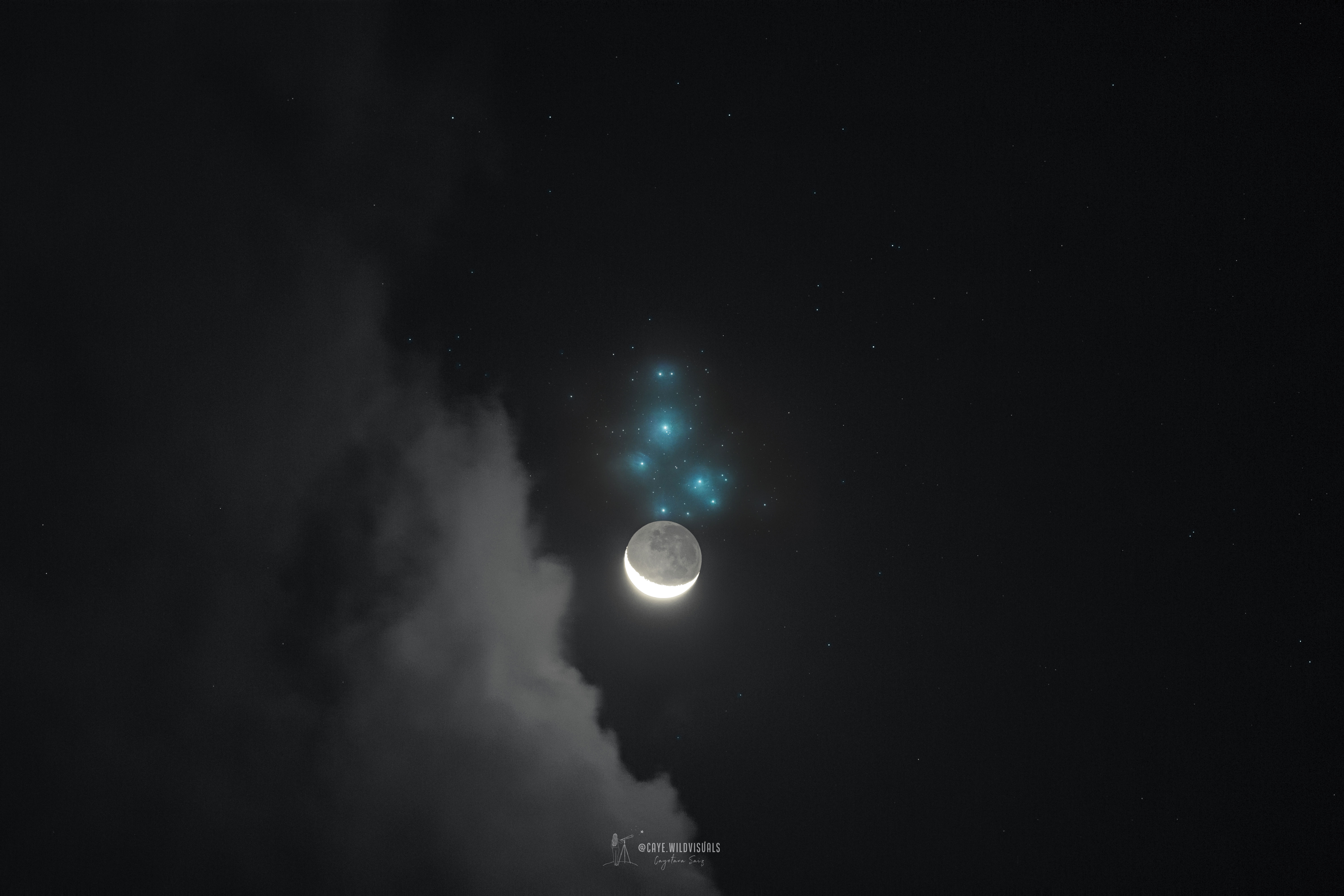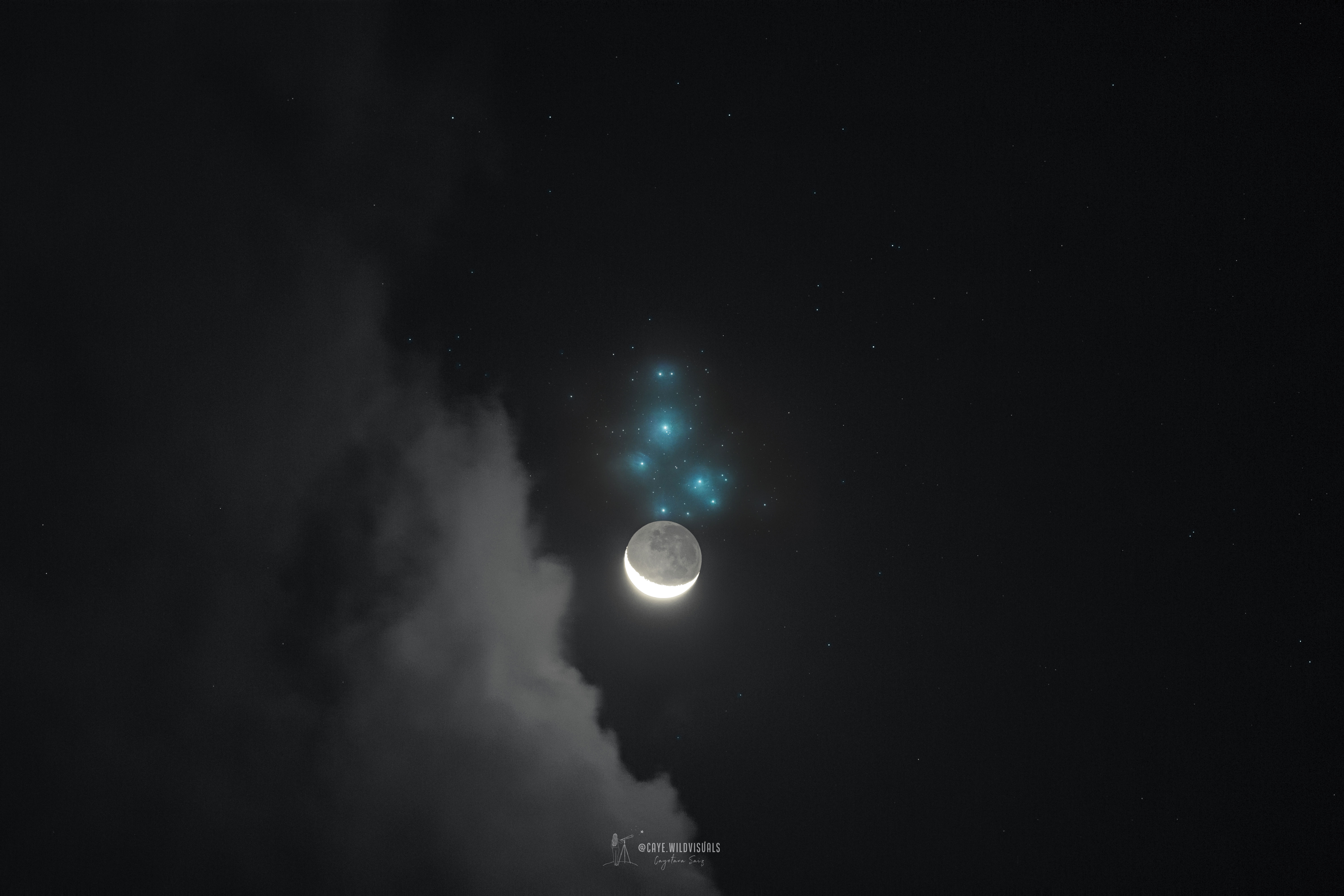
Sometimes, the Moon visits the Pleiades. Technically, this means that the orbit of our Moon takes it directly in front of the famous Pleiades star cluster, which is far in the distance. The technical term for the event is an occultation, and the Moon is famous for its rare occultations of all planets and several well-known bright stars. The Moon's tilted and precessing orbit makes its occultations of the Seven Sisters star cluster bunchy, with the current epoch starting in 2023 continuing monthly until 2029. After that, though, the next occultation won't occur until 2042. Taken from Cantabria, Spain on April 1, the featured image is a composite where previous exposures of the Pleiades from the same camera and location were digitally added to the last image to bring up the star cluster's iconic blue glow. Jigsaw Challenge: Astronomy Puzzle of the Day
A veces, la Luna visita las Pléyades. Técnicamente, esto significa que la órbita de nuestra Luna la lleva directamente frente al famoso cúmulo estelar de las Pléyades, que se encuentra muy lejos. El término técnico para este evento es una ocultación, y la Luna es famosa por sus raras ocultaciones de todos los planetas y varias estrellas brillantes conocidas. La órbita inclinada y precesante de la Luna hace que sus ocultaciones del cúmulo estelar de las Siete Hermanas sean irregulares, con el período actual comenzando en 2023 y continuando mensualmente hasta 2029. Después de eso, sin embargo, la próxima ocultación no ocurrirá hasta 2042. La imagen destacada, tomada en Cantabria, España, el 1 de abril, es un compuesto en el que se añadieron digitalmente exposiciones anteriores de las Pléyades tomadas con la misma cámara y en el mismo lugar a la última imagen para resaltar el característico brillo azul del cúmulo estelar.