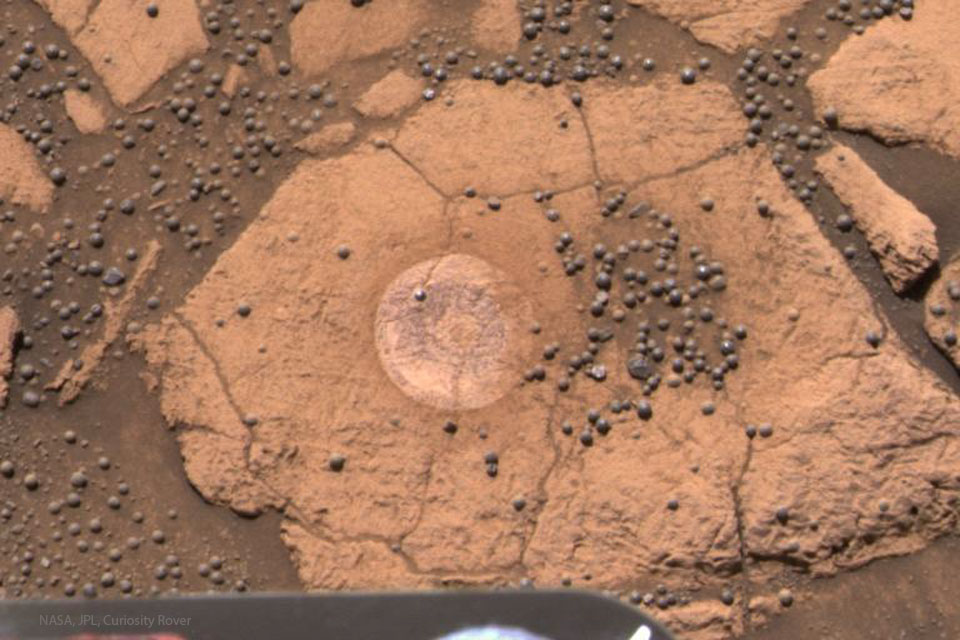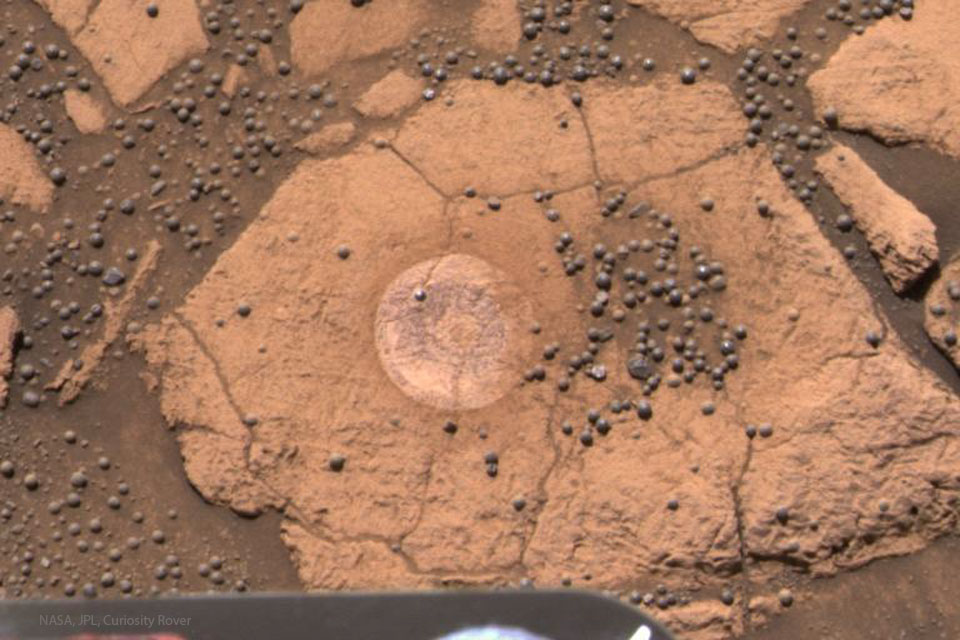
How were these unusual Martian spherules created? Thousands of unusual gray spherules made of iron and rock and dubbed blueberries were found embedded in and surrounding rocks near the landing site of the robot Opportunity rover on Mars in 2004. To help investigate their origin, Opportunity found a surface dubbed the Berry Bowl with an indentation that was rich in the Martian orbs. The Berry Bowl is pictured here, imaged during rover's 48th Martian day. The average size of a Martian blueberry rock is only about 4 millimeters across. By analyzing a circular patch in the rock surface to the left of the densest patch of spherules, Opportunity obtained data showing that the underlying rock has a much different composition than the hematite rich blueberries. This information contributes to the growing consensus that these small, strange, gray orbs were slowly deposited from a bath of dirty water. APOD Turns 30!: Free Public Lecture in Cork, Ireland on Tuesday, June 24 at 7 pm
¿Cómo se crearon estas inusuales esferas marcianas? Miles de esferas grises inusuales compuestas de hierro y roca, apodadas 'blueberries' (fresas), se encontraron incrustadas en y alrededor de rocas cerca del lugar de aterrizaje del robot Opportunity en Marte en 2004. Para investigar su origen, Opportunity encontró una superficie apodada Berry Bowl con una depresión rica en estas esferas marcianas. Aquí se muestra el Berry Bowl, fotografiado durante el día 48 marciano del rover. El tamaño promedio de una roca 'blueberry' marciana es de solo unos 4 milímetros de diámetro. Al analizar un parche circular en la superficie rocosa a la izquierda del parche más denso de esferas, Opportunity obtuvo datos que mostraron que la roca subyacente tiene una composición muy diferente a las blueberries ricas en hematita. Esta información contribuye al creciente consenso de que estos pequeños, extraños, óvalos grises se depositaron lentamente desde una bañera de agua sucia.