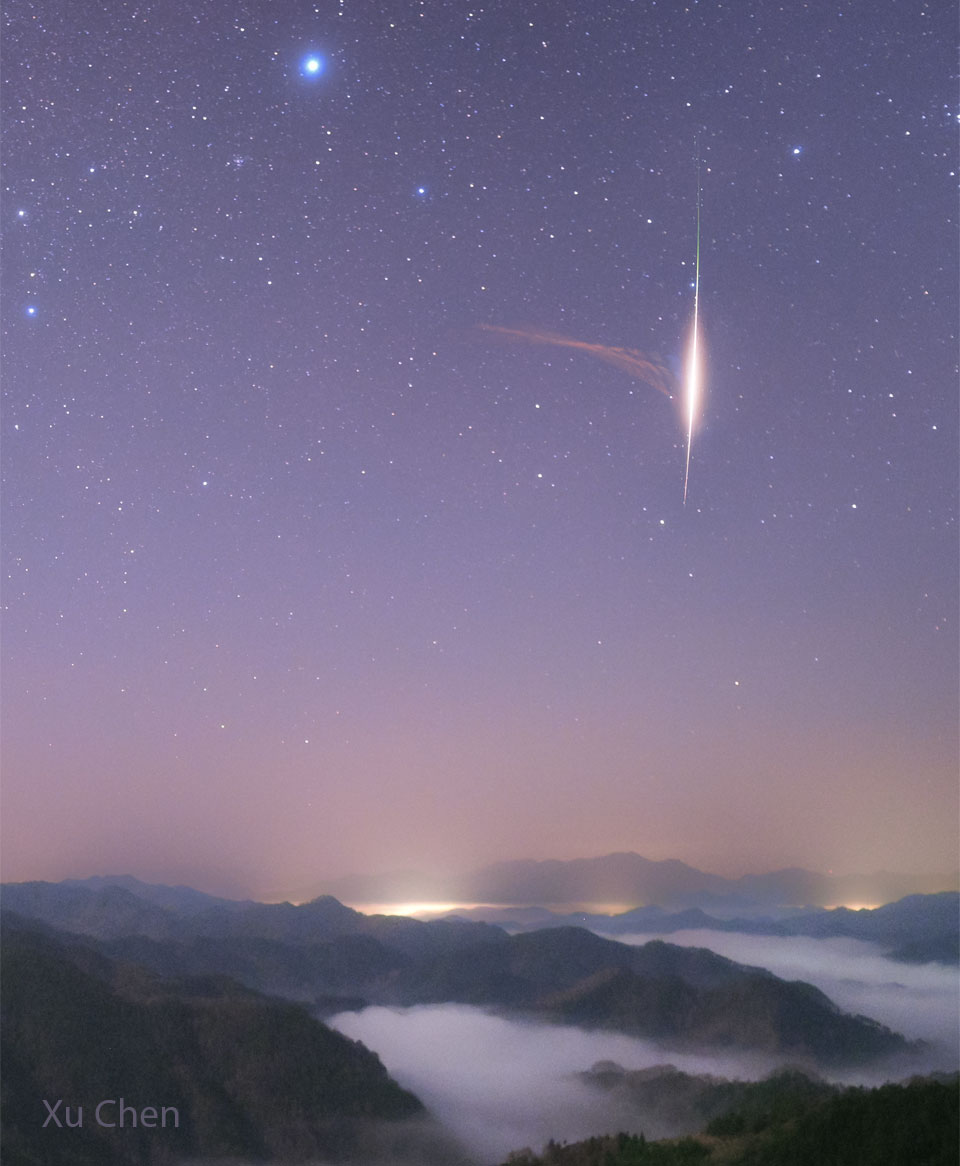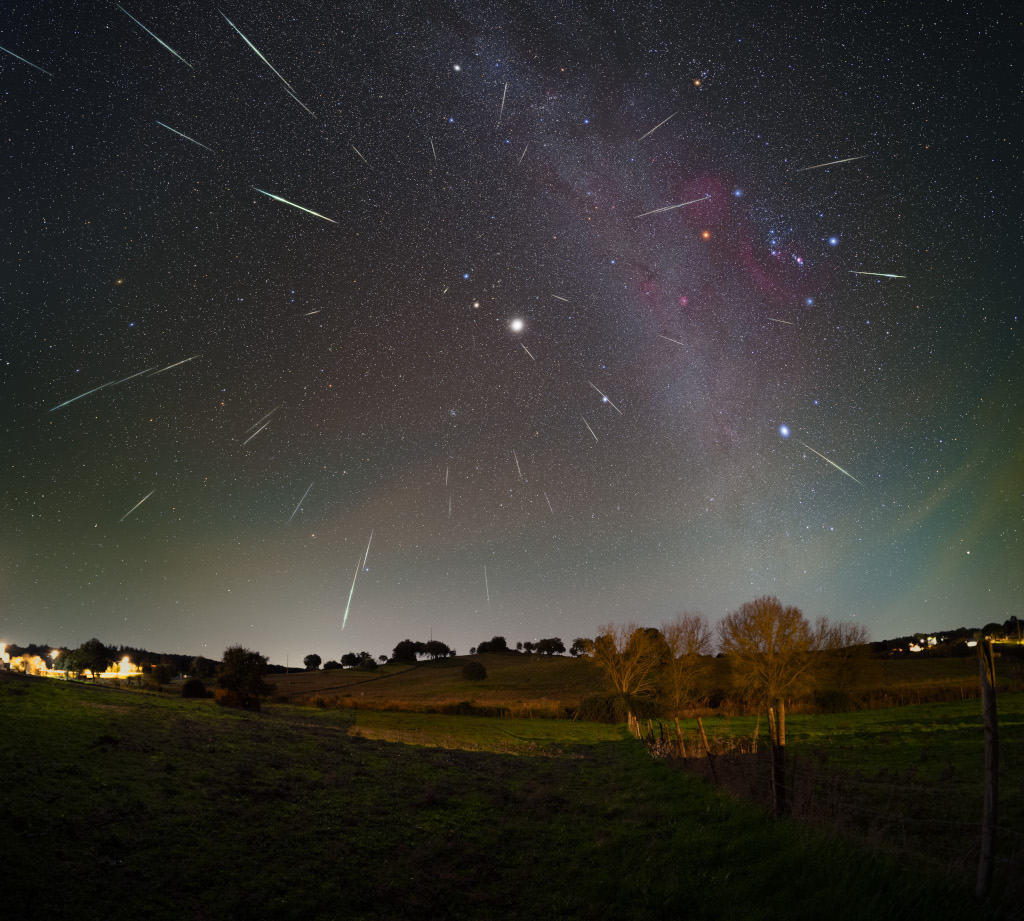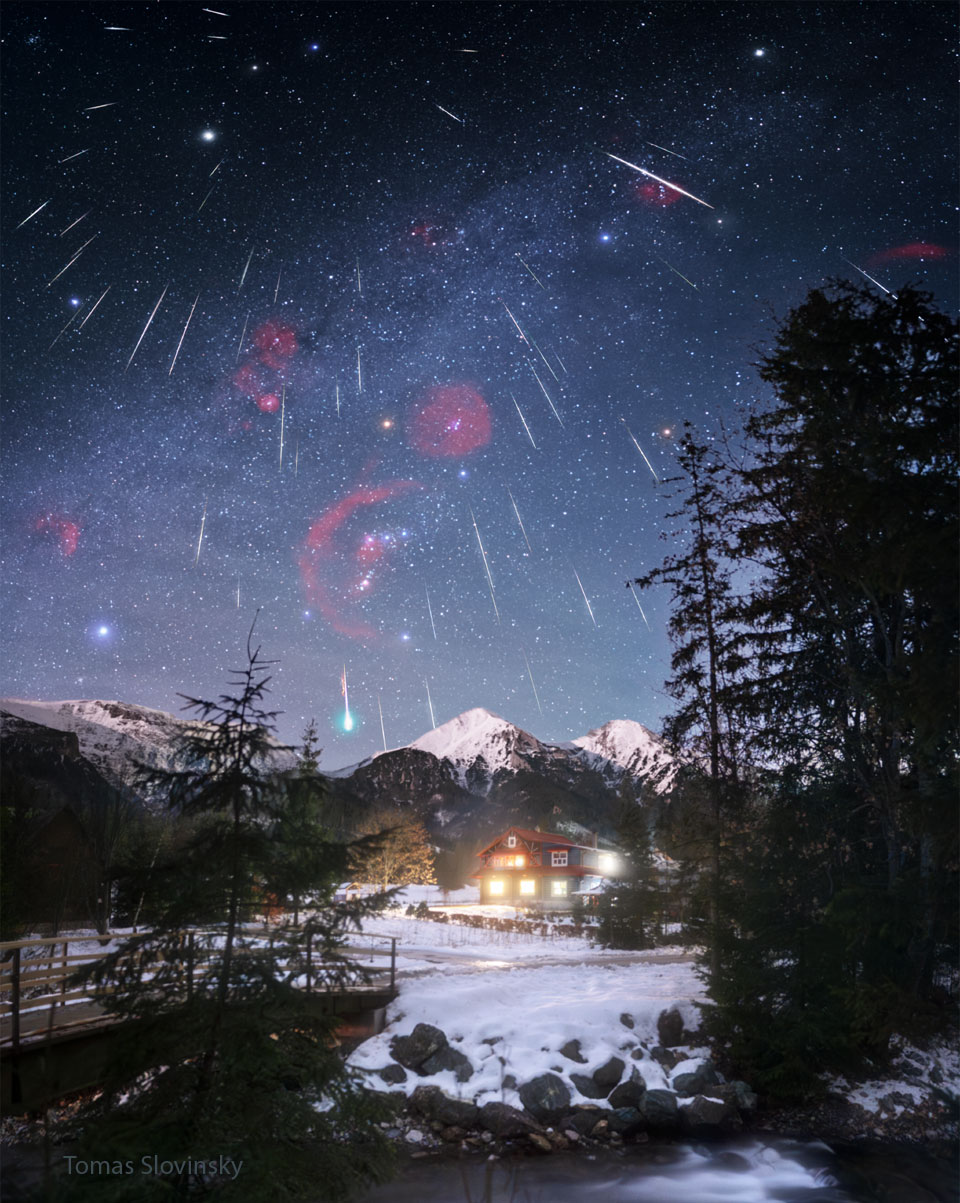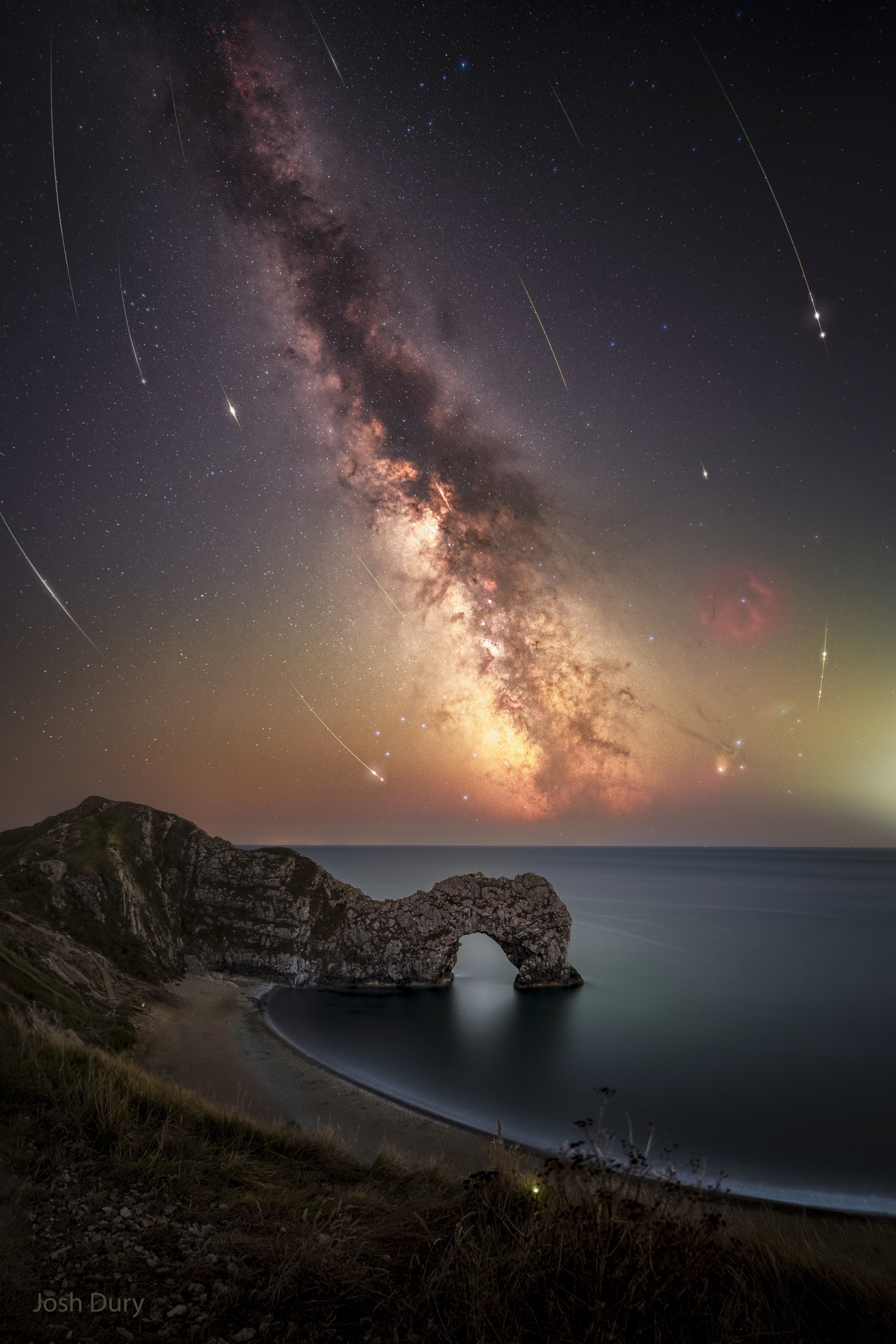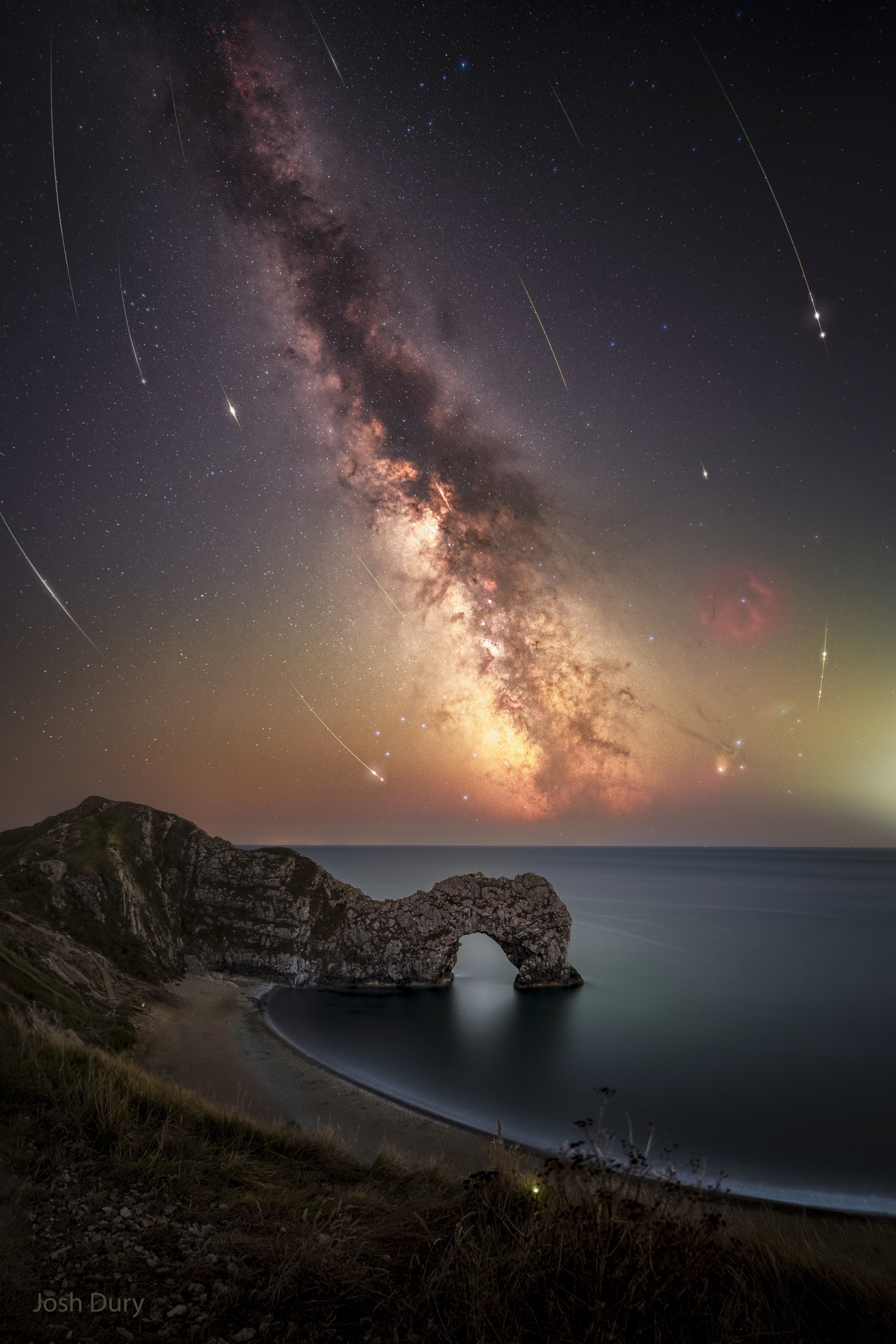
What are those curved arcs in the sky? Meteors -- specifically, meteors from this year's Perseid meteor shower. Over the past few weeks, after the sky darkened, many images of Perseid meteors were captured separately and merged into a single frame, taken earlier. Although the meteors all traveled on straight paths, these paths appear slightly curved by the wide-angle lens of the capturing camera. The meteor streaks can all be traced back to a single point on the sky called the radiant, here just off the top of the frame in the constellation of Perseus. The same camera took a deep image of the background sky that brought up the central band of our Milky Way galaxy running nearly vertically through the featured image's center. The limestone arch in the foreground in Dorset, England is known as Durdle Door, a name thought to survive from a thousand years ago.
¿Qué son esos arcos curvos en el cielo? Meteores — específicamente, meteores de la lluvia de Perseidas de este año. Durante las últimas semanas, después de que el cielo se oscureciera, se capturaron muchas imágenes de meteores de las Perseidas por separado y se fusionaron en un solo fotograma, tomado anteriormente. Aunque todos los meteores viajaron por trayectorias rectas, estas trayectorias aparecen ligeramente curvadas debido a la lente de gran angular de la cámara que los capturó. Todos los rastros de los meteores pueden ser trazados hacia un único punto en el cielo llamado radiante, que en este caso se encuentra justo fuera de la parte superior del fotograma, en la constelación de Perseo. La misma cámara tomó una imagen profunda del cielo de fondo que reveló la banda central de nuestra galaxia, la Vía Láctea, que atraviesa casi verticalmente el centro de la imagen destacada. El arco de piedra caliza en primer plano en Dorset, Inglaterra, se conoce como Durdle Door, un nombre que se cree que ha sobrevivido desde hace mil años.