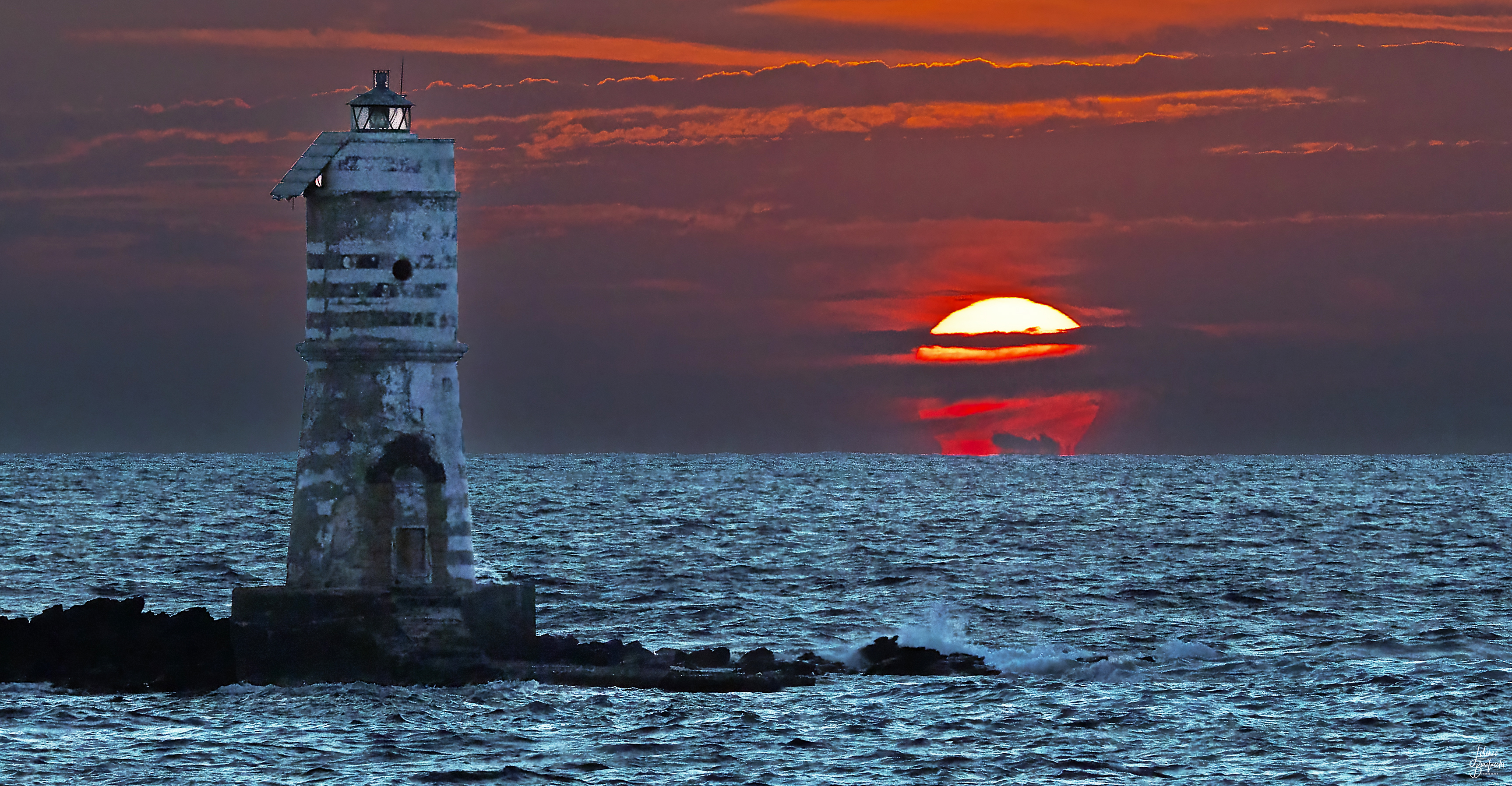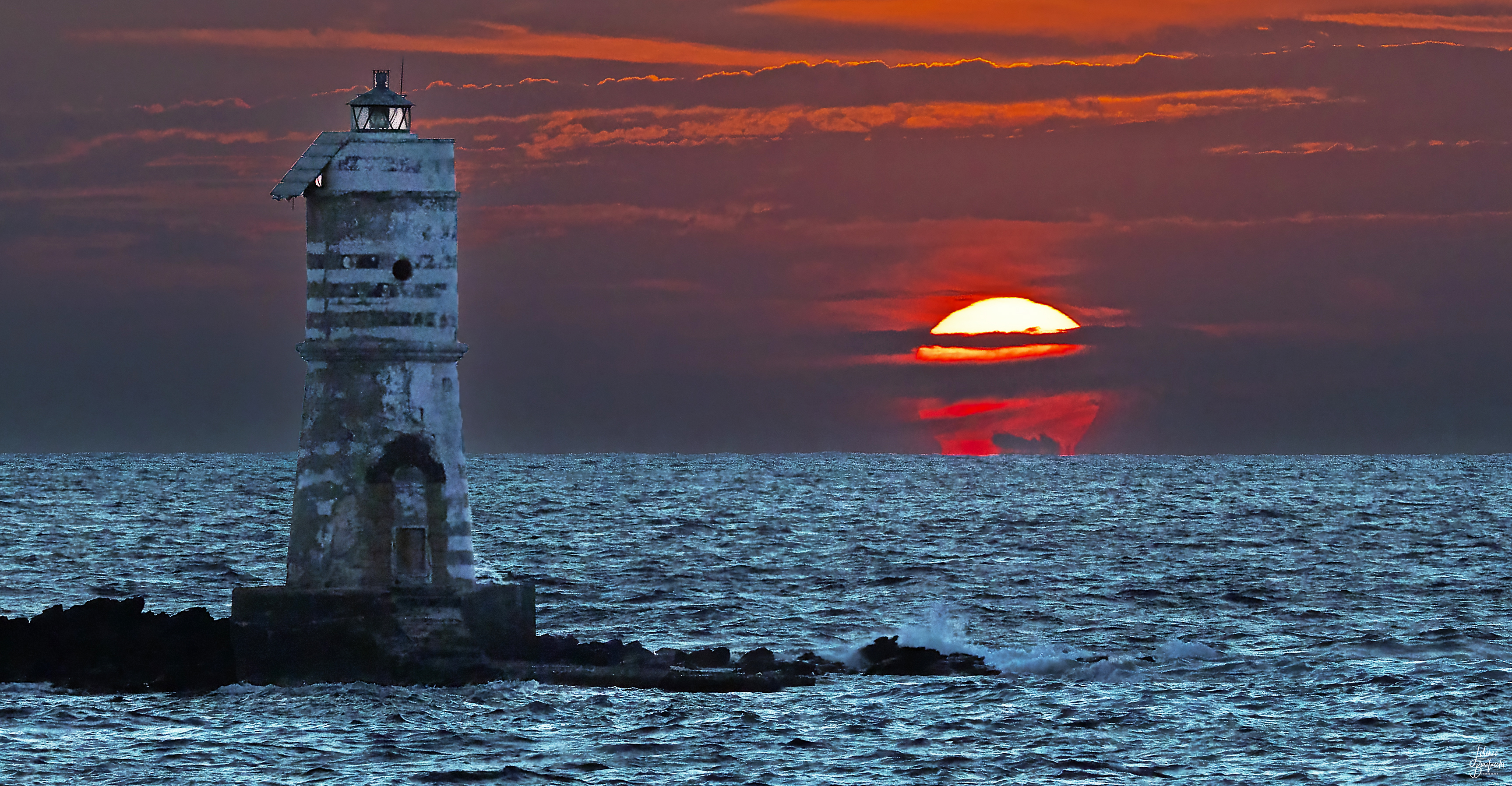
When the sun sets on September 7, the Full Moon will rise. And on that date denizens around much of our fair planet, including parts of Antarctica, Australia, Asia, Europe, and Africa can witness a total lunar eclipse, with the Moon completely immersed in Earth's shadow. As the bright Full Moon first enters Earth's shadow it will darken, finally taking on a reddish hue during the total eclipse phase. In fact, the color of the Moon during a total lunar eclipse is due to reddened light from sunrises and sunsets around planet Earth. The reddened sunlight is scattered by a dense atmosphere into the planet's otherwise dark central shadow. When the sun set on August 22, this telephoto snapshot of red skies, blue sea, and the Mangiabarche Lighthouse was captured from Sant'Antioco, Sardinia, Italy.
Cuando el sol se ponga el 7 de septiembre, la Luna Llena se elevará. Y en esa fecha, los habitantes de gran parte de nuestro planeta, incluyendo partes de la Antártida, Australia, Asia, Europa y África podrán presenciar un eclipse lunar total, con la Luna completamente sumergida en la sombra de la Tierra. Cuando la brillante Luna Llena entre por primera vez en la sombra de la Tierra, se oscurecerá, finalmente adquiriendo un tono rojizo durante la fase de eclipse total. De hecho, el color de la Luna durante un eclipse lunar total es debido a la luz rojiza de los amaneceres y atardeceres alrededor del planeta Tierra. La luz solar rojiza es dispersada por una atmósfera densa hacia la sombra central del planeta, que de otro modo estaría oscura. Cuando el sol se puso el 22 de agosto, esta imagen de teleobjetivo de cielos rojos, mar azul y el faro Mangiabarche fue capturada desde Sant'Antioco, en Sardenia, Italia.