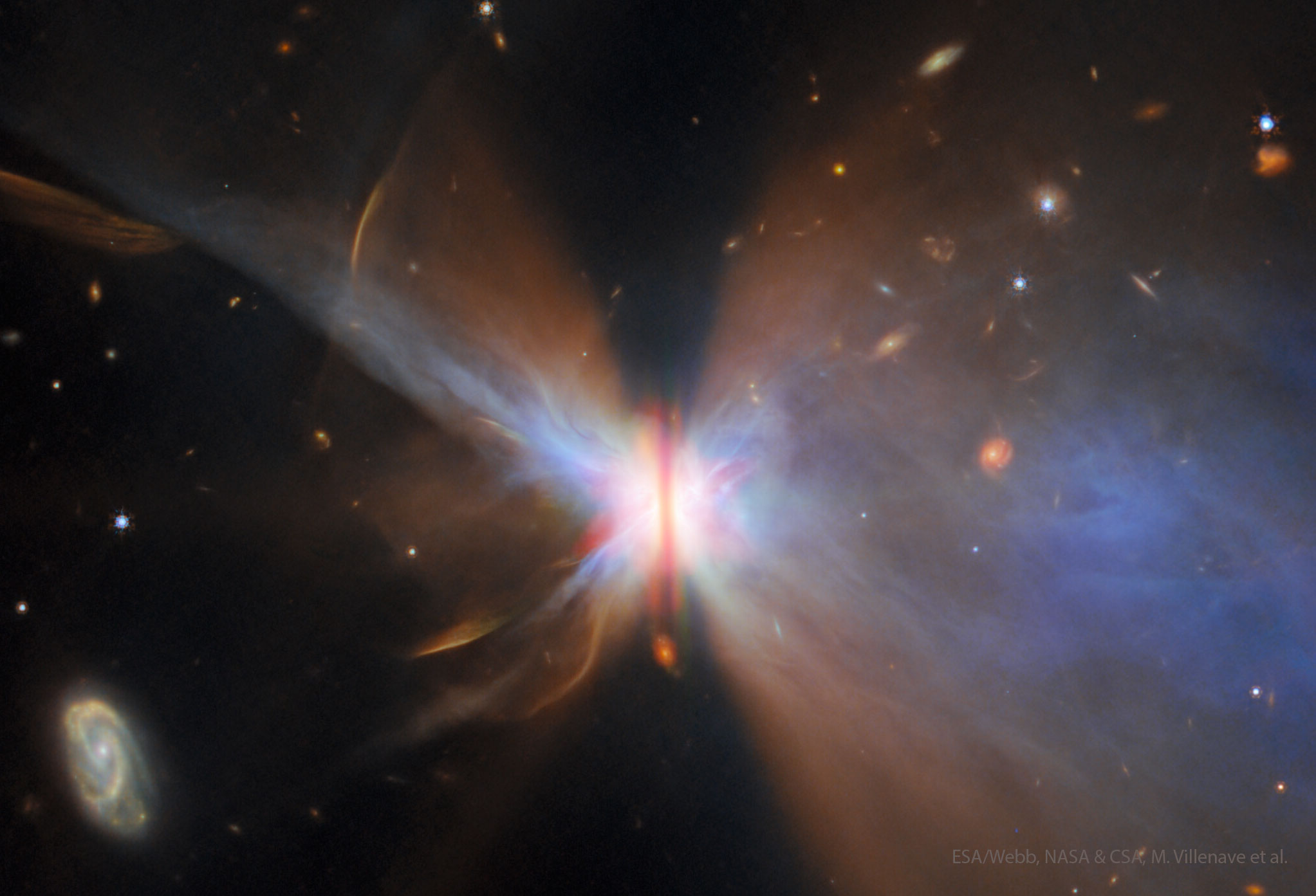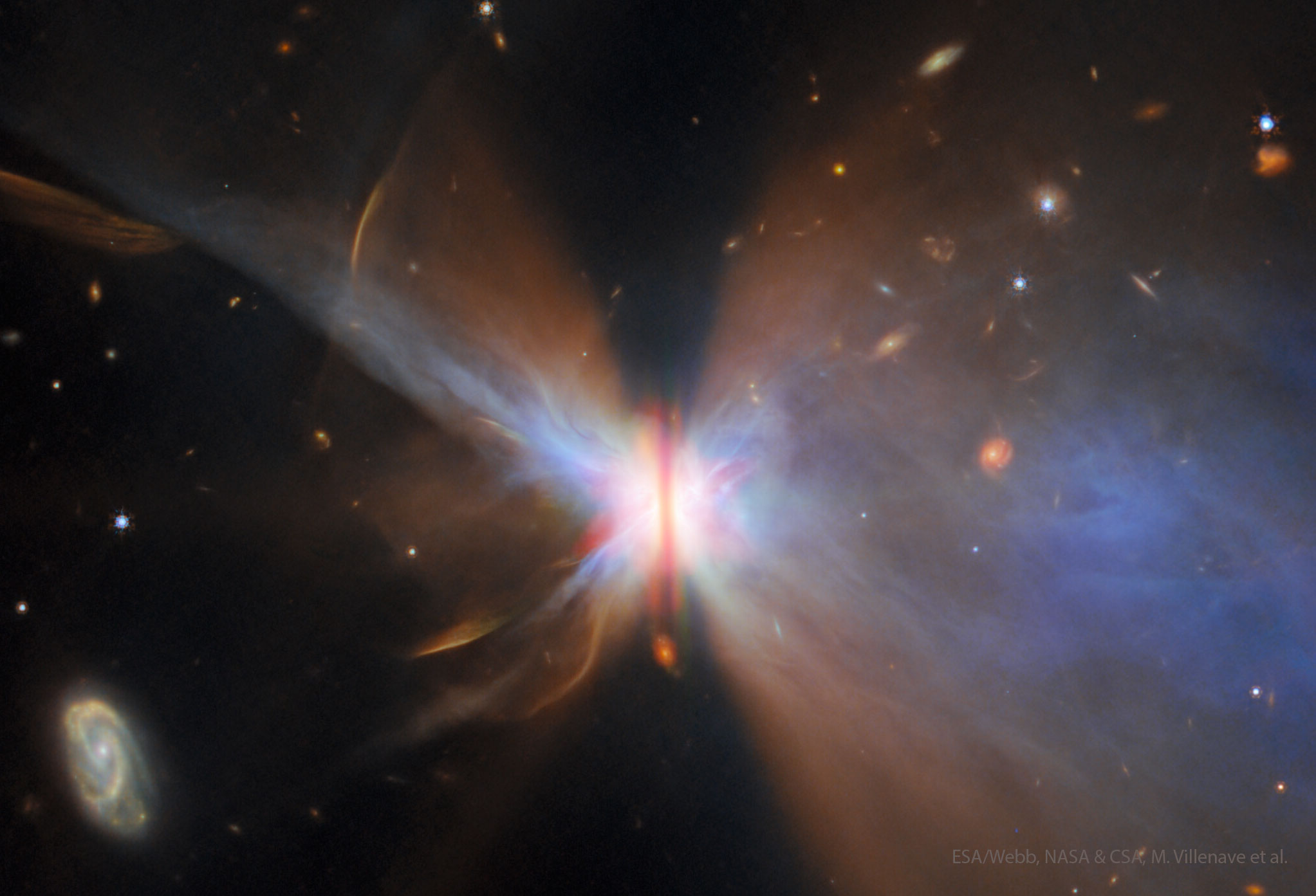
This butterfly can hatch planets. The nebula fanning out from the star IRAS 04302+2247 may look like the wings of a butterfly, while the vertical brown stripe down the center may look like the butterfly's body -- but together they indicate an active planet-forming system. The featured picture was captured recently in infrared light by the Webb Space Telescope. Pictured, the vertical disk is thick with the gas and dust from which planets form. The disk shades visible and (most) infrared light from the central star, allowing a good view of the surrounding dust that reflects out light. In the next few million years, the dust disk will likely fragment into rings through the gravity of newly hatched planets. And a billion years from now, the remaining gas and dust will likely dissipate, leaving mainly the planets -- like in our Solar System. Explore the Universe: Random APOD Generator
Esta mariposa puede eclosionar planetas. La nebulosa que se extiende desde la estrella IRAS 04302+2247 puede parecer las alas de una mariposa, mientras que la franja marrón vertical que recorre el centro puede parecer el cuerpo de la mariposa — pero juntas indican un sistema activo de formación planetaria. La imagen destacada fue capturada recientemente en luz infrarroja por el Telescopio Espacial Webb. En la imagen, el disco vertical está denso con el gas y el polvo del cual se forman los planetas. El disco bloquea la luz visible y (la mayor parte de la) luz infrarroja de la estrella central, permitiendo una buena visión del polvo circundante que refleja la luz. En los próximos millones de años, el disco de polvo probablemente se fragmente en anillos debido a la gravedad de los planetas recién formados. Y dentro de mil millones de años, el gas y el polvo restantes probablemente se dispersarán, dejando principalmente los planetas — como en nuestro Sistema Solar.