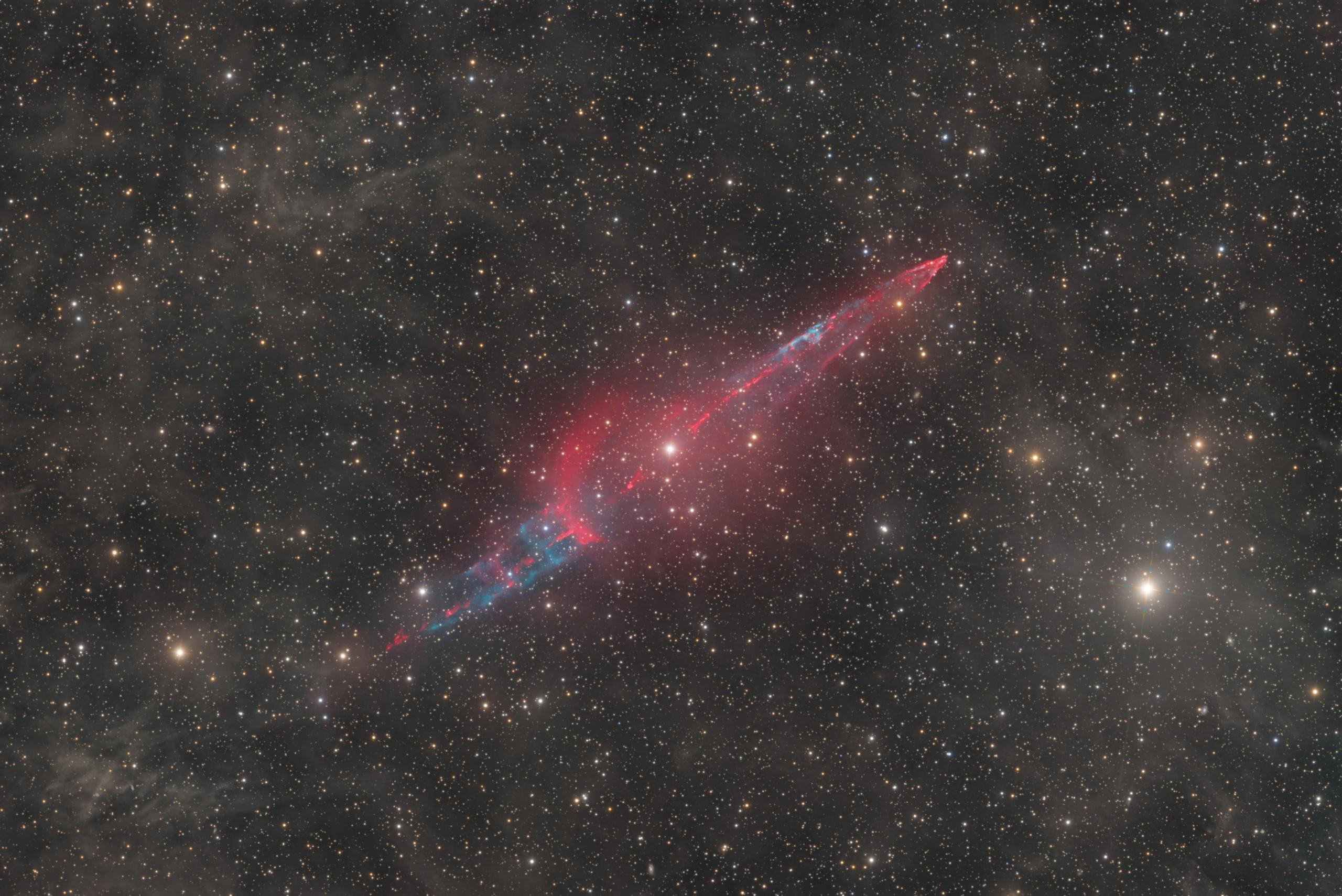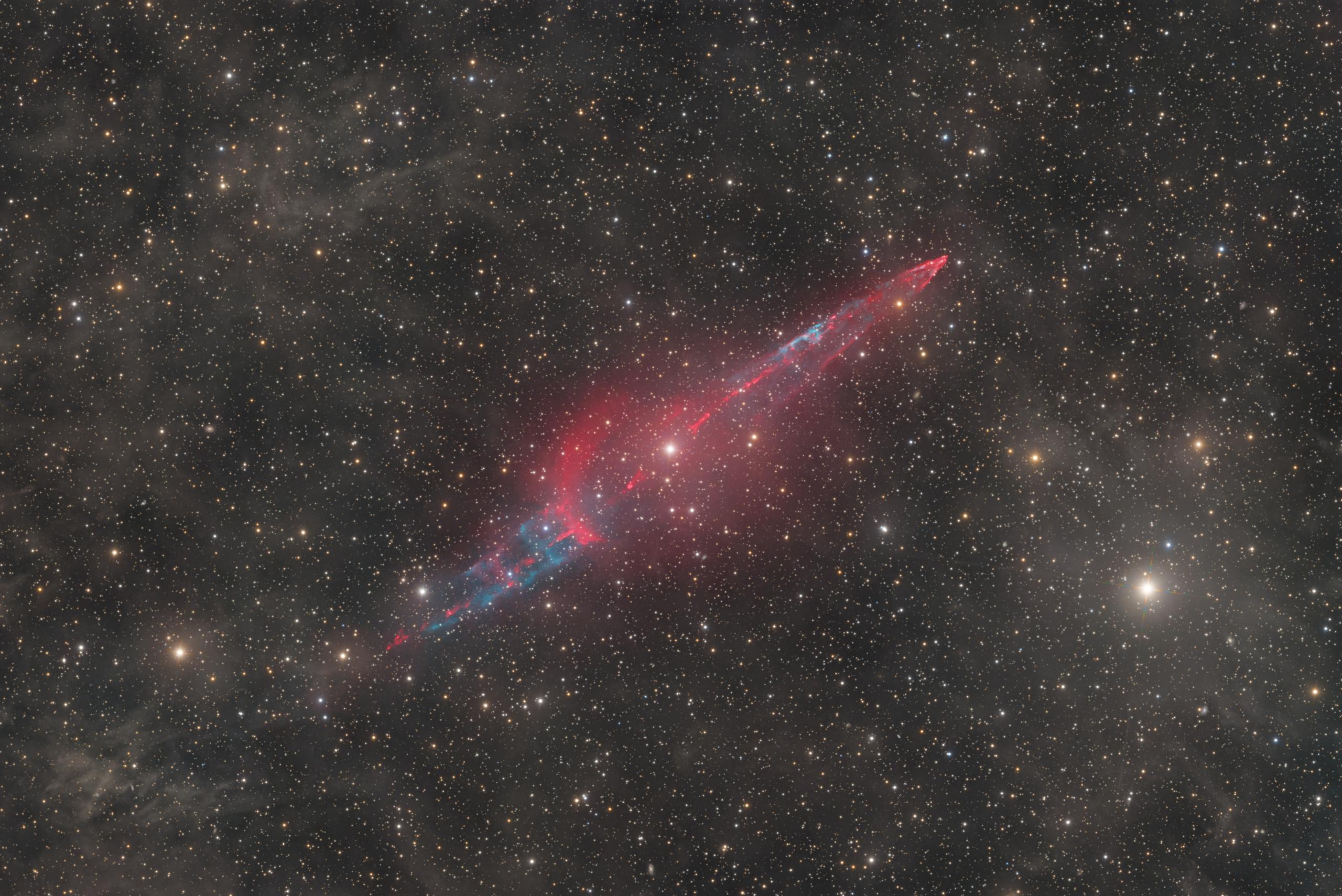
Blasting outward from variable star KX Andromedae, these stunning bipolar jets are 19 light-years long. Recently discovered, they are revealed in unprecedented detail in this deep telescopic image centered on KX And and composed from over 692 hours of combined image data. In fact, KX And is spectroscopically found to be an interacting binary star system consisting of a bright, hot B-type star with a swollen cool giant star as its co-orbiting, close companion. The stellar material from the cool giant star is likely being transferred to the hot B-type star through an accretion disk, with spectacular symmetric jets driven outward perpendicular to the disk itself. The known distance to KX And of 2,500 light-years, angular size of the jets, and estimated inclination of the accretion disk lead to the size estimate for each jet of an astonishing 19 light-years. Free APOD Lecture in Phoenix: Wednesday, December 10 at 7 pm
Crédito: NASA, CGRO SSC Estos asombrosos chorros bipolares, que se proyectan hacia afuera desde la estrella variable KX Andromedae, tienen una longitud de 19 años luz. Recientemente descubiertos, se revelan en un detalle sin precedentes en esta imagen telescópica profunda centrada en KX And, compuesta a partir de más de 692 horas de datos de imagen combinados. De hecho, KX And se ha encontrado espectroscópicamente que es un sistema binario interactuante, compuesto por una estrella brillante y caliente del tipo B junto con una gigante fría hinchada como su compañera en órbita cercana. La materia estelar de la gigante fría probablemente se transfiere a la estrella del tipo B caliente a través de un disco de acreción, con chorros simétricos y espectaculares que se proyectan hacia afuera perpendicularmente al disco mismo. La distancia conocida a KX And de 2.500 años luz, el tamaño angular de los chorros y la inclinación estimada del disco de acreción dan lugar a una estimación de tamaño para cada chorro de asombrosos 19 años luz.